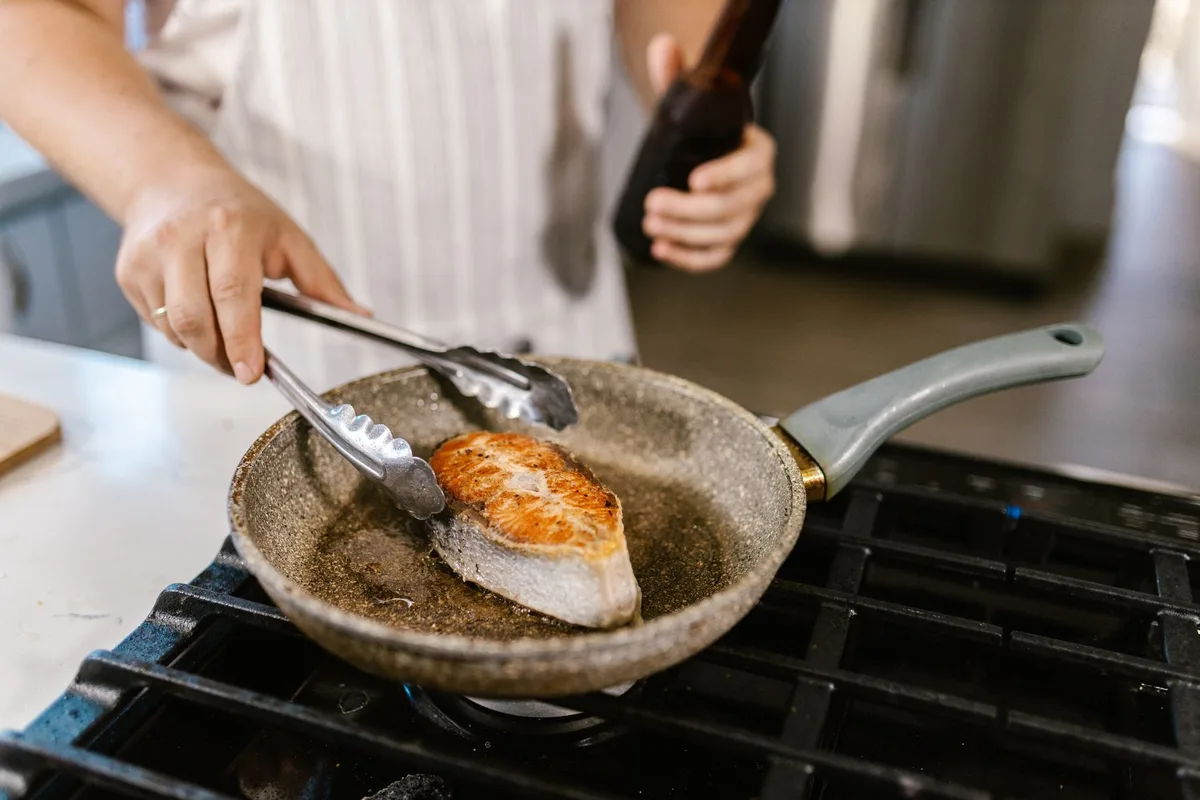
Image source: Pexels / RDNE Stock project (Pexels License)
You just spent good money on a non-stick pan. Maybe it’s a high-end French brand. Maybe it’s a mid-range workhorse from a reputable kitchen-supply company.
Either way, you want it to last longer than six months before the coating starts flaking and everything sticks anyway.
I’ve been there. I’ve ruined more non-stick pans than I care to admit. But here’s the thing: most of those failures were my fault.
I was cooking on high heat with metal utensils and throwing the pans in the dishwasher like they were cast iron.
Non-stick cookware is different. It needs different treatment. Get it right, and your pans can stay slick and reliable for years.
Get it wrong, and you’ll be shopping for replacements every season.
This guide covers everything you need to know. From picking the right pan to using it properly to cleaning it without destroying the coating. No fluff.
Just practical advice that works.
Understanding Non-Stick Coatings
Before we get into usage, you need to understand what you’re working with. Non-stick coatings aren’t indestructible. They’re delicate engineered surfaces that reward gentle treatment.
PTFE (Teflon) Coatings
PTFE stands for polytetrafluoroethylene. You probably know it as Teflon, though that’s a brand name. Most non-stick pans today use some form of PTFE coating.
These coatings work because PTFE has incredibly low friction. Eggs slide off. Pancakes flip without sticking.
Cleanup takes five seconds.
The catch? PTFE starts breaking down above 500°F (260°C). That’s not a problem for most cooking, but it matters when you blast the heat.
If your pan hits 660°F, the coating can release fumes that cause polymer fume fever, temporary flu-like symptoms. It’s not fatal for humans, but it can kill pet birds. Yes, really.
Birds have extremely sensitive respiratory systems.
Modern PTFE coatings are safe for normal cooking. The FDA and European food safety authorities have approved them. The scare stories from the 2000s were mostly about PFOA, a manufacturing chemical that’s now banned in non-stick production.
The US Environmental Protection Agency phased out PFOA use in cookware years ago.
Ceramic Non-Stick Coatings
Ceramic coatings are newer. They’re made from silicon dioxide, basically sand. They handle higher temperatures than PTFE, often up to 800°F.
Ceramic pans feel different. They’re smoother to the touch. They heat more evenly in some cases.
But they’re also less durable. A ceramic coating might lose its non-stick properties after six months of heavy use. PTFE can last years if you treat it right.
Neither coating is bulletproof. Both need care. The rest of this guide applies to both types unless I specifically call out a difference.
How to Use Non-Stick Cookware: The Golden Rules
Let’s get straight to the practical stuff. These rules aren’t negotiable if you want your pans to last.
1. Use Low to Medium Heat
This is the biggest mistake people make. They crank the burner to high and wonder why everything burns and the coating peels.
Non-stick pans don’t need high heat. They conduct heat efficiently. Medium heat on most stoves is enough for searing, frying, and sautéing.
High heat is for boiling water in stainless steel pots, not for non-stick cookware.
Here’s a simple test: preheat your non-stick pan on medium for two minutes. Flick a drop of water on it. If it sizzles and evaporates immediately, you’re ready.
If it beads up and dances around like a crazy marble, the pan is too hot. Turn it down.
For eggs: use low heat. Yes, low. Crack your egg into a cold pan with butter, then turn the heat to low.
The egg cooks slowly and slides right off. Try it once and you’ll never go back.
2. Never Use Metal Utensils
Metal scratches non-stick coatings. Period. A single scrape with a metal spatula can damage the surface permanently.
Those scratches become weak points where the coating can peel.
Use silicone, nylon, wood, or plastic utensils. Silicone is best because it withstands higher heat and won’t melt. Wooden spoons work great for stirring and scraping.
Just avoid anything with sharp edges.
If someone in your household grabs the metal spatula anyway, hide it. Put the non-stick utensils in a separate drawer. Make it easy to do the right thing.
3. Don’t Preheat an Empty Pan
Non-stick pans heat up fast. An empty pan on medium-high heat can hit dangerous temperatures in under a minute.
Always add oil, butter, or food before the pan gets hot. The oil acts as a buffer and distributes heat evenly. It also prevents the coating from overheating in a concentrated spot.
If you’re preheating for a recipe, add a teaspoon of oil first, swirl it around, then let the pan heat up. That oil keeps the coating safe while the pan reaches temperature.
4. Avoid Thermal Shock
Don’t run cold water on a hot non-stick pan. The sudden temperature change can warp the metal and damage the coating.
Let pans cool down naturally before washing. I set mine on the stovetop or a trivet and walk away for fifteen minutes. If I’m in a rush, I run warm water over the back of the pan first to equalize the temperature slowly.
Thermal shock is also why you shouldn’t put a hot pan directly on a cold countertop. Use a trivet or a folded kitchen towel.
5. No Dishwasher
This one hurts to hear, I know. Dishwashers are convenient. But the high heat, harsh detergents, and water pressure are brutal on non-stick coatings.
Hand wash your non-stick pans. It takes thirty seconds. Use warm water, mild dish soap, and a soft sponge.
That’s it. No steel wool, no scouring pads, no abrasive cleaners.
If you absolutely must use the dishwasher, expect to replace your pans twice as often. That’s the trade-off.
Choosing the Right Non-Stick Pan
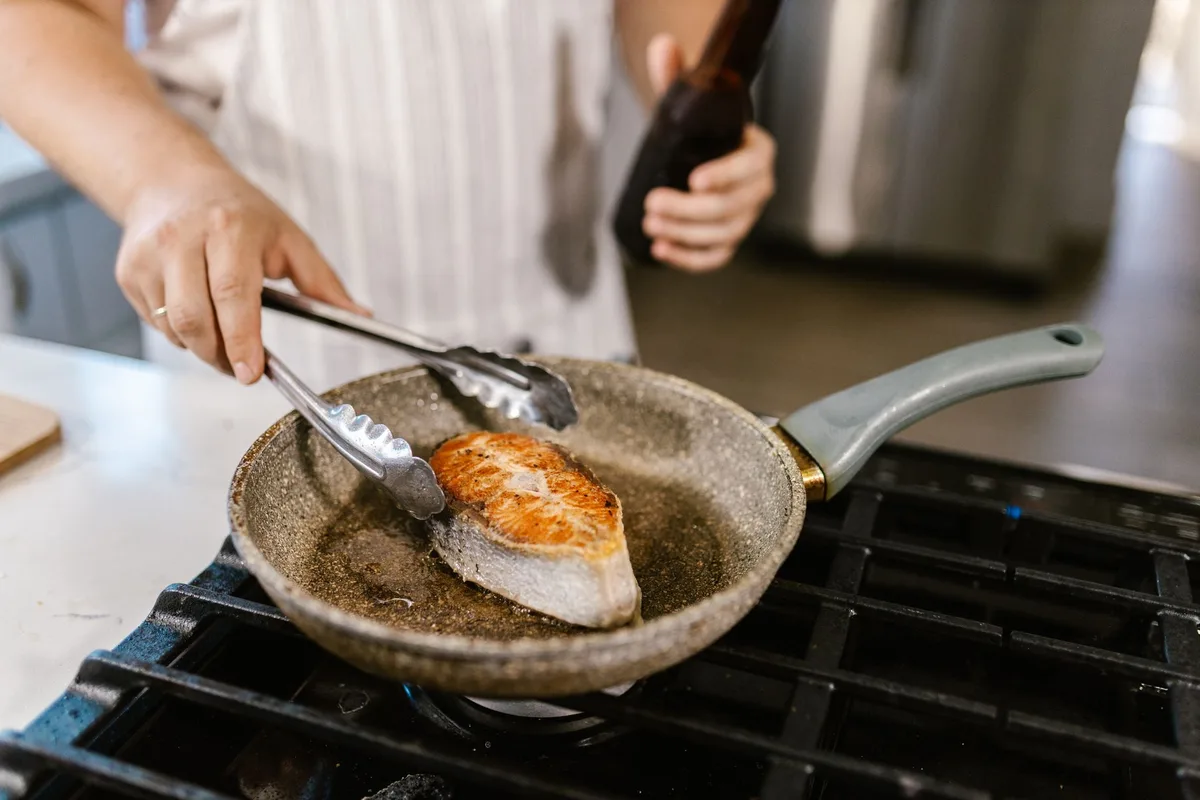
Image source: Pexels / RDNE Stock project (Pexels License)
Not all non-stick pans are created equal. Buying the right one makes using it much easier.
Weight Matters
Cheap non-stick pans are thin. They heat unevenly and develop hot spots. Food burns in one spot while the rest stays undercooked.
A good non-stick pan has a thick base. Pick it up before buying. Feel the weight.
If it feels flimsy, put it back.
Hard-anodized aluminum is a premium option. It’s lightweight but durable. The anodization process hardens the surface so the pan resists warping.
Stainless steel with a thick clad base is also excellent, though heavier.
Coating Quality
You get what you pay for. The cheap supermarket pan with a one-star rating will lose its coating in three months. A quality pan from a reputable brand will last years if maintained.
Look for “triple-layer” or “reinforced” coatings. Some brands use titanium or diamond particles infused into the PTFE. These aren’t gimmicks, they genuinely extend the life of the coating.
Avoid coatings that look splotchy or uneven in the store. That’s a sign of poor application.
Compatibility with Your Stove
Check the packaging. Not all non-stick pans work on all stoves.
- Gas and electric: works with almost everything
- Induction: needs a magnetic base (most but not all non-stick pans have one)
- Ceramic glass: any smooth-bottomed pan is fine
If you have induction, bring a magnet to the store. If the magnet sticks firmly to the pan’s bottom, it will work on your stove.
Seasoning Your Non-Stick Pan
Here’s a pro tip most people don’t know: you can season non-stick pans just like cast iron. It’s not the same process, but it helps.
Most new pans are pre-seasoned at the factory. They might seem non-stick already. But a quick seasoning at home makes them even better.
Here’s how:
- Wash the pan with warm soapy water and dry it completely.
- Rub a thin layer of vegetable oil or canola oil over the entire cooking surface.
- Wipe off the excess with a paper towel. You want only a microscopic layer.
- Heat the pan on medium-low for two to three minutes.
- Let it cool, then wipe again.
That’s it. The oil fills microscopic pores in the coating and creates a slicker surface. Repeat this process every few months or whenever things start sticking.
Don’t use olive oil for this. It burns at a lower temperature and leaves sticky residue. Use a neutral oil with a high smoke point.
What to Cook in Non-Stick Cookware
Non-stick excels at some things and fails at others. Know the difference.
Perfect for:
- Eggs, scrambled, fried, omelets, you name it
- Pancakes and crepes
- Fish fillets, delicate skin stays intact
- Rice and grains, nothing sticks to the bottom
- Sauces and custards, easy stirring without scorching
- Grilled cheese and quesadillas
Avoid for:
- High-heat searing, you can’t get the crust you want without damaging the coating
- Deglazing, don’t add cold wine or broth to a hot non-stick pan
- Cooking with cooking sprays, aerosol sprays leave residue that builds up and ruins the coating. Use oil from a bottle instead.
- Broiling, direct overhead heat destroys non-stick coatings
Proper Care and Maintenance
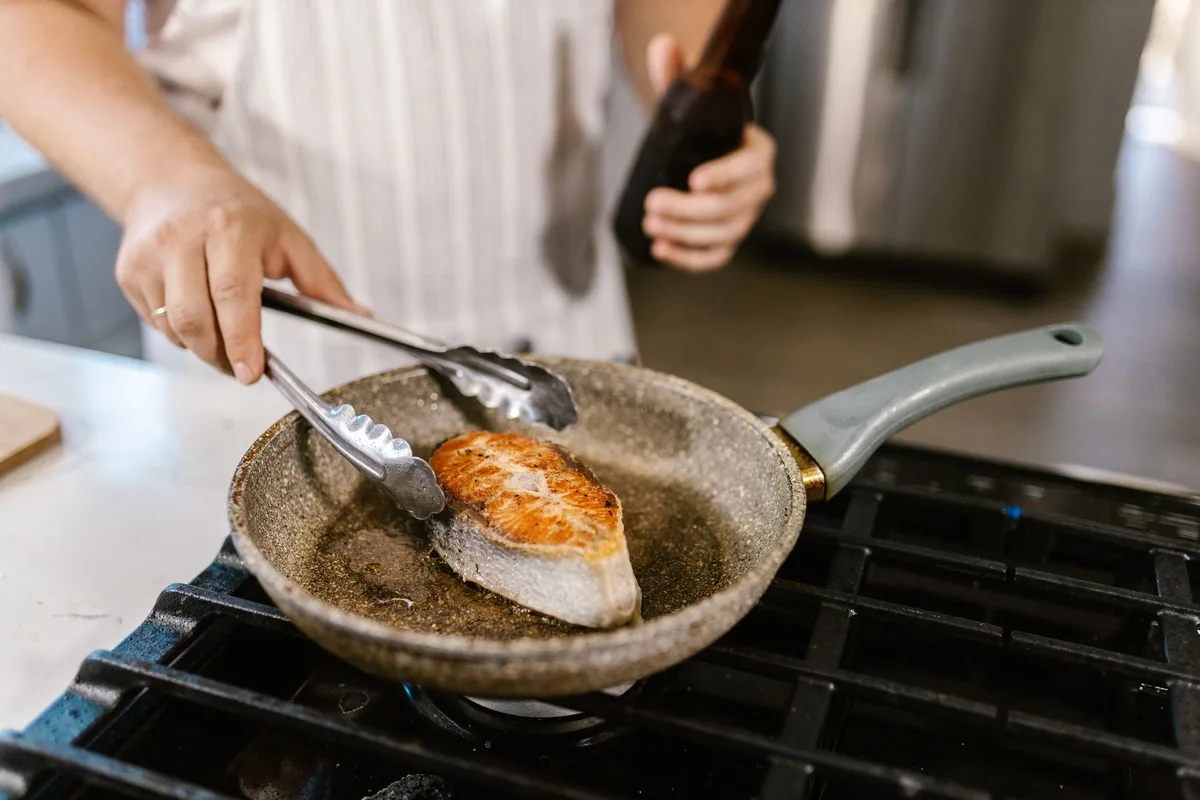
Image source: Pexels / RDNE Stock project (Pexels License)
You’ve used the pan correctly. Now take care of it afterward.
Daily Cleaning
Let the pan cool. Then wash with warm water and a drop of dish soap. Use a soft sponge or a non-stick-safe scrubber.
For stuck-on food, soak the pan in warm soapy water for ten minutes. Everything softens and wipes away. Don’t scrub aggressively.
Gentle persistence works better than brute force.
If you have burned-on residue, make a paste of baking soda and water. Apply it to the cooled pan and let it sit for fifteen minutes. Wipe clean.
The baking soda is mildly abrasive but gentle enough for most coatings.
Storing Non-Stick Pans
Stacking pans damages the coating. The bottom of one pan scratches the interior of another.
Store non-stick pans upright if possible. If you must stack them, place a paper towel or felt pan protector between each one. Those cheap felt pads from kitchen stores actually work.
Don’t hang non-stick pans by their handles unless the handles are designed for hanging. Some handles loosen over time from the weight.
When to Replace
Non-stick pans don’t last forever. Know the signs of failure:
- The coating is visibly peeling or flaking
- Food sticks even after proper oiling
- You see scratches or bubbles in the surface
- The pan has warped and wobbles on the stovetop
If any of these apply, replace the pan. Flaking coating can end up in your food. PTFE particles pass through the digestive system harmlessly, but it’s not pleasant to eat.
A well-cared-for non-stick pan should last two to five years. Budget pans die faster. Quality pans survive longer.
Your usage habits determine the exact timeline.
Common Mistakes and How to Fix Them
Mistake: Using high heat to speed up cooking
Fix: Cook on medium or low. Non-stick pans heat faster than you think. The food cooks just as fast because heat transfers more efficiently.
If you’re impatient, start with the pan on medium for one minute before adding oil.
Mistake: Using olive oil for everything
Fix: Olive oil has a low smoke point. It burns and leaves sticky residue on non-stick surfaces. Use avocado oil, grapeseed oil, or canola oil for high-heat cooking.
Save the extra virgin olive oil for drizzling on finished dishes.
Mistake: Cutting food inside the pan
Fix: Never cut food while it’s in a non-stick pan. A knife blade scratches the coating even if you’re careful. Slide the food onto a cutting board, slice it there, then return it to the pan if needed.
Mistake: Putting pans away wet
Fix: Dry non-stick pans thoroughly before storing. Water spots can stain the coating. More importantly, moisture trapped between stacked pans can cause mold or corrosion on the pan’s exterior.
Non-Stick Safety: What You Actually Need to Know
There’s a lot of misinformation about non-stick cookware safety. Let me clear that up.
Modern non-stick pans are safe for normal cooking. The PFOA scare is over. No reputable manufacturer uses PFOA in coatings today.
The only real safety concern is overheating. Above 500°F, PTFE coatings can release fumes. Above 660°F, those fumes become toxic.
But you’d have to leave an empty pan on high heat for several minutes to reach those temperatures.
Symptoms of PTFE fume exposure include headache, chills, and fever. It’s called polymer fume fever. It’s temporary and passes within 24 hours.
It’s not pleasant, but it’s not dangerous for most people.
The exception is pet birds. Birds are extremely sensitive to PTFE fumes. Even low levels can kill them.
If you own birds, keep them out of the kitchen when using non-stick cookware. Or switch to stainless steel or cast iron for your avian friends.
Ceramic non-stick coatings don’t have this problem. They’re safe at higher temperatures. But they wear out faster.
When to Use Non-Stick vs. Other Cookware
Non-stick is a specialist tool. It’s not your only pan.
Use non-stick for:
- Delicate proteins like fish and eggs
- Foods that stick aggressively like pancakes
- Low-fat cooking with minimal oil
- Quick weeknight meals where easy cleanup matters
Use stainless steel, cast iron, or carbon steel for:
- High-heat searing and browning
- Deglazing to make pan sauces
- Cooking acidic foods like tomatoes or citrus
- Oven-to-table serving
- Long, slow braises
Having one good non-stick pan and one good stainless steel pan covers almost everything. You don’t need a full set of non-stick cookware. One 10-inch skillet and one 12-inch skillet are plenty.
The Bottom Line on Non-Stick Cookware
Non-stick cookware is a convenience tool. It makes cooking easier and cleanup faster. But it asks for care in return.
Use low to medium heat. Never metal utensils. Hand wash with soft sponges.
Store with protection between pans. Replace when the coating degrades.
Follow these rules and your non-stick pans will treat you well for years. Ignore them and you’ll be frustrated by peeling coatings and stuck-on eggs.
I’ve been cooking with non-stick pans for over a decade. I’ve learned these lessons the hard way. My current set of pans is three years old and still looks almost new.
They slide eggs like the day I bought them. That’s proof that slow, gentle treatment works.
Treat your non-stick pans with respect. They’ll return the favor.