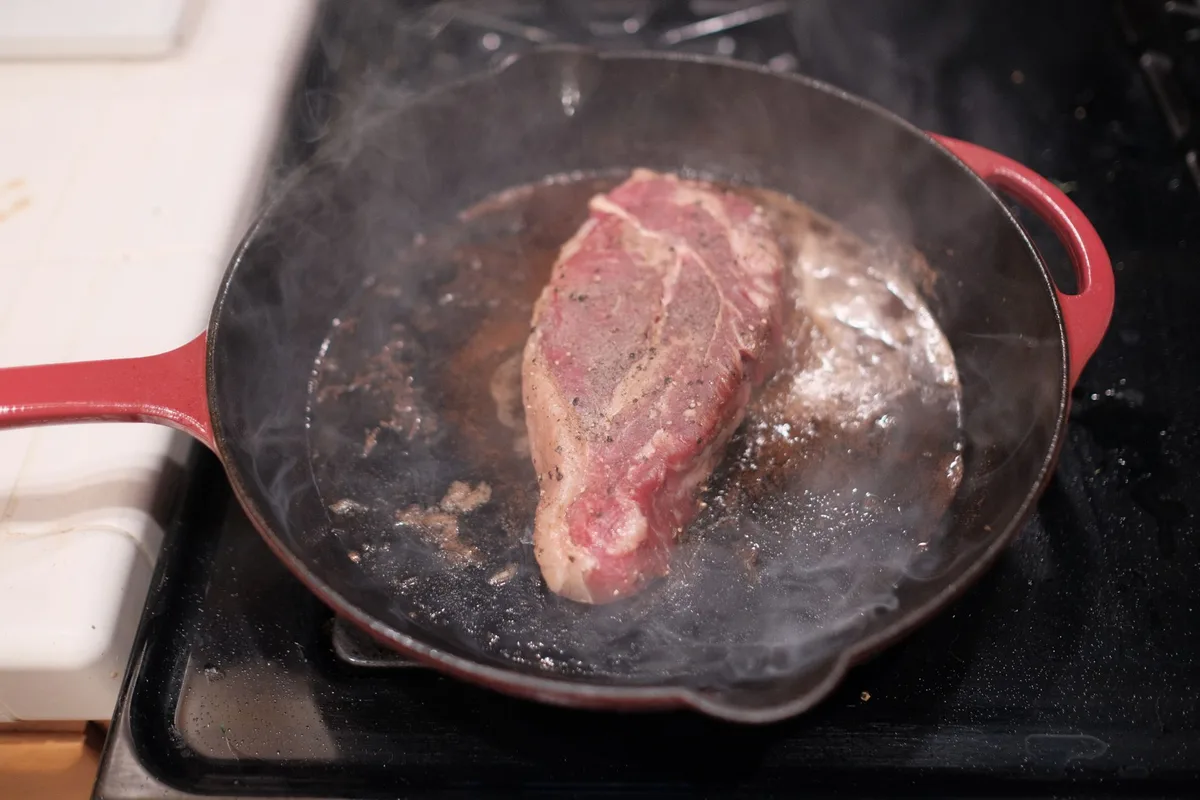
I’ve cooked thousands of steaks in cast iron. The pan gives a crust you can’t replicate on stainless or non‑stick. The secret is heat control, a dry surface, and patience.
Follow the steps below and you’ll get a restaurant‑quality sear every time.
Why Cast Iron?
Cast iron holds heat like a brick. When you drop a steak in, the temperature barely drops. That steady energy creates the Maillard reaction, the brown, flavor‑packed crust that defines a great steak.
The pan also adds a tiny amount of iron to the food, a bonus the USDA notes as a dietary benefit for many people.
A well‑seasoned skillet is naturally non‑stick. You don’t need heavy oil; a thin film is enough. And the pan goes from stovetop to oven without warping, which makes finishing thick cuts easy.
Choosing the Right Cut
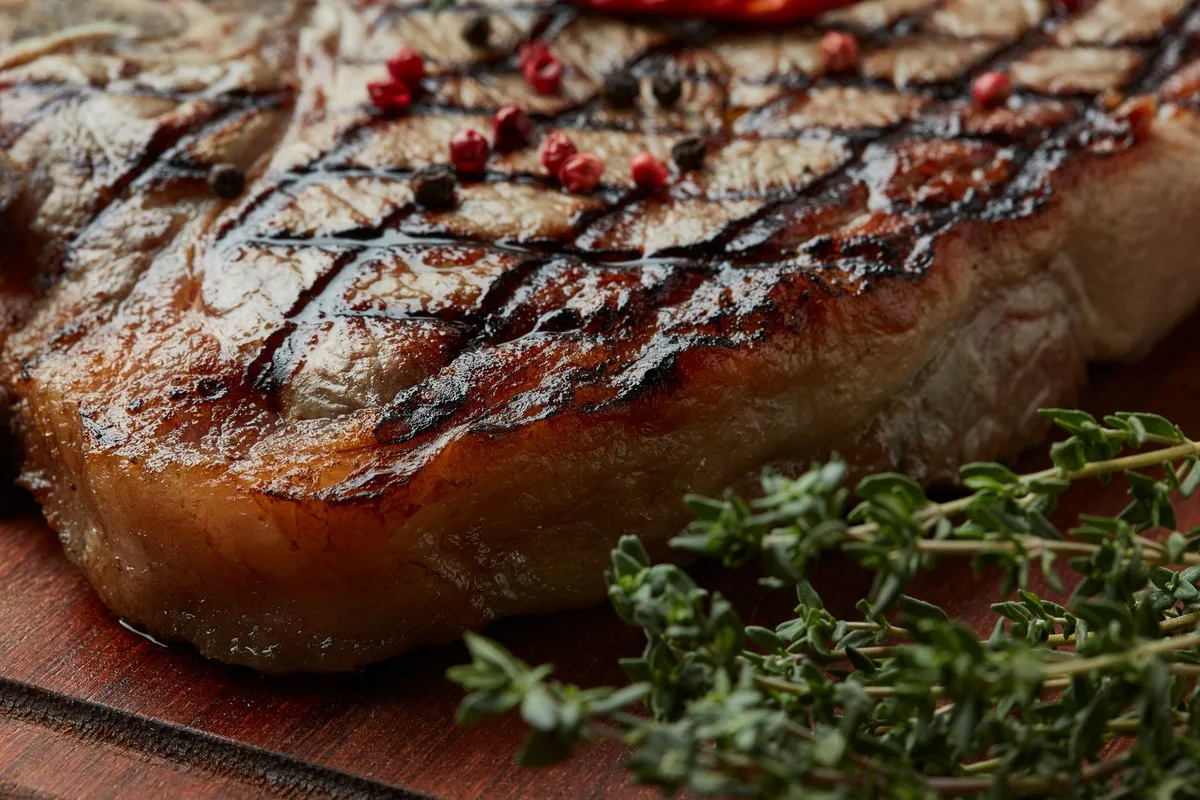
Pick a steak at least 1‑inch thick. Ribeye, strip, and filet mignon all work. Thick cuts give you a window to build a crust before the center overcooks.
Look for good marbling, thin white flecks of fat that melt and baste the meat from inside.
If you prefer leaner meat, sirloin or flank can work, but they need a shorter cook time and a quick rest. For the best crust, I always choose a bone‑in ribeye; the bone conducts heat and adds flavor.
Prepping the Steak
- Remove the steak from the fridge 45 minutes before cooking. Cold meat sears unevenly.
- Pat it dry with paper towels. Moisture is the enemy of browning.
- Season generously with kosher salt and freshly cracked black pepper. Salt draws out a little moisture, then re‑absorbs, forming a dry surface that browns faster.
- Optional: add a light coat of high‑smoke‑point oil (canola, grapeseed, or avocado). Rub it on the meat, not the pan.
Let the seasoned steak sit on a wire rack while the pan heats. Air circulation keeps the surface dry.
Preheating the Pan
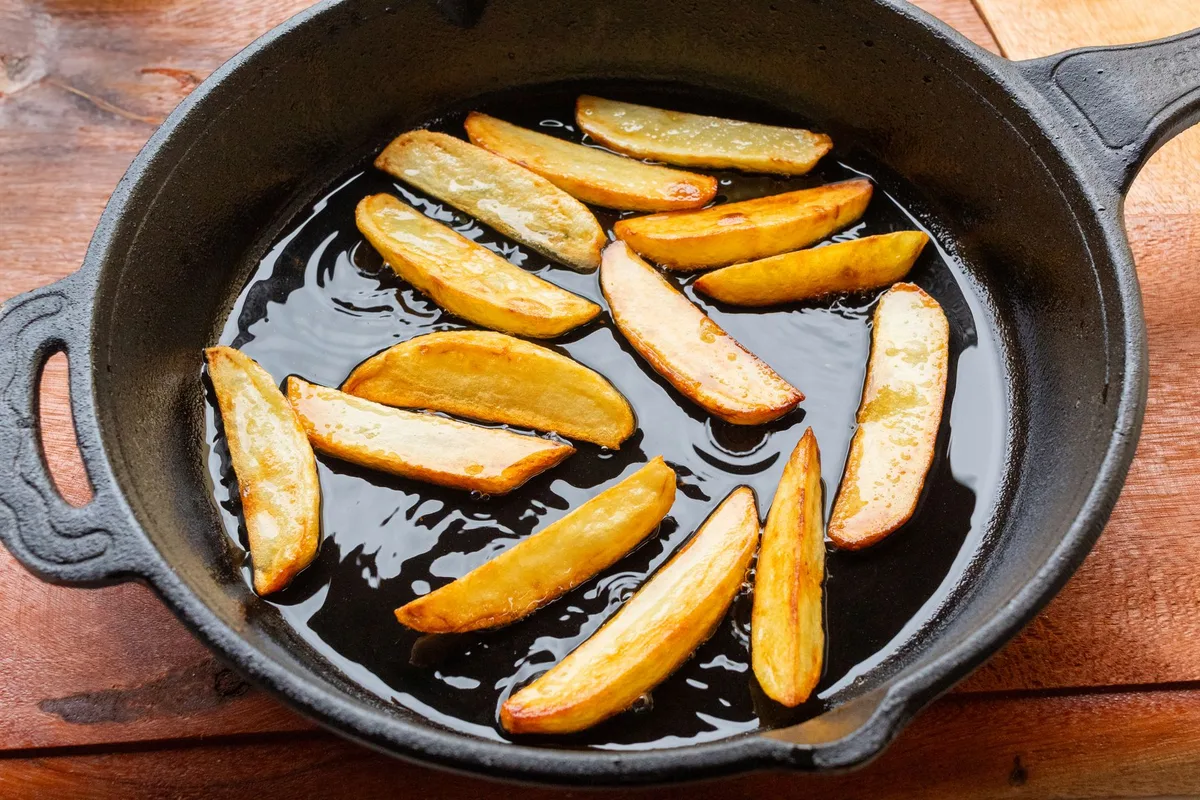
Place the cast iron on the burner and set the heat to medium‑high. Give it 5‑7 minutes. You want the pan surface to hit 450‑500 °F (230‑260 °C).
A drop of water should skitter and evaporate instantly.
If you have an infrared thermometer, aim for 480 °F. No thermometer? Hold your hand 3 inches above the pan; you should feel intense heat after 2 seconds.
Add a teaspoon of oil to the pan only after it’s hot. Swirl to coat the bottom. The oil should shimmer but not smoke heavily.
The Sear: Step‑by‑Step
- Lay the steak away from you to avoid splatter.
- Press gently with tongs to maximize contact.
- Don’t move it for 2‑3 minutes. You’ll hear a steady sizzle.
- Flip once when the edges turn deep brown and the steak releases easily.
- Sear the second side for another 2‑3 minutes.
For a 1.5‑inch ribeye, this gives a dark crust and a rare center. Adjust time by 30 seconds per side for each additional half‑inch of thickness.
Finishing in the Oven
If the steak is thicker than 1.5 inches, transfer the pan to a preheated 400 °F oven. Roast 4‑6 minutes for medium‑rare, 6‑8 for medium. Use an instant‑read thermometer: 125 °F for rare, 130 °F for medium‑rare, 135 °F for medium.
The oven’s gentle heat finishes the interior without burning the crust. I learned this trick from the University of Minnesota Extension, which recommends oven‑finishing for thick cuts to keep the exterior intact.
Resting and Slicing
Pull the steak from the pan (or oven) and set it on a cutting board. Tent loosely with foil. Rest 8‑10 minutes.
Resting lets juices redistribute; cutting too early spills them onto the board.
Slice against the grain in ½‑inch strips. The grain runs parallel to the long muscle fibers; cutting across shortens them, making each bite tender.
Common Mistakes to Avoid
- Crowding the pan. Cook one steak at a time. Two steaks drop the temperature and steam the meat.
- Using low‑smoke oil. Butter burns before the crust forms. Save butter for a finishing baste after the sear.
- Skipping the dry‑pat step. Wet surfaces steam, not sear.
- Flipping too often. Each flip resets the crust formation.
- Neglecting pan maintenance. A rusty skillet won’t give a clean sear.
Cleaning and Seasoning Your Cast Iron
While the pan is still warm, rinse with hot water and a stiff brush. No soap needed; a little salt works as abrasive if food sticks. Dry immediately on the stove over low heat.
Apply a thin layer of oil (canola or vegetable) inside and out. Heat the pan upside down in a 450 °F oven for an hour. This polymerizes the oil into a durable, non‑stick surface.
Repeat every few months or after heavy use.
FAQ
Can I use a stainless‑steel pan instead?
You can, but stainless doesn’t retain heat as evenly. You’ll get a decent sear, but the crust won’t be as deep.
What oil has the highest smoke point?
Avocado oil (520 °F) and refined safflower oil (510 °F) top the list. Canola (400 °F) works fine for most home cooks.
How do I know when the steak is done without a thermometer?
Press the center with your finger. Rare feels like the fleshy part of your palm below the thumb; medium‑rare feels like the base of your thumb; medium feels like the pad at the base of your index finger.
Should I salt the steak the night before?
Dry‑brining overnight deepens flavor and dries the surface further. Pat dry again before cooking.
Can I cook a frozen steak in cast iron?
Not recommended. Thaw fully for even cooking and a proper crust.
Final Thoughts
Cast iron gives you control, flavor, and a crust that’s hard to beat. Master the heat, keep the steak dry, and respect the rest. Do that, and every steak you fry will taste like it came from a top steakhouse.
1 thought on “How To Fry Steak In Cast Iron Pan”