Pan frying and stir frying look similar on the surface. Both use a hot pan, a splash of oil, and quick cooking. The devil lives in the details, pan shape, heat level, oil depth, and how you move the food.
I’ve spent years behind the line testing both techniques, and the contrast changes everything from texture to flavor.
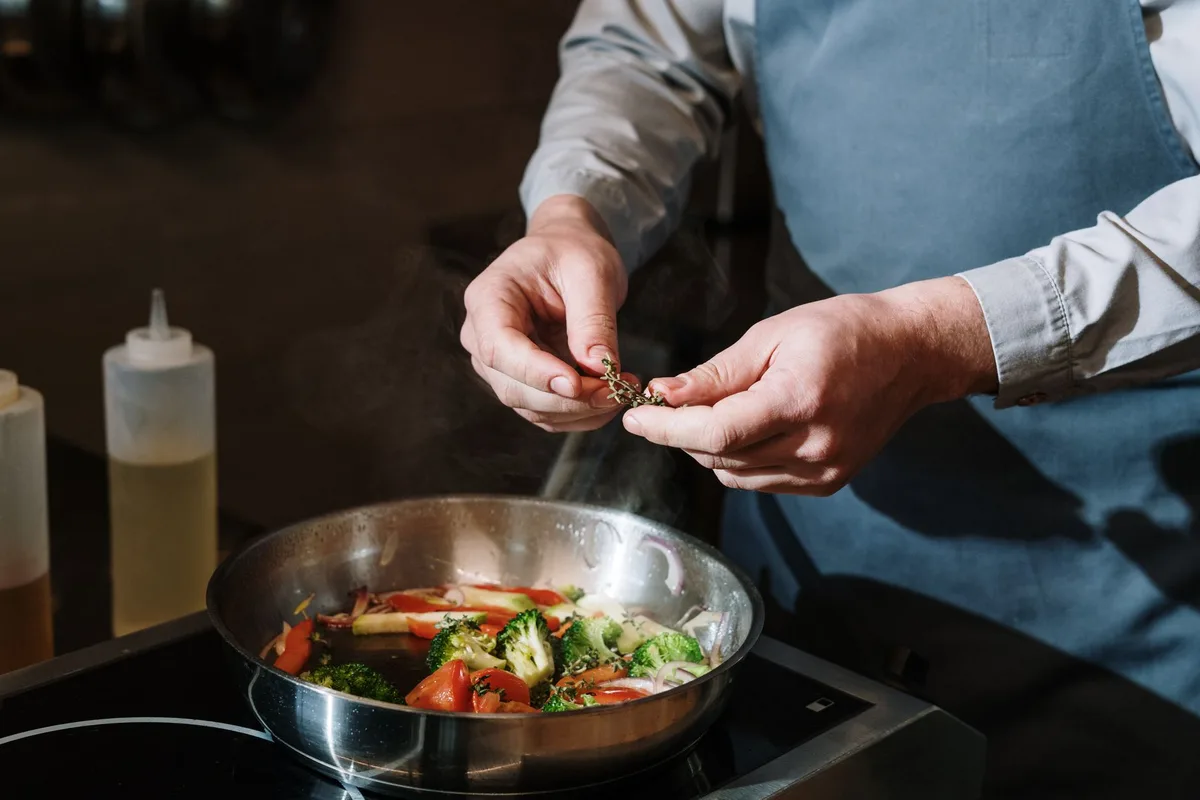
Image source: Pexels / cottonbro studio (Pexels License)
What Is Pan Frying?
Pan frying cooks food in a shallow layer of oil, usually 1/8 to 1/4 inch deep. The pan stays relatively flat, a skillet, sauté pan, or cast‑iron griddle works fine. Heat is medium‑high, enough to brown the surface without burning.
Food sits mostly still; you flip it once or twice. The goal is a crisp crust and a juicy interior. Think chicken cutlets, pork chops, or a golden‑brown fish fillet.
Key points
- Oil covers the bottom, not the food.
- Temperature hovers around 350 °F (175 °C).
- Minimal tossing; you let the Maillard reaction do its work.
What Is Stir-Frying?
Stir frying is a high‑heat, constant‑motion method. A wok or deep, rounded skillet holds a thin film of oil, just enough to coat the surface. The burner cranks to 450 °F (230 °C) or higher.
Ingredients cut into uniform, bite‑size pieces fly through the oil in seconds. You toss, flip, and push continuously. The result: seared edges, vibrant color, and a texture that stays crisp‑tender.
Key points
- Oil depth is a whisper‑thin sheen.
- Heat is fierce; the wok “breathes” smoke.
- Non‑stop movement prevents burning and ensures even cooking.
Equipment: Wok vs. Skillet
The pan shapes the technique. A wok’s curved walls funnel heat to the center and let you lift food up the sides for a quick sear. A flat skillet spreads heat evenly across the bottom, ideal for a steady crust.
You can stir‑fry in a skillet, but you lose the “tumble” that a wok gives. Conversely, pan frying in a wok works, yet the sloped sides make flipping large pieces awkward.
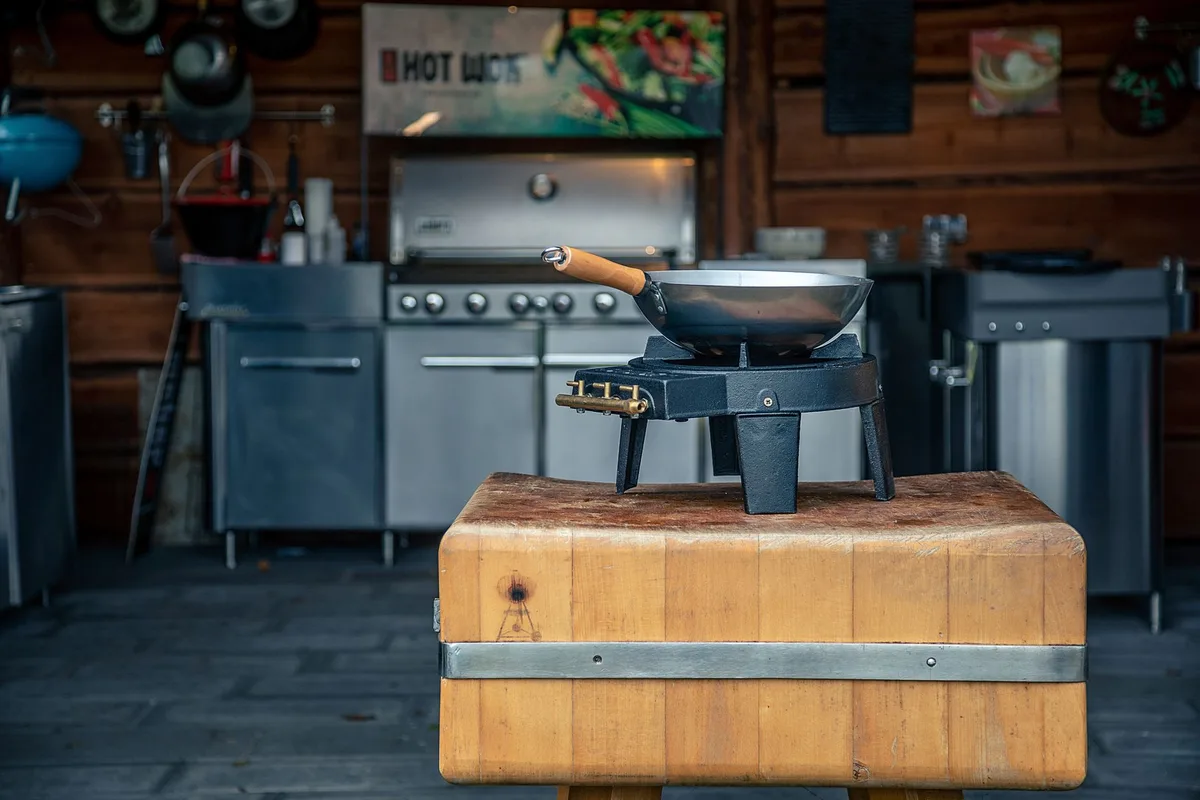
Image source: Pexels / HOT WOK (Pexels License)
Choosing the right tool
- Wok, carbon steel, 14‑inch, seasoned. Best for stir fry, deep‑fry, steam.
- Skillet, 10‑12 inch, heavy‑bottom stainless or cast iron. Best for pan fry, sear, shallow‑fry.
If you own only one, a 12‑inch carbon‑steel skillet with slightly flared sides bridges both worlds.
Technique: Heat Control & Oil Depth
Heat management separates the two methods more than any ingredient list. Pan frying uses a steady medium‑high flame; you wait for the oil to shimmer, then lay the protein down. Stir frying demands a screaming hot wok, oil should smoke within seconds.
You add aromatics first (garlic, ginger, scallions), then the longest‑cooking vegetables, finishing with quick‑cook items and sauce.
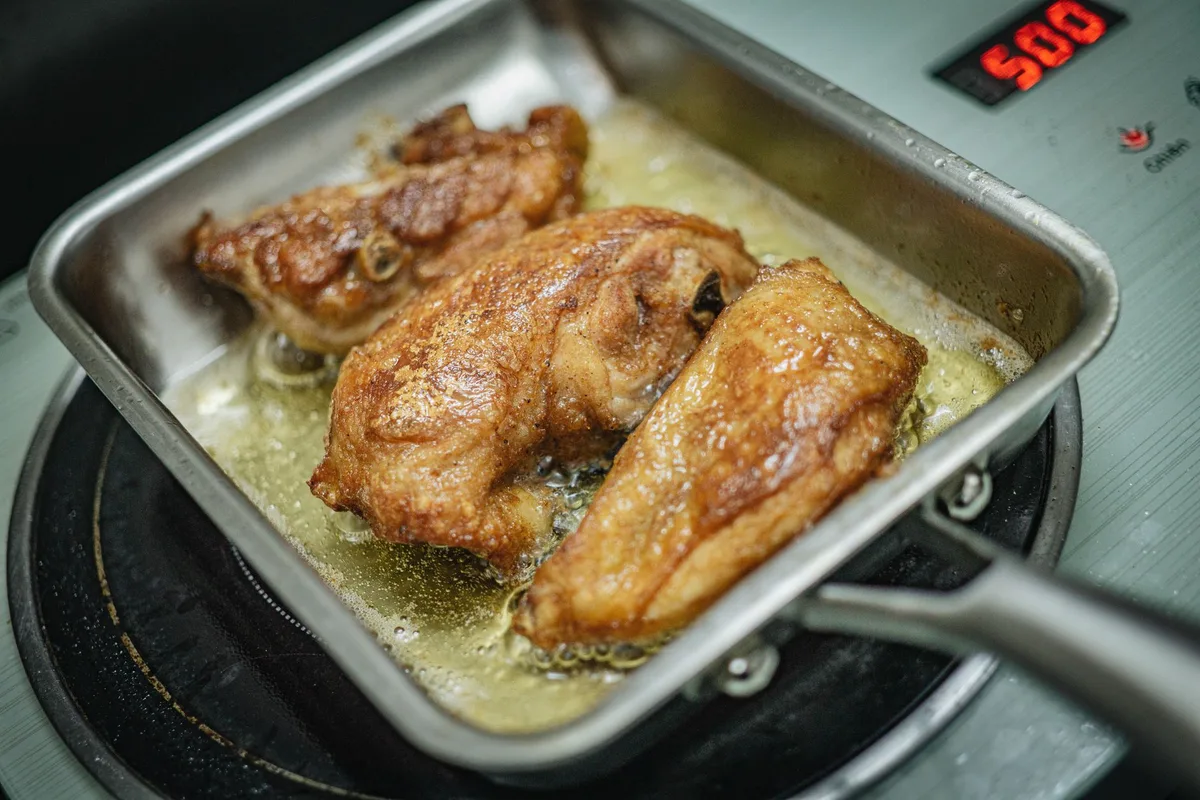
Image source: Pexels / FOX ^.ᆽ.^= ∫ (Pexels License)
Oil depth cheat sheet
- Pan fry: 1/8, 1/4 inch, enough to halfway cover the food’s thickness.
- Stir fry: a few teaspoons, just a slick coating.
A quick test: drop a single piece of vegetable into the pan. Pan fry, it sinks, sizzles gently. Stir fry, it dances, sears instantly.
For safe internal temperatures on meat, the USDA Food Safety guidelines recommend 165 °F for poultry and 145 °F for whole cuts of pork and beef.
Ingredient Prep & Cut Size
Uniform cuts are non‑negotiable for stir fry. Matchstick carrots, 1‑inch bell‑pepper squares, thin‑sliced beef, everything hits the wok at the same rate. Pan frying tolerates thicker, irregular pieces because the food rests longer.
A bone‑in chicken thigh can stay whole; a stir‑fry would demand it be deboned and sliced.
Prep checklist
- Pat proteins dry, moisture kills sear.
- Marinate stir‑fry proteins 15 minutes in soy, shaoxing, cornstarch.
- Season pan‑fry items just before they hit the pan.
Cooking Time & Texture Outcomes
Pan fry: 4, 8 minutes per side for a 1‑inch chop. The crust forms slowly, giving a deep, caramelized flavor. Interior stays moist.
Stir fry: 2, 4 minutes total. Vegetables retain snap; meat stays tender but not rare. Overcook by 30 seconds and you lose that prized “wok hei”, the breath of the wok.
Flavor Development & Sauce Integration
Pan frying builds flavor in the fond, the browned bits stuck to the pan. Deglaze with wine, stock, or citrus to make a quick pan sauce. Stir frying layers flavor in the oil: aromatics first, then protein, then vegetables, finally a pre‑mixed sauce that thickens in seconds.
The sauce coats every piece because the toss keeps everything moving.
Typical stir‑fry sauce ratio
- 2 Tbsp soy sauce
- 1 Tbsp oyster sauce
- 1 tsp sugar
- 1 tsp cornstarch slurry
- Splash of sesame oil at the end
Common Mistakes & How to Avoid Them
| Mistake | Pan Fry Fix | Stir Fry Fix |
|---|---|---|
| Crowding the pan | Cook in batches; leave space between pieces. | Keep batches small; a 14‑inch wok handles ~2 cups at once. |
| Cold protein | Bring meat to room temp 15 min before cooking. | Same rule — cold drops wok temperature instantly. |
| Wrong oil | Use high‑smoke‑point oil (canola, grapeseed). | Same; avoid butter or olive oil for high heat. |
| No movement | Flip once, don’t poke. | Constant toss; use a wok spatula or long tongs. |
| Skipping rest | Let pan‑fried meat rest 5 min. | Stir‑fry serves immediately — no rest needed. |
When to Choose Pan Fry vs. Stir Fry
Choose pan fry when you want a pronounced crust on a larger cut, steak, chicken breast, fish fillet, or a thick vegetable slab like eggplant rounds. Choose stir fry for quick weeknight meals with mixed veg, thin‑sliced meat, tofu, or noodles. Stir fry also shines when you need a sauce that clings to every piece.
Quick Reference Table
| Aspect | Pan Fry | Stir Fry |
|---|---|---|
| Pan shape | Flat skillet | Rounded wok |
| Oil depth | 1/8–1/4 inch | Thin film |
| Heat | Medium‑high (≈350 °F) | Very high (≈450 °F+) |
| Motion | Flip 1–2× | Constant toss |
| Cut size | Thick, irregular | Uniform, bite‑size |
| Cook time | 8–12 min total | 2–4 min total |
| Sauce | Pan‑deglaze after | Pre‑mix, add at end |
| Typical foods | Chops, fillets, cutlets | Veg mixes, thin meat, noodles |
FAQ
Can I stir‑fry in a non‑stick skillet?
Yes, but you lose the high‑heat tolerance and the “wok hei” flavor. Use a carbon‑steel or cast‑iron wok for best results.
What oil works for both methods?
Refined avocado oil, peanut oil, or high‑oleic sunflower oil handle 450 °F+ without burning.
Do I need a wok ring for a flat‑top stove?
If your burner is flat, a wok ring stabilizes a round‑bottom wok. A flat‑bottom wok sits directly on the grate.
How do I keep vegetables crisp in stir fry?
Cut uniformly, pre‑heat the wok until smoking, add hardest veg first, and finish with a quick splash of water or stock to steam‑finish for 15 seconds.
Is pan frying healthier than stir frying?
Both use minimal oil. Pan frying may absorb slightly more oil because food sits in it longer. Drain on a rack to reduce excess.
Final Word
Master both techniques and you own the kitchen. Pan fry for that golden, crusty satisfaction. Stir fry for speed, color, and that unmistakable wok breath.
The pan you pick, the heat you command, and the way you move the food write the story on the plate.