Image source: Pexels / Anna Tarazevich (Pexels License)
I’ve been cooking with Circulon cookware for years. I know the frustration of seeing that first stubborn stain on a beautiful nonstick surface. And I know the panic when you accidentally use the wrong sponge.
Here’s the truth: cleaning Circulon cookware isn’t complicated. But it does require specific steps. Get it right, and your pans last a decade.
Get it wrong, and you’re shopping for replacements in a year.
This guide covers everything. From daily hand washing to tackling burnt-on messes. I’ll show you exactly what works, what damages the coating, and how to keep that signature nonstick performance for years.
No fluff. No affiliate pitches. Just real, tested advice.
Why Circulon Cookware Needs Special Care
Circulon uses a unique nonstick coating. It’s reinforced with a hard-anodized exterior and a patented “Circular” pattern on the cooking surface. That pattern does more than look cool.
It helps distribute heat evenly and reduces sticking.
But that coating is delicate. Harsh scrubbing, high heat, and the wrong cleaning tools will degrade it. Once the nonstick layer starts peeling, there’s no going back.
You can’t “resurface” a Circulon pan.
That’s why cleaning matters. Not just for looks. For longevity.
The manufacturer recommends hand washing only. Dishwashers are tempting, but they blast pans with harsh detergents and high-pressure jets. Over time, that dulls the finish and weakens the nonstick layer.
I’ve seen it happen. A friend’s Circulon set lasted three years in the dishwasher. My hand-washed set?
Still going strong after eight.
So before we dive into the steps, repeat this to yourself: hand wash, not dishwasher. It’s the single most important rule.
What You’ll Need
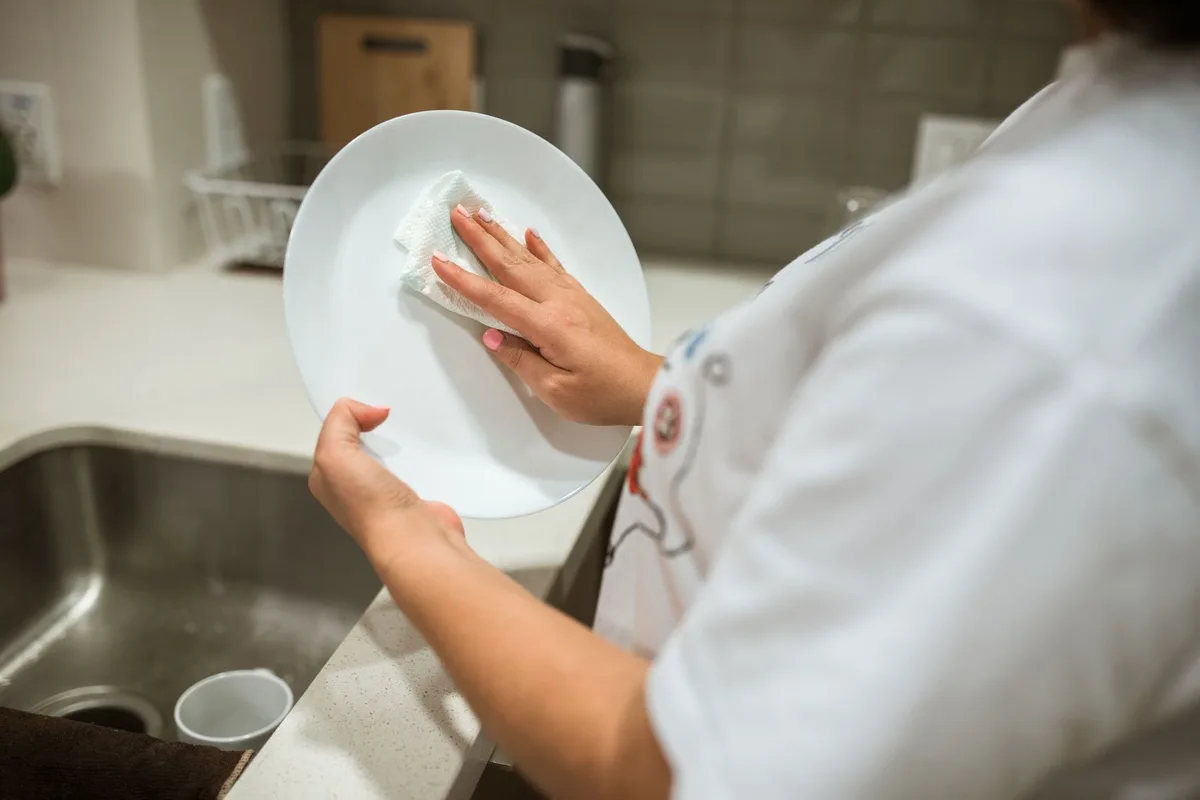
Image source: Pexels / RDNE Stock project (Pexels License)
You don’t need a cabinet full of specialty products. Most of what you need is already in your kitchen.
The essentials:
- Soft sponge or microfiber cloth, No abrasive pads. No steel wool. No Scotch-Brite green scrubbers. Those will scratch the coating. Use the soft side of a sponge or a dedicated nonstick-safe sponge.
- Mild dish soap, Dawn, Seventh Generation, or any gentle liquid soap. Avoid anything with citrus oils or bleach. Those can strip the nonstick layer.
- Baking soda, Your best friend for stubborn stains. It’s a mild abrasive that won’t damage the coating.
- White vinegar, Helps remove mineral deposits and water spots. Dilute with water.
- Soft-bristle brush, Optional, but useful for cleaning the grooved “Circular” pattern. Look for a nylon brush.
- Paper towels or a soft drying cloth, Circulon pans are prone to water spots. Drying them immediately prevents that.
What to avoid at all costs:
- Steel wool, scouring pads, abrasive powders.
- Bleach, ammonia, or oven cleaner.
- Dishwasher detergent (even if you run the pan through the dishwasher).
- Cooking sprays that contain lecithin, they can leave a sticky residue that’s hard to remove.
Step 1: Hand Wash Only
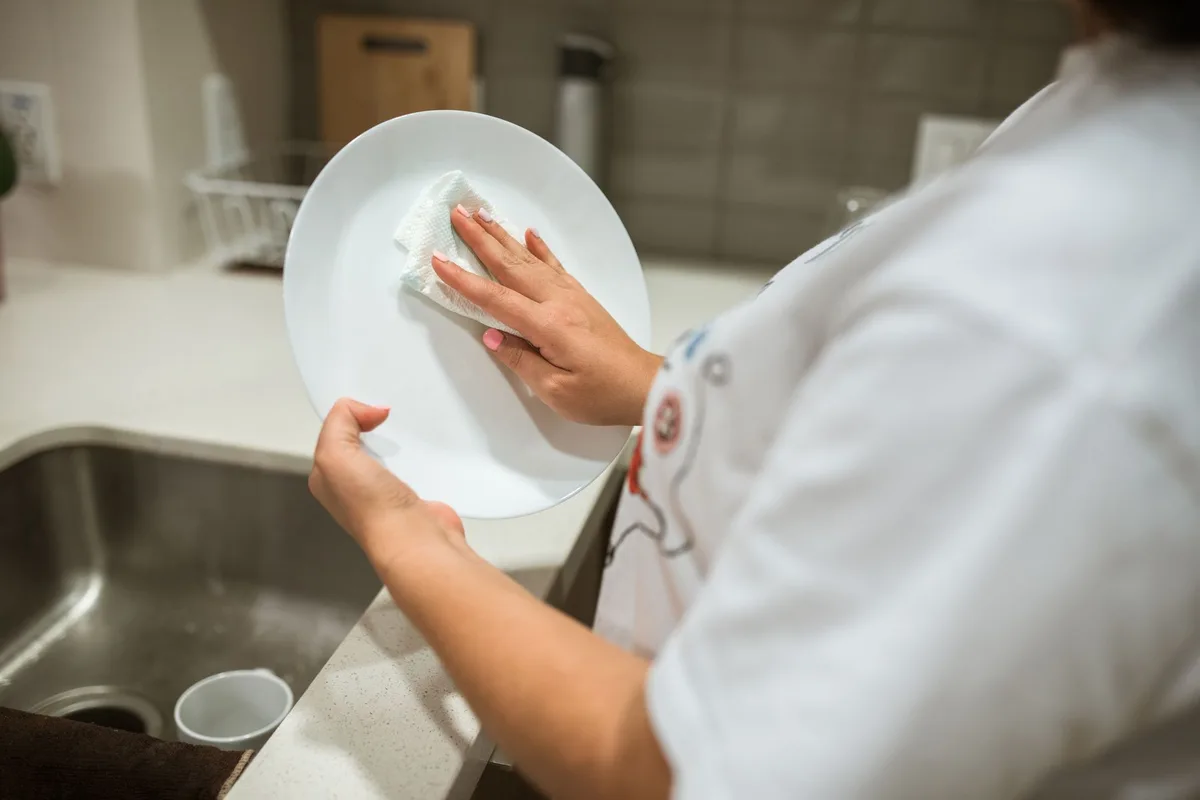
Image source: Pexels / RDNE Stock project (Pexels License)
This is the daily cleaning routine. Do this after every use.
Let the pan cool completely. Never plunge a hot Circulon pan into cold water. The rapid temperature change can warp the metal or crack the nonstick coating. Let it sit on the stovetop for 15, 20 minutes.
Or run a little warm water in the sink and wait until the pan is lukewarm.
Fill the sink with warm water. Add a few drops of mild dish soap. Don’t use boiling water. Hot tap water is fine.
Boiling water can damage the nonstick surface over time.
Soak the pan for 5, 10 minutes. This loosens food residue. For most meals, that’s enough. No scrubbing required.
Use a soft sponge. Gently wipe the interior and exterior. Pay attention to the rim and the handle. Grease and oil tend to collect there.
Rinse thoroughly. Soap residue can leave a dull film. Run the pan under warm water until it feels slippery-free.
Dry immediately. Use a soft cloth or paper towel. Don’t air dry. Air drying leaves water spots and mineral deposits.
That’s why some Circulon pans develop a white or cloudy film, it’s not damage, just hard water residue. Drying by hand prevents it.
That’s it. Two minutes of work. Your pan is clean and ready for the next meal.
Step 2: Tackle Stubborn Food Residue
Sometimes food sticks despite the nonstick coating. Burnt cheese. Caramelized sugars.
Fried eggs that went sideways.
Don’t panic. Don’t reach for the metal spatula.
Make a baking soda paste. Mix three parts baking soda with one part water. You want a thick, spreadable paste. Apply it to the stuck-on residue.
Let it sit for 15 minutes.
Gently scrub with a soft sponge. The baking soda acts as a mild abrasive. It’s strong enough to lift burnt food but gentle enough to protect the coating. Use circular motions.
Rinse and repeat if needed.
For really stubborn spots, boil water in the pan. Add ½ cup of water and ¼ cup of white vinegar. Bring it to a gentle simmer for 2, 3 minutes. The steam and acid loosen the residue.
Then remove from heat, let it cool, and scrub with the baking soda paste.
Avoid metal utensils. Even if you’re cleaning, don’t scrape with a metal spatula or knife. Use a wooden or silicone spatula to gently lift any stuck pieces.
What about burnt-on oil? If the pan has a brown, sticky film from overheated oil, use the same baking soda paste. Apply it, let it sit, then scrub. You may need to repeat the process twice.
Heat the pan gently with the paste on it, low heat, 2 minutes, then scrub. That works every time.
Step 3: Remove Discoloration (White or Cloudy Film)
Over time, Circulon pans can develop a white or cloudy film. This is usually hard water deposits or mineral buildup. It’s not harmful.
But it looks ugly.
Fix it with vinegar. Mix equal parts white vinegar and water. Pour it into the pan. Swirl it around.
Let it sit for 5, 10 minutes.
Wipe with a soft cloth. The vinegar dissolves the mineral deposits. Rinse thoroughly with warm water. Dry immediately.
For stubborn buildup, soak the pan in the vinegar solution. Fill the pan with the solution and let it sit for 30 minutes. Then scrub gently with a soft sponge.
Never use bleach. Bleach can react with the nonstick coating and cause peeling. If you’ve accidentally used bleach, rinse the pan immediately with plenty of water.
What about the exterior? The hard-anodized exterior can also develop a white film. Same fix. Wipe it down with vinegar solution.
For the black anodized finish, avoid abrasive scrubbing. The finish is tough, but it can scratch.
Step 4: Clean the Exterior
The outside of a Circulon pan gets dirty too. Oil splatters, fingerprints, and burnt-on grease. Many people ignore the exterior.
Don’t. It affects heat distribution and looks unprofessional.
Use the same gentle soap. Warm water and mild dish soap. Wipe the entire exterior, including the bottom and handle.
For grease buildup, use a degreasing dish soap. Dawn Ultra or similar. Apply directly to a soft sponge. Scrub the exterior in circular motions.
Avoid the dishwasher. The hard-anodized exterior can discolor in the dishwasher. It’s not going to ruin the pan, but it will look faded and blotchy.
For burnt-on stains on the bottom. If you’ve used high heat, the bottom may have brown or black marks. Use baking soda paste. Apply it, let it sit, then scrub with a soft brush.
For tough stains, you can use a non-abrasive cleaner like Bar Keepers Friend (the liquid version, not the powder). But test it on a small spot first.
Pro tip: Clean the exterior every time you wash the interior. It takes 30 seconds. It prevents buildup that requires heavy scrubbing later.
Step 5: Dry and Store Properly
Drying and storing seem trivial. They’re not.
Always dry immediately. Water spots are the enemy of a clean look. More importantly, moisture left on the pan can lead to oxidation or mineral deposits. Use a soft cloth.
Paper towels work too, but they can leave lint.
Stack pans with protection. If you stack your Circulon pans, place a paper towel or felt pad between them. The nonstick coating can get scratched by the bottom of another pan. Circulon sells silicone protectors, but a simple paper towel works.
Don’t hang them by the handle. The handle is riveted, and hanging can stress the joint over time. There’s no evidence it causes immediate damage, but why risk it? Store them flat or in a drawer with dividers.
Avoid high heat storage. Don’t store pans near the stovetop where they’ll be exposed to prolonged heat or steam. That can degrade the nonstick coating.
Use a lid organizer. If you have lids, store them separately. Don’t place them upside down on the pan. That traps moisture.
Common Mistakes to Avoid
I’ve made every mistake in this list. Learn from my errors.
Using cooking spray. Most cooking sprays contain lecithin, which creates a sticky residue that bonds to the nonstick surface. It’s nearly impossible to remove. Use a small amount of oil or butter instead.
Preheating on high heat. Circulon pans are designed for medium or medium-high heat. High heat damages the nonstick coating. It can also cause the pan to warp.
Always preheat on low or medium.
Using metal utensils. Even if you’re careful, metal utensils can scratch the coating. Use silicone, wood, or nylon. Yes, even the “nonstick-safe” metal utensils from some brands.
I’ve seen them scratch.
Storing food in the pan. Acidic foods like tomato sauce can react with the aluminum core over time. Don’t leave leftovers in the pan. Transfer to glass or plastic containers.
Using abrasive cleaners. Comet, Ajax, and other powdered cleansers are too harsh. They’ll scratch the coating. Stick to baking soda or mild soap.
Ignoring the manufacturer’s care guide. Circulon provides a detailed care and use manual. It’s available on their website. I recommend reading it.
Circulon’s official care instructions are the gold standard for this cookware.
How to Restore Nonstick Performance
If your Circulon pan has lost its nonstick ability, you might be tempted to replace it. But sometimes it’s just dirty.
Residue buildup is the culprit. Oil and food particles can build up over time, creating a thin layer that food sticks to. The pan isn’t broken. It’s just dirty.
Deep clean with baking soda and vinegar. Fill the pan with water. Add 2 tablespoons of baking soda. Bring to a boil.
Let it simmer for 5 minutes. Remove from heat. Add ¼ cup of white vinegar.
The fizzing action loosens residue. Then wash with soap and water.
Season the pan (yes, nonstick can be seasoned). Rub a very thin layer of vegetable oil onto the cooking surface. Wipe off the excess with a paper towel. Heat the pan on low for 2 minutes.
Let it cool. This fills microscopic pores in the coating and improves nonstick performance.
If the coating is visibly peeling or flaking, replace the pan. There’s no fixing that. Peeling nonstick coating can flake into your food. It’s not safe.
Don’t risk it.
Frequently Asked Questions
Can I use a dishwasher if I run the “quick wash” cycle?
No. Quick wash cycles still use high-pressure jets and harsh detergents. The temperature and chemicals are what damage the coating, not the cycle length.
Hand washes only.
Is it safe to use a chainmail scrubber on Circulon?
Absolutely not. Chainmail scrubbers are designed for cast iron. They will destroy the nonstick coating.
Don’t let one near your Circulon pans.
How often should I deep clean my pans?
Once a month, or whenever you notice sticking or discoloration, daily hand washing is enough for regular use.
Can I use a magic eraser on the exterior?
No. Magic erasers are made of melamine foam, which is a mild abrasive. It can dull the anodized finish.
Use a soft sponge.
What about the “Circulon” brand cleaner? Do I need it?
Circulon sells a cleaner specifically for their cookware. It works well, but it’s not necessary. Baking soda and vinegar do the same job for pennies.
Save your money.
My pan has a rainbow tint. Is that normal?
Yes. It’s called “iridescence.” It happens when the pan is overheated or washed with hard water. It’s cosmetic.
You can remove it with a vinegar soak.
Final Thoughts
Cleaning Circulon cookware isn’t hard. It just requires a little discipline. Hand wash, dry immediately, use soft tools, and avoid high heat.
That’s the formula.
I’ve been using the same Circulon set for eight years. The pans still look like new. They still release food without sticking.
The coating hasn’t peeled. The handles haven’t loosened. All because I follow these simple steps.
You don’t need expensive cleaners or special gadgets. You just need to be gentle. That’s the secret.
Now go clean your pans. They’ll thank you for years to come.