Image source: Pexels / Đậu Photograph (Pexels License)
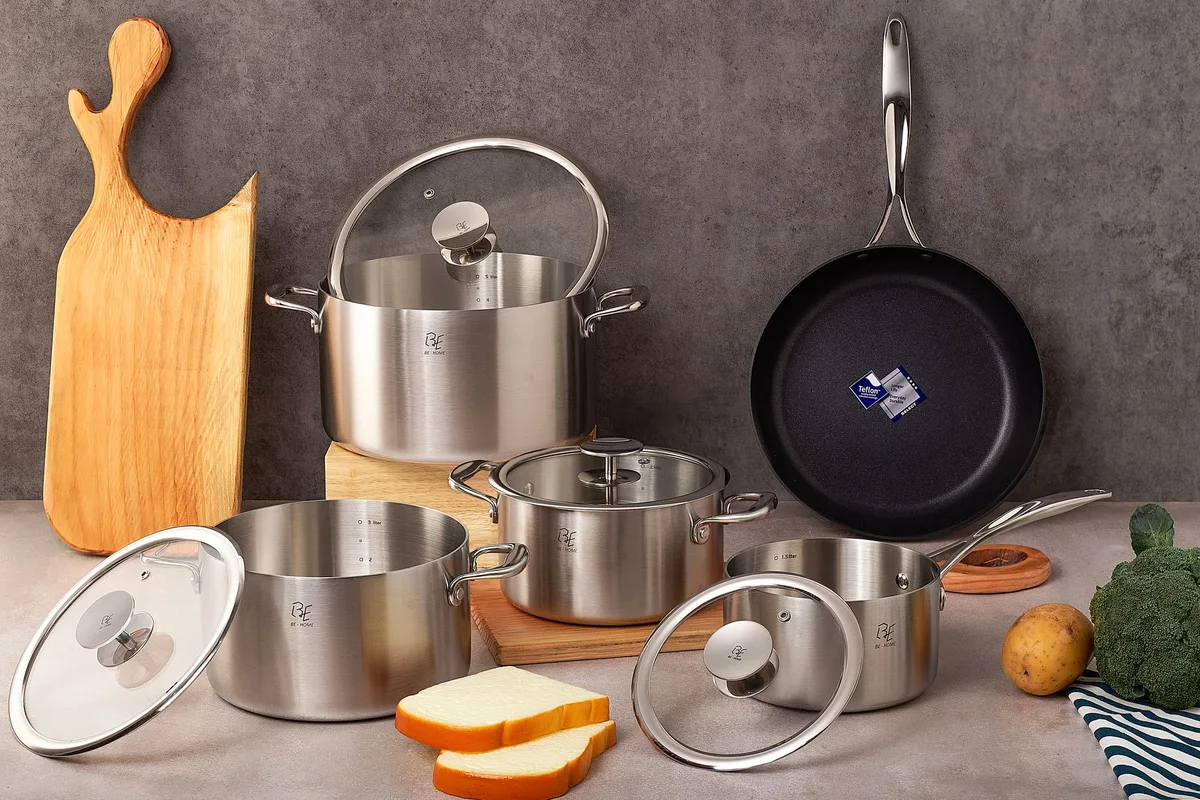
You’re staring at a wall of pots and pans. Stainless steel gleams next to nonstick black. Cast iron sits heavy on the shelf.
Prices range from forty bucks to four hundred. Where do you even start?
I’ve been writing about kitchen gear for over a decade. I’ve tested dozens of cookware sets across every price bracket. And I’ve learned one thing: the best set isn’t the most expensive.
It’s the one that matches your cooking style, your stove, and your patience for cleanup.
This guide walks you through every decision point. By the end, you’ll know exactly what to look for, what to skip, and which material fits your kitchen.
Material Matters: What’s Inside Your Cookware?
The material determines everything. Heat conductivity. Durability.
Weight. Even flavor. Let’s break down the four main options.
Stainless Steel
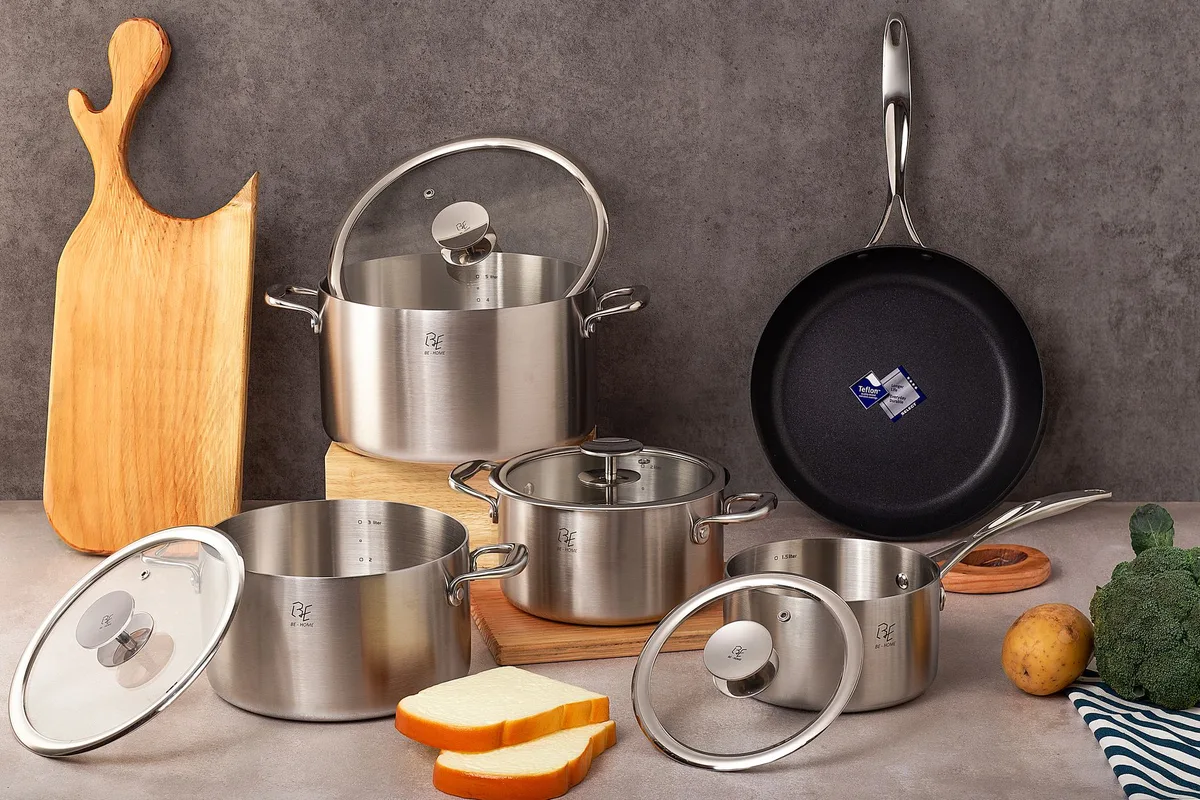
Image source: Pexels / Đậu Photograph (Pexels License)
Stainless steel is the workhorse. It doesn’t react with acidic foods. It won’t chip or rust.
It’s dishwasher-safe and nearly indestructible. But pure stainless steel is a poor heat conductor. That’s why quality sets use a multi-ply construction, usually aluminum or copper sandwiched between layers of steel.
Look for “tri-ply” or “clad” on the label. The best sets go to five or seven layers. More layers mean even heating with no hot spots.
Downsides? Food sticks if you don’t get the heat right. You need oil or fat.
And stainless steel requires a little technique. But once you learn to use it, you’ll never look back.
Nonstick (Coated)
Nonstick is the convenience king. Eggs slide off like magic. Cleanup takes seconds.
Perfect for low-fat cooking or anyone who hates scrubbing.
The coating is the weak point. Traditional PTFE (Teflon) can scratch and flake. Modern ceramic coatings are safer but don’t last as long.
Either way, you’re buying a replacement every few years.
Never heat a nonstick pan above medium heat. High temperatures can degrade the coating. And use wooden or silicone utensils, metal will destroy it.
Go nonstick if you cook delicate foods often. Skip it if you want a set that lasts a decade.
Cast Iron
Cast iron is a lifestyle choice. Heavy. Unbelievably heavy.
But it holds heat like a vault and seasons into a naturally nonstick surface.
You get incredible sear marks on steak. Even browning on cornbread. And it lasts forever, literally.
A hundred-year-old cast iron skillet works as well today as the day it was made.
The big trade-offs: weight and care. You can’t soak it in soap (well, you can, but don’t). You have to dry it immediately.
And it’s just plain heavy, wrist fatigue is real.
If you want one pan that does everything, get cast iron. But for a full set? Only if you’ve got the arm strength and the patience.
Carbon Steel
Carbon steel is the lighter cousin of cast iron. Same seasoning process. Same heat retention.
But thinner, so it heats faster and weighs less.
Professional chefs love carbon steel for woks and fry pans. It sears beautifully and develops a natural nonstick patina over time.
Downsides: it rusts if you look at it wrong. You need to season it regularly. And it reacts with acidic foods, no simmering tomato sauce for hours.
Good for specialty pieces. Not the best choice for a complete set unless you’re a dedicated enthusiast.
Key Features to Consider
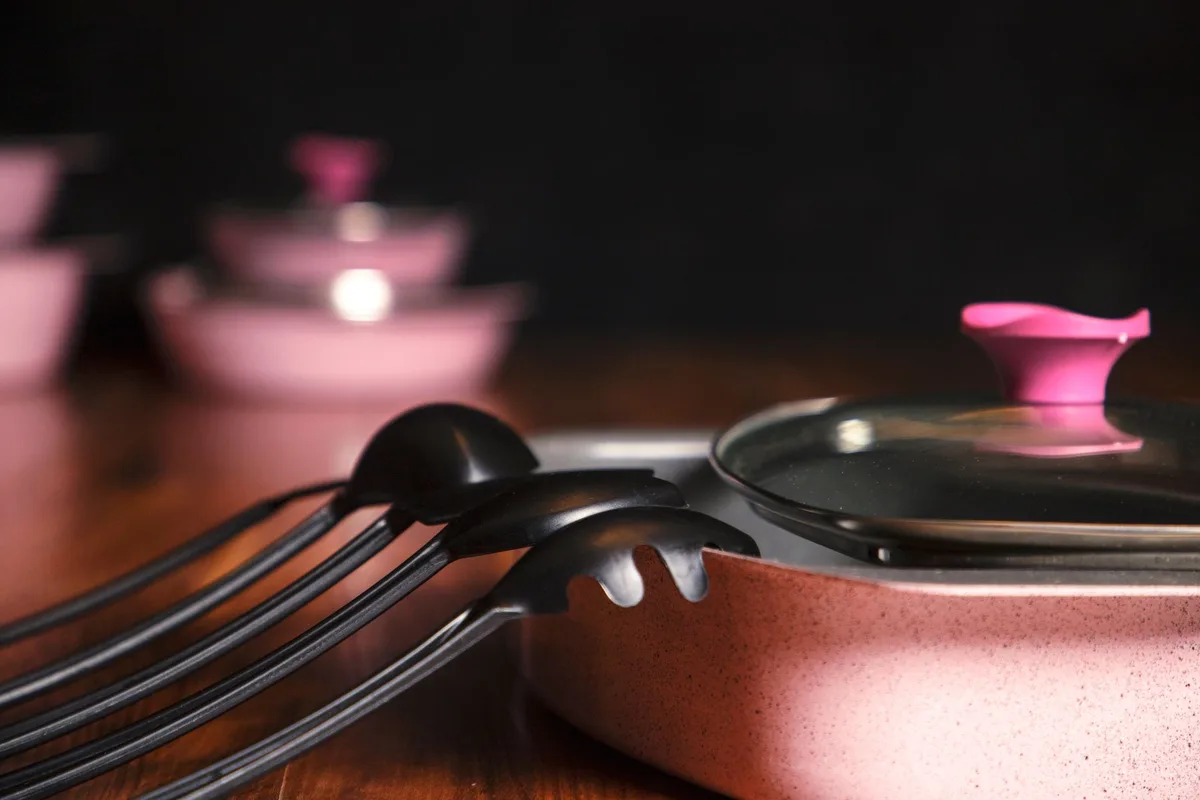
Image source: Pexels / Mohsen Naranjani (Pexels License)
Before you pick a material, check the features that separate cheap sets from quality ones.
Weight and Balance
A good pan feels solid but not backbreaking. Pick it up in the store. Does it feel heavy in your hand?
That can signal quality, but only if the weight comes from the aluminum or copper core, not a thick base that’s purely stainless steel.
Balance matters too. The handle shouldn’t make the pan tip forward when empty. Run your thumb along the rim, should be smooth, no sharp edges.
Handle Design
Handles are often an afterthought. They shouldn’t be.
Look for stainless steel handles riveted to the pan. They stay cool on the stovetop, most of the time. (Check the manufacturer’s heat limit.) Cast iron handles get hot, so you’ll always need a mitt.
Silicone-wrapped handles feel nice but can melt in the oven. Metal handles are oven-safe up to high temperatures, 500°F is common.
Also check the grip. Thin, slippery handles are a burn waiting to happen. Rounded, ergonomic shapes feel better.
Lid Fit
Lids should seal tightly. A loose lid lets steam escape, which means water evaporates and food dries out. Look for tempered glass lids with a steam vent, they let you watch cooking without lifting the lid.
Stainless steel lids are heavier and retain heat better, but you can’t see inside. Your call.
Oven Safety
Not all cookware can go in the oven. Nonstick pans often have a 350°F max. Stainless steel and cast iron can handle 500°F or more.
The lid matters too, glass lids usually cap at 400°F.
If you finish steaks in the oven or braise for hours, oven-safe pieces are non-negotiable.
Induction Compatibility
Induction cooktops require magnetic cookware. Stainless steel with a magnetic base works. Aluminum and copper don’t, unless they have a stainless steel bottom layer.
Check the product specs. Many manufacturers mark induction-compatible pieces with a symbol. If in doubt, hold a magnet to the bottom.
Cookware Sets vs. Individual Pieces: What’s the Right Mix?
Sets are convenient. One box, one price, done. But most sets come with pieces you don’t need and miss the ones you do.
Here’s the reality: a typical 10-piece set includes a 1-quart saucepan, a 2-quart saucepan, a 3-quart saucepan, a 5-quart Dutch oven, an 8-inch fry pan, a 10-inch fry pan, and lids. That’s five pieces that do the same thing, boiling water.
What you actually reach for:
- A 10-inch or 12-inch skillet (fry pan), for searing, sautéing, and one-pan meals.
- A 3-quart saucepan, for sauces, grains, and small batches of soup.
- A 5-to-7-quart Dutch oven or stockpot, for stews and pasta.
- A 2-quart saucepan if you cook for one or two.
That’s three or four pieces. You don’t need eight pans to make dinner.
If you decide to buy a set, look for one that includes those core pieces and skips the tiny 1-quart pot that only holds a single serving of oatmeal. Many high-end brands sell “starter” sets with exactly the pieces you need.
Stovetop Compatibility: Induction vs. Gas vs. Electric
Your stove dictates your choices more than you think.
Gas: Any cookware works. No restrictions. Just make sure the pan sits flat and doesn’t wobble on the grates.
Electric (coil or smooth top): Flat bottoms are critical. Warped pans can scratch glass surfaces. Cast iron works but can scratch if you slide it.
Be gentle.
Induction: Only magnetic cookware works. Stainless steel with a magnetic base. Cast iron.
Carbon steel. Aluminum and copper, unless they have a bonded magnetic bottom. Test with a magnet before buying.
Induction is becoming more common. If you ever plan to move or upgrade your stove, buy induction-compatible cookware. It future-proofs your set.
Maintenance and Longevity: How to Protect Your Investment
You have a cookware set. Now keep it alive.
Stainless Steel Care
Dishwasher-safe? Yes, but hand washing with mild soap extends the finish. Stubborn food residue?
Deglaze with water while the pan is hot, then scrub with a non-abrasive sponge.
Avoid steel wool. It leaves scratches that trap food.
Nonstick Care
Never high heat. Never metal utensils. Never stack pans without protectors between them.
The coating will delaminate eventually, expect 2, 5 years of regular use.
When it starts peeling, replace it. Ingesting flakes isn’t a proven health hazard for most modern coatings, but why risk it?
Cast Iron and Carbon Steel Care
No soap, or very little. Rinse with hot water and a stiff brush. Dry immediately on the stove.
Rub with a thin coat of oil after each cleaning.
Seasoning is not optional. It builds up over time and makes the surface nonstick. If you mess up and the pan rusts, you can scrub it off and reseason.
It’s fixable, but it’s work.
General Tips
- Let pans cool before running cold water. Thermal shock can warp the base.
- Use wooden, silicone, or heat-resistant nylon utensils.
- Store with paper towels or protectors between pans to avoid scratching.
Budget and Value: When to Spend, When to Save
You don’t need a $500 set to cook well. But you also don’t want a $50 set that warps after three uses.
Here’s how the price brackets break down.
Under $100: Usually thin stainless steel or flimsy nonstick. The aluminum core is thin, so heat distribution is uneven. Handles get hot.
Lids don’t seal well. You’ll replace them in two years.
$100, $250: The sweet spot for most home cooks. You get tri-ply stainless steel or decent nonstick sets. Brands like Tramontina and Cuisinart offer great value here.
These sets last 5, 10 years with care.
$250, $500: Premium tri-ply or five-ply sets with better ergonomics and heavier bases. All-Clad, Le Creuset, and Viking fall here. If you cook daily and want heirloom quality, this is the range.
$500+: Luxury brands, copper cores, or specialty materials. You’re paying for brand cachet and minor performance gains. Most home cooks won’t notice the difference.
My recommendation: Spend $150, $250 on a good tri-ply stainless steel set. Add one nonstick skillet for eggs. That covers 95% of your cooking.
Final Checklist: Your Cookware Buying Guide
I’ve thrown a lot at you. Here’s the cheat sheet.
- Choose a material. Stainless steel for versatility. Nonstick for convenience. Cast iron for durability and searing.
- Check features. Look for tri-ply construction, riveted metal handles, tight-fitting lids, and oven safety up to 500°F.
- Match your stove. Induction requires magnetic cookware. Gas is flexible.
- Buy the pieces you need. A 10-inch skillet, a 3-quart saucepan, and a 6-quart Dutch oven cover most recipes.
- Set a budget. $150, $250 gives you quality without overspending.
- Plan for maintenance. Nonstick won’t last forever. Stainless steel and cast iron will, with the right care.
Common Questions About Choosing Cookware Sets
Is a set cheaper than buying individual pieces?
Usually yes. Sets bundle pieces at a lower per-item cost. But you might pay for pieces you don’t use.
If you only need three pans, buying them individually from a good brand can be smarter.
Can I use metal utensils on stainless steel?
Yes. Stainless steel is scratch-resistant. Metal utensils won’t damage it.
Are ceramic nonstick coatings safer than Teflon?
Modern PTFE (Teflon) is safe under normal use. Ceramic coatings are free of PTFE and PFOA, but they don’t last as long. Neither is a health risk if used correctly.
How do I know if my pans are induction-compatible?
Hold a magnet to the bottom. If it sticks, it works. If it doesn’t, it won’t.
Should I avoid rivets on the inside of pots?
Rivets are fine. They’re a sign of quality, welded handles are cheaper but less durable. Just clean around them with a small brush.
The Bottom Line on Cookware Sets
Don’t overthink it. A good stainless steel tri-ply set handles almost everything. Add a nonstick skillet for eggs and a cast iron pan for steaks, and you’ve got a setup that rivals most professional kitchens.
Focus on build quality first. Material second. Pieces third.
The rest is marketing noise.
For more on cookware safety standards, the NSF International maintains a public database of certified cookware materials at nsf.org. And the FDA’s guidance on food contact substances can be found at fda.gov. Both are solid resources if you want to dig deeper into what’s actually in your pans.
Now go find that set. Your kitchen deserves it.