Picture this: you’re staring at two boxes on the counter, both unopened, both promising to make your life easier. One’s a blender. The other’s a food processor.
And now you’re wondering whether you actually need both, or whether one of them is about to become an expensive paperweight.
Here’s the truth. These two machines overlap more than most people think, but they’re built for fundamentally different jobs. Pick the wrong one and you’ll find yourself scraping chunky soup off the blender lid every Sunday.
Pick the right one and your weeknight cooking gets noticeably faster. I’ve been writing about kitchen gear for years, and the blender-vs-food-processor question comes up constantly, so let’s walk through it properly.
By the end of this guide, you’ll know exactly which machine fits the way you actually cook. We’ll cover what each one does, where they shine, where they fail, and how to decide without buying both.
What Is a Blender and How Does It Work?
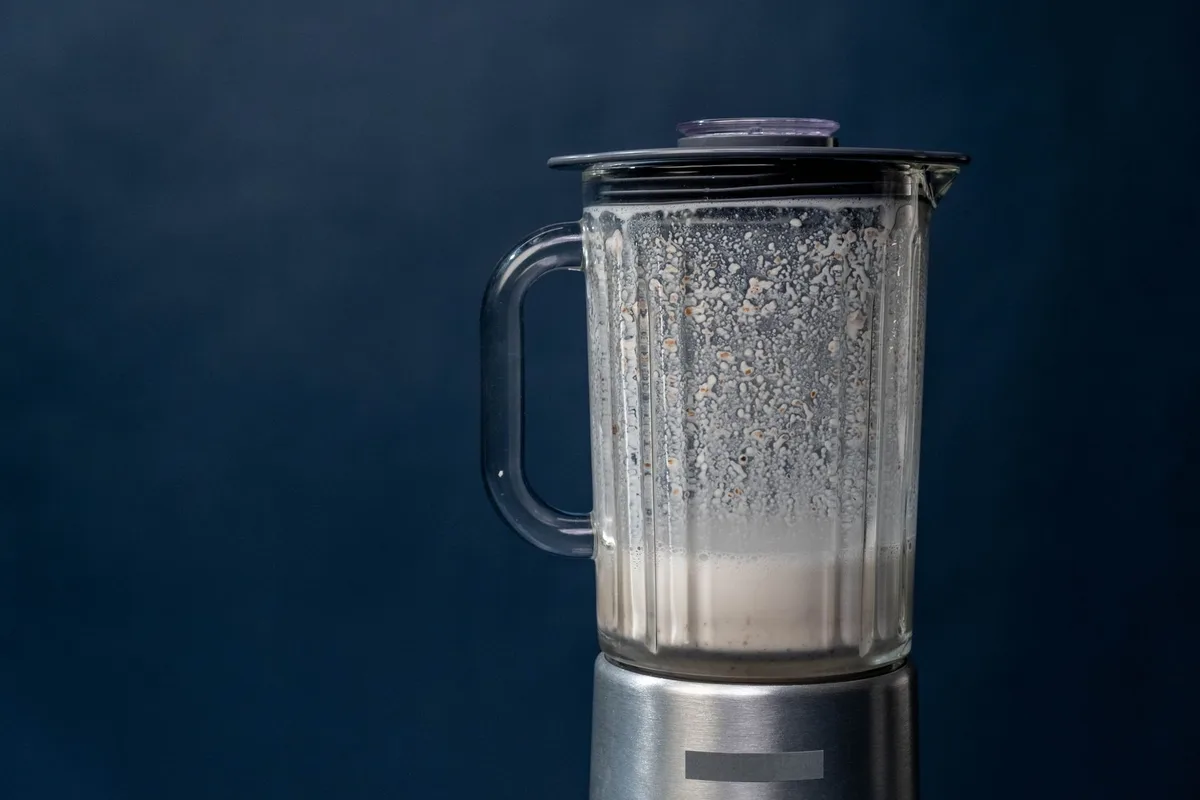
A blender is a high-speed liquid specialist. At its core, it’s a motorized base that spins a set of blades at the bottom of a tall, narrow jar. The jar has a vented lid, and the blades, typically four, angled sharply, create a vortex that pulls ingredients downward into the cutting zone.
That vortex is the whole secret. Liquids and soft ingredients get pulled into the blade path over and over. Hard items like ice cubes or frozen fruit get pulverized fast.
The result is a smooth, uniform liquid, smoothies, puréed soups, milkshakes, salad dressings, and cocktail mixes.
Modern blenders run anywhere from about 500 watts (entry-level) to over 1,500 watts (high-performance). More watts generally mean faster, smoother blending and the ability to handle tough jobs like crushing ice or processing fibrous greens.
What blenders do well
- Smoothies and shakes. This is the textbook job. Bananas, berries, yogurt, ice, done in 30 seconds.
- Purées and soups. Cooked vegetables blend into silky soup with no chunks.
- Crushing ice. A decent blender turns a tray of cubes into snow in seconds.
- Nut milks. Soaked almonds become smooth almond milk with minimal grit.
- Pancake batter, waffle batter, vinaigrettes. Anything that needs to be lump-free.
- Frozen drinks. Margaritas, daiquiris, frappé coffee.
Where blenders struggle
- Chopping vegetables. Without enough liquid, the blades just spin in place, leaving a pile of uneven chunks at the bottom.
- Slicing or shredding. A blender can’t slice a cucumber or shred cheese. Period.
- Making dough. Heavy doughs are too thick to circulate.
- Small jobs. The tall jar means you can’t efficiently chop a single clove of garlic.
If your meals revolve around liquids, purées, and frozen drinks, the blender is your workhorse.
What Is a Food Processor and How Does It Work?
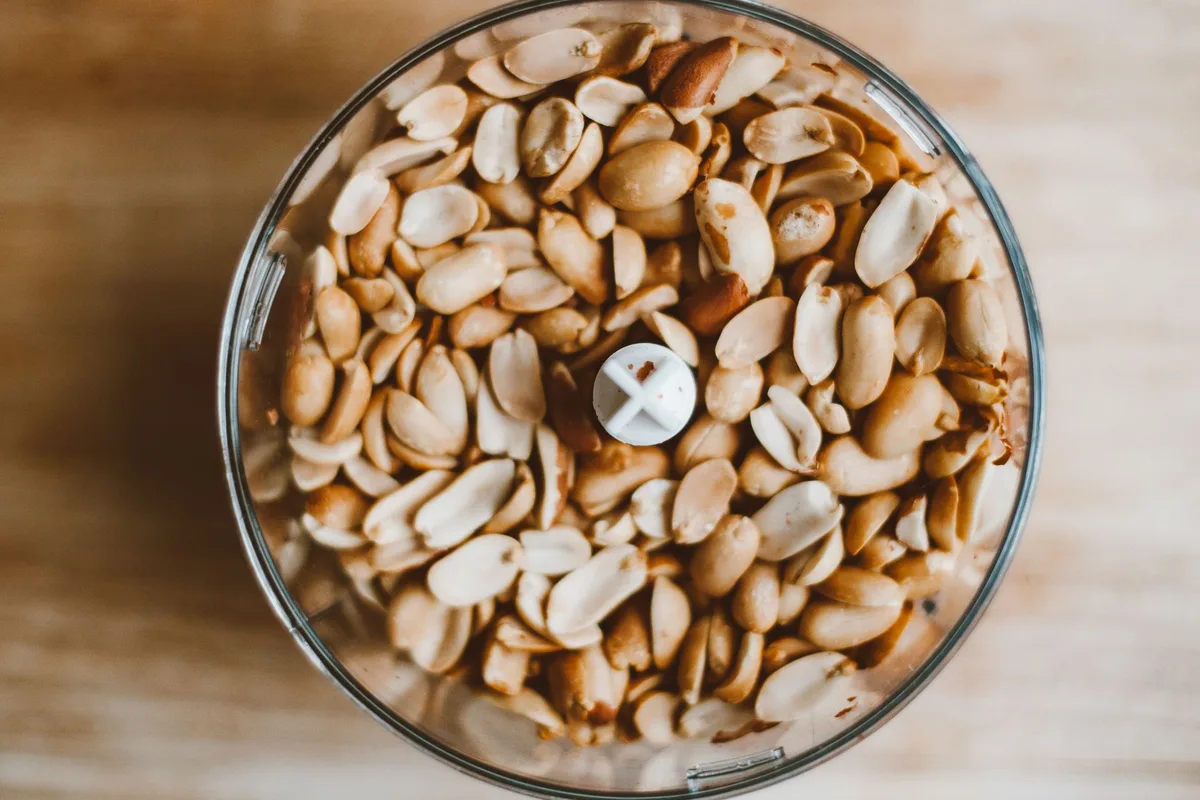
A food processor is a chopping, slicing, and mixing machine. The motor sits in a base, with a wide, shallow bowl on top and a horizontal blade (or disc) that spins across the bottom of the bowl.
Unlike a blender, a food processor uses a wide feed tube at the top. You push food through the tube onto a spinning disc, or you let the S-blade chop directly in the bowl. The wide bowl means food sits in a flat layer where the blade can reach everything evenly.
Most food processors come with multiple attachments: an S-blade for chopping and mixing, a slicing disc, a shredding disc, and sometimes a dough blade or a whisk. Power ranges from about 250 watts for small models to 1,200 watts for full-size machines.
What food processors do well
- Chopping vegetables. Onions, celery, carrots, uniformly chopped in seconds.
- Slicing and shredding. A disc attachment turns a pile of potatoes into perfect gratin slices.
- Making dough. Pizza dough, pie crust, biscuit dough, kneaded in under a minute.
- Grinding meat. Fresh burgers, sausage, meatballs.
- Pesto, hummus, salsa, tapenade. Thick mixtures that would clog a blender.
- Nut butters. The slow, steady grind produces smooth almond or peanut butter.
Where food processors struggle
- Smoothies. They can do it, but you’ll get a chunkier result with more air whipped in.
- Very small quantities. A single garlic clove gets lost in a full-size bowl.
- Hot liquids. Steam builds up under the lid and can blow it off, risky and messy.
- Crushing ice. Some models handle it; most don’t. The blades aren’t designed for that impact.
If your meals revolve around chopping, slicing, and preparing multiple ingredients at once, the food processor is your workhorse.
Blender vs Food Processor: The Core Differences
Let’s put them side by side. The differences fall into a handful of categories that matter most when you’re choosing.
Blade design and motion
A blender has vertical blades at the bottom of a tall jar. They pull ingredients down into a vortex. A food processor has a horizontal blade or disc that sweeps across a wide bowl.
The motion is fundamentally different, and that’s why each excels at different jobs.
Jar shape
Blenders have tall, narrow jars, ideal for liquids and vortex creation. Food processors have wide, shallow bowls, ideal for catching chopped food and exposing it to the blade.
What they handle best
Blenders = liquids, purées, frozen ingredients. Food processors = solids, chopping, slicing, dough.
Quantity
Blenders usually max out at 40, 64 oz, but they work best filled at least a third full to maintain the vortex. Food processors range from 3-cup mini models to 14-cup full-size, and they handle both small and large batches more evenly.
Noise and power
High-powered blenders tend to be loud, some over 90 dB. Food processors are usually quieter because they spin slower and process softer solids.
Which Jobs Overlap (and Which Don’t)
Here’s where buyers get confused. Both machines can technically:
- Purée cooked vegetables
- Make pesto or hummus
- Crush ice (in some cases)
- Grind nuts
But the quality of the result differs sharply. A blender will give you smoother hummus but run hot from friction. A food processor gives you chunkier hummus in half the time but won’t get it perfectly smooth.
The cleanest way to think about it: if the recipe ends in “-ée” (purée, smoothie, shake, milk, juice), reach for the blender. If it ends in “chopped,” “sliced,” “shredded,” “ground,” or “dough,” reach for the food processor.
How to Decide Based on How You Actually Cook
Forget specs for a minute. Let’s talk about your kitchen habits, because that’s what determines the right answer.
Choose a blender if you…
- Make smoothies or protein shakes daily
- Love cold soups like gazpacho
- Host cocktail nights and need crushed ice fast
- Drink nut milks or fresh juices
- Blend hot soups after cooking
- Have a small kitchen and want a single multi-purpose machine for liquid-based tasks
Choose a food processor if you…
- Cook dinner from scratch most nights
- Chop onions, carrots, and celery constantly (the “mirepoix” crowd)
- Bake bread, pizza, or pastry regularly
- Make large-batch sauces, pestos, or dips
- Slice or shred vegetables for gratins, slaws, or stir-fries
- Grind your own meat for burgers or sausages
- Hate using a knife for repetitive chopping
Choose both if you…
- Cook seriously and often, both machines earn their space
- Make everything from scratch, including smoothies and dough
- Have the counter space and budget
Honestly, if you can afford it, owning both is the gold standard. They don’t replace each other; they complement each other. A serious home cook will use a blender three or four times a week and a food processor almost daily.
Mini Food Processors and Personal Blenders: A Compromise
What if you don’t have the room or budget for two full-size machines? The market has answered with smaller, single-purpose alternatives.
Mini choppers (3, 5 cup bowls) handle garlic, herbs, small onion jobs, baby food, and small batches of pesto. They’re cheap, take up minimal space, and handle the one or two tasks a food processor covers for most people.
Personal blenders (single-serve cups) are built for smoothies and protein shakes. You blend right in the to-go cup, twist on a lid, and walk out the door.
If I had to pick just one compromise appliance for someone who cooks moderate amounts, I’d lean toward a mini chopper over a personal blender, because chopping onions by hand is the task that wastes the most time, while smoothies can be made in a regular jar with a fork if you’re patient.
Features That Actually Matter When Buying
Spec sheets are exhausting. Let’s cut through the noise. Here are the features that genuinely affect performance.
For blenders
- Wattage. Below 600W is weak. Aim for 800W+ for ice and frozen fruit.
- Blade quality. Look for stainless steel, forged if possible. Stamped blades dull fast.
- Jar material. Glass is heavier and resists scratching but can shatter. Tritan plastic is lighter and shatterproof.
- Tamper. High-end blenders include a tamper to push ingredients into the blade. This matters for thick blends like nut butter.
- Speed settings. Variable speeds give you more control than just “low/high.”
For food processors
- Bowl size. 7, 9 cups is the sweet spot for most households. Smaller than 5 cups is too restrictive; larger than 12 is overkill.
- Feed tube width. A wide feed tube saves you from pre-cutting everything.
- Included discs. Slicing and shredding discs are standard; some models include a julienne disc or a dough blade.
- Dishwasher-safe parts. Look for this. Hand-washing blade assemblies gets old fast.
- Storage. Most discs and blades need to be stored somewhere. Check if a case or box is included.
For more on safe food handling and kitchen equipment standards, the U.S. Food and Drug Administration provides guidance on materials that come into contact with food, which matters when any blade or bowl touches what you eat.
Common Mistakes Buyers Make
I’ve watched people return these machines for the same reasons, over and over. Avoid these mistakes.
- Buying a cheap blender and expecting it to crush ice. It won’t. Cheap motors overheat or stall. If ice crushing matters, spend the money.
- Buying a tiny food processor to “save space.” A 3-cup bowl can’t handle a whole onion, let alone a meal-prep batch. You’ll outgrow it in a month.
- Choosing wattage over blade design. A 1,200W motor with a poor blade will underperform a 600W motor with a great one.
- Ignoring the lid seal. Cheap lids leak. A good rubber gasket makes a measurable difference.
- Skipping the warranty. Blenders and food processors both have mechanical parts that fail. A 5+ year warranty is worth something.
When a Simple Tool Beats Either Machine
Sometimes the best answer isn’t a machine at all. A sharp chef’s knife and a cutting board still beat both appliances for many tasks. If you’re cooking for one or two people and only need a handful of chopped onions a week, you may not need either gadget.
The right time to invest in either appliance is when you find yourself doing the same repetitive task over and over, chopping, slicing, blending, and wishing you had help. That’s when a machine pays for itself.
Frequently Asked Questions
Can a food processor replace a blender?
For most liquid tasks, no. A food processor makes chunkier smoothies, struggles with ice, and can be dangerous with hot liquids. It can purée cooked vegetables decently, but the texture won’t be as silky as a blender’s.
Can a blender replace a food processor?
For chopping, slicing, and dough, no. A blender can’t slice a cucumber or shred cheese without the right attachments. Some high-end blenders come with a “food processor” bowl accessory, and those work reasonably well for chopping, but they’re not a true substitute.
Which is easier to clean?
Both have removable parts that are usually dishwasher-safe. Food processors win slightly because their bowls are wider and easier to wipe out. Blender jars, especially the narrow bases around the blade, can be annoying to scrub by hand.
Which lasts longer?
Both should last 5, 10 years with normal use. Blenders tend to fail when the motor burns out or the blade assembly cracks. Food processors fail when the drive shaft weakens or a plastic gear strips.
Higher-end models from reputable brands tend to outlast budget options regardless of type.
Is an immersion blender a good middle ground?
For purées and soups, yes, an immersion blender is a fantastic tool and far cheaper than a countertop blender. But it can’t chop vegetables or make smoothies well. It’s a complement to a food processor, not a replacement for either.
The Bottom Line
So, blender or food processor? It comes down to one question: what do you cook most often?
If your kitchen revolves around smoothies, soups, and sauces, the blender is your priority. Get one with at least 800 watts, a sturdy jar, and a tamper if you can.
If your kitchen revolves around chopping, slicing, and baking, the food processor is your priority. Get one with a 7, 9 cup bowl, a sharp S-blade, and at least one slicing disc.
And if you cook seriously and want to enjoy the process more, get both. They each do a few jobs well, and together they cover almost every prep task in the kitchen.
The worst outcome isn’t picking the wrong machine, it’s buying one of them, hating it, and never cooking from scratch again. Pick the machine that matches your actual habits. That’s the one that’ll earn its space on your counter.