I’ve cooked hundreds of stir fries in my time, and I’ll tell you straight up: a Teflon pan makes it dead simple. No sticking, no wrestling with a wok, and cleanup takes about thirty seconds. But you need to know a few tricks.
Nonstick coating isn’t invincible, and beef stir fry is a high-heat, fast-moving dish. Get the technique right, and you’ll have tender, juicy strips of beef with crisp vegetables every single time. Let me walk you through exactly how to do it.
Image source: Pexels / Sternsteiger Stahlwaren (Pexels License)
Why a Teflon Pan Works for Beef Stir Fry
A Teflon pan (or any PTFE-coated nonstick pan) is actually ideal for stir fry, if you respect its limits. Traditional carbon steel woks need high heat and constant oiling. Teflon doesn’t.
The coating provides a slick surface that lets you sear beef without it grabbing and tearing. That means you can use less oil, get a cleaner sear, and avoid the burnt-on residue that ruins a regular pan.
The downside? Nonstick coatings can’t handle extreme temperatures. Most Teflon pans are safe up to around 500°F (260°C).
That’s plenty for stir fry, but you can’t blast the burner on high and walk away. You need to control the heat. Do that, and your Teflon pan will last years and produce consistently good stir fries.
Ingredients and Prep for Beef Stir Fry in a Teflon Pan
You don’t need much. The key is preparation. Stir fry is fast, once the heat is on, you won’t have time to chop.
What You’ll Need
- Beef: Flank steak, sirloin, or ribeye. Slice it thin, against the grain. About 8, 12 ounces (225, 340g) for two servings.
- Vegetables: Bell peppers, broccoli, snap peas, carrots, onions, whatever you like. Cut them into uniform bite-sized pieces.
- Aromatics: Garlic, ginger, green onions.
- Sauce: Soy sauce, oyster sauce (or hoisin), a splash of rice vinegar, a little sugar or honey, cornstarch slurry to thicken.
- Oil: A high smoke point oil like avocado, peanut, or canola. Don’t use olive oil, it smokes too low.
- Optional: Sesame oil for finishing, chili flakes for heat.
Prep Steps
- Slice the beef when it’s partially frozen. That makes thin, even strips easy. Pat them dry with paper towels. Season with a pinch of salt and a tiny bit of cornstarch to help browning.
- Mix the sauce in a small bowl. Combine 2 tablespoons soy sauce, 1 tablespoon oyster sauce, 1 teaspoon rice vinegar, 1 teaspoon sugar, and ½ cup water or broth. Stir in 1 teaspoon cornstarch until dissolved.
- Cut vegetables, keep them similar in size so they cook evenly. Softer veggies like bell pepper can go in later; harder ones like broccoli need a head start.
- Prep aromatics, mince garlic and ginger, slice green onions.
Step-by-Step: How to Cook Beef Stir Fry in a Teflon Pan
Here’s the sequence that works every time. Follow it closely.
Step 1: Heat the Pan
Place your Teflon pan over medium-high heat. Let it warm up for about 30 seconds. Add 1 tablespoon of oil, swirl it around.
The oil should shimmer but not smoke. If it smokes, the pan is too hot. Lower the heat immediately.
Step 2: Sear the Beef
Add the beef strips in a single layer. Don’t crowd the pan, work in batches if needed. Let them sear undisturbed for 1, 2 minutes.
Then flip and cook another 30, 60 seconds. The beef should be browned on the outside, still pink inside. Remove it to a plate.
Don’t overcook it now; it will finish cooking later.
Step 3: Cook the Aromatics
Lower the heat to medium. Add a tiny bit more oil if needed. Toss in the garlic and ginger.
Stir for 15, 20 seconds until fragrant. Don’t let them burn, burnt garlic ruins the dish.
Step 4: Cook the Vegetables
Add the hard vegetables first (broccoli, carrots). Stir fry for 2, 3 minutes. Then add the softer ones (bell peppers, snap peas).
Cook another 1, 2 minutes. You want them crisp-tender, not mushy.
Step 5: Combine Everything
Return the beef to the pan. Pour the sauce over everything. Stir well.
The sauce will bubble and thicken quickly. Let it cook for about 30 seconds until it coats the beef and vegetables.
Step 6: Finish and Serve
Drizzle a little sesame oil on top if you like. Toss once more. Serve immediately over rice or noodles.
The entire cooking process from start to finish should take about 8, 10 minutes.
How Nonstick Coating Works
Image source: Pexels / Multitech Institute (Pexels License)
Understanding your pan helps you use it better. Modern Teflon pans use a coating of polytetrafluoroethylene (PTFE), the same stuff that gives you that slick surface. PTFE is a stable polymer.
It’s non-reactive, so it won’t leach into your food during normal use. The coating is applied in multiple layers, bonded to the pan’s metal base.
The magic happens at the molecular level. PTFE has a very low coefficient of friction. Food particles can’t grab onto the surface.
That’s why you can cook with minimal oil and scrape off burnt bits easily.
But the coating is soft. Metal utensils, abrasive scrubbers, and high heat can damage it. Once scratched, the nonstick property degrades.
Bits of the coating can flake off into food. While ingesting small PTFE flakes is generally considered harmless (they pass through the body), it’s not ideal. So always use wooden, silicone, or plastic utensils.
PFOA (perfluorooctanoic acid) was historically used in the manufacturing process. Since 2013, major manufacturers have phased it out. All Teflon pans sold today are PFOA-free.
The USDA and FDA have confirmed that PTFE coatings are safe for cooking when used properly.
Tips for Best Results with Teflon
- Don’t preheat empty. Never heat an empty Teflon pan. It can rapidly exceed the coating’s safe temperature and release fumes. Always add oil or food before it gets hot.
- Medium heat is your friend. High heat shortens the life of the coating. For stir fry, medium-high is fine as long as you don’t let it smoke. If you see smoke, turn it down.
- Use a little oil. Even though it’s nonstick, a thin layer of oil improves heat transfer and helps browning. Don’t use cooking spray, it leaves a sticky residue that builds up over time.
- Don’t soak the pan. Let it cool, then wash with a soft sponge and mild detergent. Avoid the dishwasher, the high heat and harsh detergents degrade the coating.
- Season the pan occasionally. Some cooks lightly rub a drop of oil into the cooled pan after washing. It helps maintain the nonstick surface.
When to Replace a Nonstick Pan
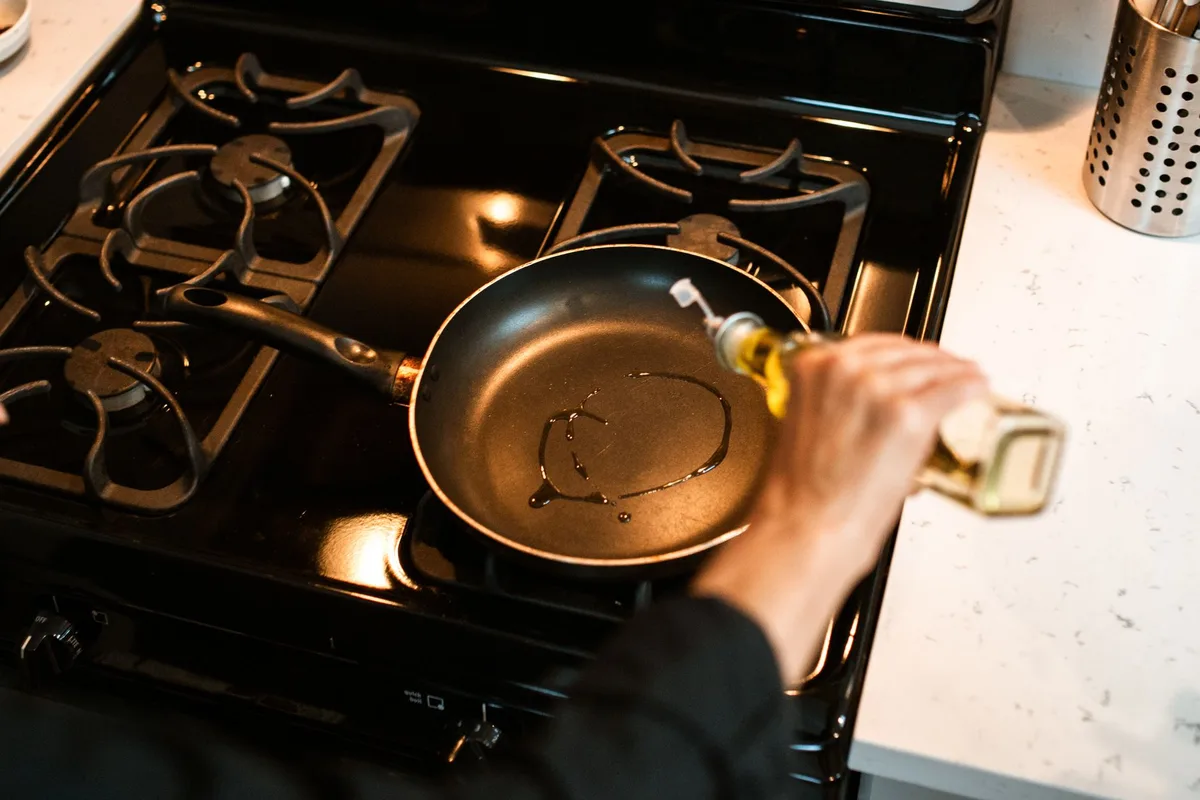
Image source: Pexels / RDNE Stock project (Pexels License)
No pan lasts forever. A Teflon pan typically gives you 2, 5 years of regular use. Here are signs it’s time to replace:
- Visible scratches or flaking. If the coating is peeling, bits can get into your food. Time to retire it.
- Food starts sticking. If you need more oil every time, the coating is wearing thin.
- Discoloration or warping. Dark stains or a warped bottom mean the pan has been overheated.
- Metallic or chemical smell. That’s the coating breaking down. Stop using it immediately.
When you buy a new one, look for a reputable brand. Prices vary, but a mid-range pan (around $30, 60) offers good balance of durability and performance. Avoid ultra-cheap pans, they often have thin coatings that wear out fast.
Cleaning and Care for Your Teflon Pan
Proper care extends the life of your pan. After cooking stir fry, let the pan cool down naturally. Don’t run cold water into a hot pan, that can warp the metal and damage the coating.
Wash with a soft sponge or nylon scrubber. Use warm water and mild dish soap. For stubborn stuck-on bits, soak the pan for 10 minutes in warm soapy water, then wipe clean.
Never use steel wool or abrasive cleaners.
Dry the pan immediately with a soft cloth. Store it with a paper towel or cloth liner inside to prevent scratches from other pans stacking on top. If you have a gas stove, make sure the burner flame doesn’t extend up the sides of the pan, that can damage the coating on the sides.
Common Mistakes to Avoid
- Overcrowding the pan. Too much food drops the temperature, causing steaming instead of searing. Cook in batches.
- Using metal utensils. They scratch the coating. Stick to wood, silicone, or plastic.
- Cooking on high heat. It’s tempting, but it destroys the coating. Stir fry doesn’t need volcanic heat, just good control.
- Skipping the prep. Mise en place is everything. Have everything chopped and sauces mixed before you turn on the heat.
- Adding sauce too early. The sauce can burn if it sits too long. Add it only at the end.
Why This Method Works Better Than a Wok
I love a wok. But a Teflon pan is more forgiving for home cooks. A wok needs high heat and constant tossing.
Most home stoves can’t generate enough heat for proper wok hei. A Teflon pan holds heat evenly and lets you get a good sear without the fire hazard. Plus, cleanup is a breeze.
You don’t need to season a Teflon pan. You don’t need to worry about rust. It’s the lazy cook’s best friend, and I mean that as a compliment.
The Bottom Line
Making beef stir fry in a Teflon pan is fast, easy, and produces great results. The key is controlling heat, prepping ingredients, and using the right technique. Avoid high heat, metal utensils, and abrasive cleaners.
Your pan will last years, and you’ll have a go-to weeknight dinner that tastes like takeout but costs half as much.
For more information on safe cooking temperatures for beef, check the USDA Food Safety and Inspection Service guidelines. And for details on nonstick cookware safety, the FDA has a factsheet on PTFE coatings. Both are reliable sources.
Now go fire up that pan. Your stir fry is waiting.