You’ve decided to make stir fry at home. Maybe you’re chasing that smoky wok hei from your favorite takeout spot. Or maybe you just want a quick weeknight dinner that doesn’t leave you with a mountain of dishes.
Either way, the pan you pick makes or breaks the dish.
I’ve tested dozens of pans over the years, carbon steel, cast iron, nonstick, stainless steel, even a few that claimed to be “wok-like” but were really just deep skillets. Most of the advice online is either too vague (“buy a wok!”) or too technical (“get a 14-gauge carbon steel wok with a flat bottom…”). Let’s cut through the noise.
Here’s exactly how to choose a stir fry pan, what matters, what doesn’t, and which material will actually work with your stove and your cooking style.
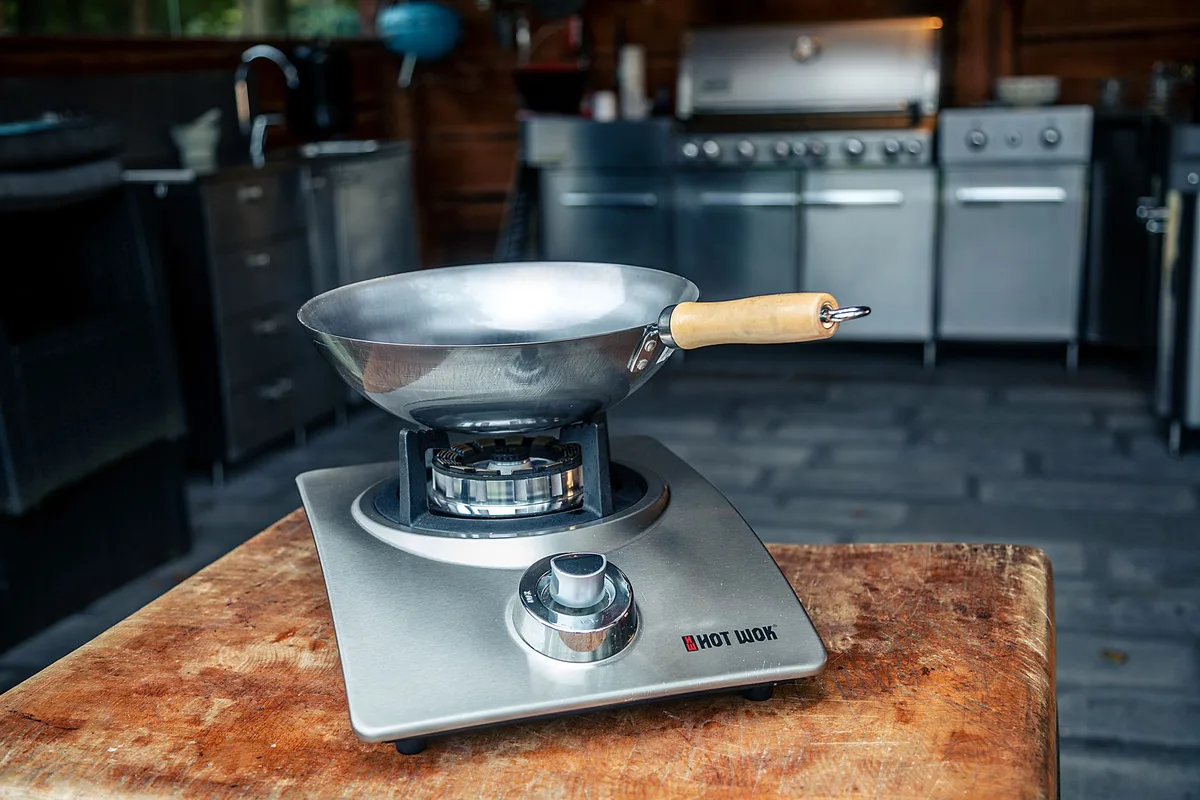
Why the Right Pan Changes Everything
Stir frying is fast. High heat, constant motion, ingredients hitting the pan in a specific order. The pan is the engine.
If it doesn’t heat evenly, you get cold spots. If it’s too heavy, you can’t toss. If the surface is wrong, your protein sticks and your sauce burns.
So we’re not just picking a pan. We’re picking the right tool for the heat source, the flavor profile, and the cook.
What Makes a Stir Fry Pan Different from a Regular Skillet
A stir fry pan is designed for one thing: rapid, high-heat cooking with constant stirring. That means:
- High, sloping sides, lets you toss ingredients without flinging them across the kitchen.
- Wide cooking surface, gives you plenty of room for even browning, not steaming.
- Thin enough to heat fast, thick enough to hold heat, a balancing act that varies by material.
- Lightweight, you’ll be flipping and tossing, so heavy cast iron can be a workout.
A regular skillet has short, straight sides. It’s fine for searing a steak. But for stir fry, you’ll lose food when you try to toss, and the shallow sides trap steam.
Bad for wok hei.
So yes, a proper stir fry pan matters. But the shape is only half the story.
The Three Main Types of Stir Fry Pans
You have three real choices. Each has strengths and weaknesses. Let’s break them down.
1. Carbon Steel Wok (The Gold Standard)
This is the traditional choice. A carbon steel wok is thin, lightweight, and heats up in seconds. It develops a natural nonstick patina over time, like a cast iron skillet, but lighter.
Pros:
- Excellent heat conductivity, gets screaming hot fast.
- Light enough to toss with one hand.
- Seasonable, the patina gets better with use.
- Affordable, good ones start around $30, $50.
- Works on gas, electric, and induction (if flat-bottomed).
Cons:
- Requires seasoning and maintenance (no soap scrubbing).
- Can rust if not dried properly.
- Handle gets hot, need a glove or towel.
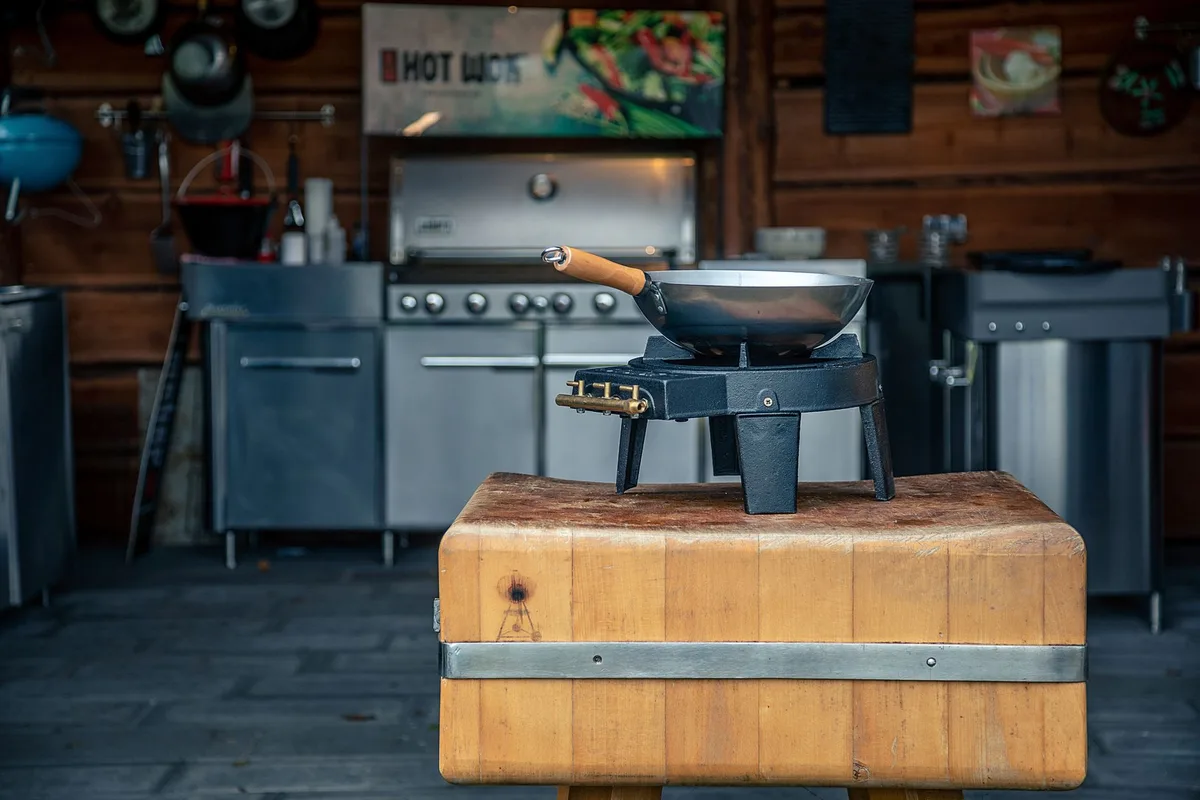
- Round-bottom woks need a wok ring for Western stoves.
Best for: Anyone who cooks stir fry often and wants authentic results. You’ll get the best flavor and the most control.
2. Nonstick Stir Fry Pan (The Convenience Pick)
A nonstick pan with sloped sides. Usually aluminum with a coating like Teflon or ceramic. Easy to clean, no seasoning needed.
Pros:
- Food slides right off.
- Minimal oil required.
- Dishwasher safe (most).
- Lightweight.
Cons:
- Cannot handle high heat, coating degrades above 450, 500°F.
- No wok hei, you’re steaming, not searing.
- Coating wears out in 1, 3 years.
- Not great for acidic sauces (can damage coating).
Best for: Beginners, quick weeknight meals, or anyone who hates scrubbing. If you’re cooking on an electric or induction stove, nonstick is the easiest path.
3. Cast Iron Wok (The Heavy Hitter)
A cast iron wok is thick, heavy, and holds heat like a furnace. It’s the opposite of carbon steel.
Pros:
- Unmatched heat retention, sears evenly.
- Naturally nonstick when seasoned.
- Virtually indestructible.
- Works on any stove, including induction.
Cons:
- Very heavy, tossing is difficult.
- Heats up slowly.
- Requires seasoning and maintenance.
- Can crack if shocked with cold water.
Best for: People who prioritize heat retention over agility. If you have a powerful gas burner and strong wrists, cast iron can work. But for most home cooks, it’s overkill.
Carbon Steel vs. Nonstick: Which One Should You Buy?
This is the most common debate. Let me settle it.
If you want authentic stir fry, that smoky, charred flavor, go carbon steel. There’s no substitute. The high heat you need (above 500°F) will destroy a nonstick coating.
And the seasoning process is simpler than people think. You season it once, then cook with oil. That’s it.
If you want convenience, easy cleanup, low oil, no seasoning, go nonstick. But accept that you’re trading flavor for ease. You can still make a decent stir fry in a nonstick pan.
It just won’t taste like restaurant food.
Here’s a quick comparison:
| Feature | Carbon Steel | Nonstick |
|---|---|---|
| Max heat | 600°F+ | ~450°F |
| Nonstick quality | Builds over time | Instant |
| Durability | Decades | 1–3 years |
| Wok hei | Yes | No |
| Maintenance | Seasoning required | None |
| Weight | Light | Light |
| Price | $30–$80 | $20–$60 |
My recommendation: If you cook stir fry at least twice a month, buy carbon steel. If you’re a once-a-month cook or you hate maintenance, buy nonstick.
What About Stainless Steel?
Stainless steel is a poor choice for stir fry. It doesn’t conduct heat well (unless it’s clad with aluminum or copper), and food sticks aggressively. You can use a stainless steel skillet, but you’ll fight with it.
Skip it unless you’re an experienced cook who knows how to deglaze.
Flat Bottom vs. Round Bottom
This matters a lot for your stove.
- Round bottom woks are traditional. They concentrate heat at the bottom. But they wobble on Western stoves. You’ll need a wok ring or a dedicated wok burner.
- Flat bottom woks sit flat on any burner. They’re much more stable. The trade-off is slightly less even heat distribution, but for most home cooks, it’s the right choice.
If you have a gas stove with high BTU output, a round bottom with a ring is fine. For electric, induction, or low BTU gas, go flat bottom.
Size Matters: How Big Should Your Stir Fry Pan Be?
The standard size is 12 to 14 inches in diameter. That’s measured across the top. For a single serving, you can go smaller (10 inches), but you’ll crowd the pan.
Rule of thumb: Don’t overcrowd. If you put too much food in the pan, the temperature drops and you steam instead of sear. A 14-inch wok can handle about 2, 3 servings of stir fry comfortably.
For a family of four, you may need to cook in batches.
Also, check the handle. A long, sturdy handle makes tossing easier. Some pans have a helper handle on the opposite side, useful for lifting.
Material and Construction: What to Look For
Not all carbon steel woks are the same. Here’s what to check:
- Gauge (thickness): 14-gauge (about 1.6 mm) is ideal. Thinner (16-gauge) heats faster but warps easily. Thicker (12-gauge) holds heat longer but is heavier.
- Rivets: Smooth, flush rivets on the inside, no sharp edges to catch food.
- Handle: Bakelite or wood handles stay cool, but they can’t go in the oven. Metal handles are oven-safe but get hot. Choose based on your cooking style.
- Nonstick coating quality: If you go nonstick, look for PFOA-free, PTFE-free ceramic coatings. They’re safer at high heat, but still not as durable as Teflon.
For nonstick, avoid super cheap pans. The coating will peel within months. Spend $30, $50 for a decent one.
How to Season a Carbon Steel Stir Fry Pan
If you buy carbon steel, you’ll need to season it. Don’t skip this step.
- Wash the pan with hot water and a stiff brush to remove the factory wax coating.
- Dry thoroughly.
- Apply a thin layer of high-smoke-point oil (flaxseed, grapeseed, or avocado).
- Wipe off the excess, you want a microscopic layer, not puddles.
- Heat the pan upside down on medium heat for 10, 15 minutes until it smokes.
- Let it cool. Repeat 2, 3 times.
After that, just cook with oil. The patina builds naturally. Never use soap, just hot water and a scrub brush.
Dry immediately to prevent rust.
Cooking Techniques That Maximize Your Pan
Even the best pan won’t save bad technique. Here’s what matters:
- Preheat properly. Carbon steel needs 30, 60 seconds on high heat before adding oil. Nonstick should be preheated on medium.
- Use the right oil. Peanut, avocado, or grapeseed, high smoke point. Olive oil burns.
- Follow the order. Aromatics first (garlic, ginger), then meat, then vegetables in order of density. Add sauce last.
- Keep it moving. Stir fry means constant motion. If you’re not tossing, you’re not stir frying.
- Don’t crowd the pan. Cook in batches if needed.
Stovetop Compatibility: Gas, Electric, Induction
Let’s be real: gas is best for stir fry. You get instant heat control and visible flames. But not everyone has gas.
Electric coil: Works fine with flat-bottomed pans. Carbon steel and cast iron both work. Nonstick is fine too.
Just don’t slide the pan around, it can scratch the coating.
Ceramic glass: Flat-bottomed pans work well. Carbon steel is fine, but it may leave marks. Nonstick is safe.
Avoid round-bottom woks.
Induction: Only magnetic pans work. Carbon steel and cast iron work. Nonstick pans often have an aluminum base, not magnetic.
If you have induction, check the label. You need a pan with a magnetic stainless steel layer.
Wok rings: If you buy a round-bottom wok for gas, you’ll need a ring. They’re cheap ($5, $10). Just make sure it’s stable.
How to Choose a Stir Fry Pan for a Gas Stove
Gas is the easiest. You can use any material. But for the best results, get a flat-bottomed carbon steel wok.
It heats fast, and you can toss easily. If you have a high-output burner (15,000 BTU or more), a round-bottom wok with a ring is even better.
How to Choose a Stir Fry Pan for an Electric or Induction Stove
Go flat-bottomed. Period. Round-bottom woks are unstable and will scorch unevenly.
For electric, carbon steel works well. But you won’t get the same heat control as gas. Nonstick is a good compromise, it heats evenly and prevents sticking.
For induction, look for a carbon steel wok that’s explicitly labeled “induction compatible.” Some have a magnetic base. Cast iron is also induction-friendly but heavy.
Common Mistakes When Buying a Stir Fry Pan
- Buying too small. A 10-inch pan is not enough for a full meal. Get 12, 14 inches.
- Ignoring handle comfort. If the handle is too short or too hot, you won’t use it.
- Choosing stainless steel. It’s not worth the hassle.
- Overpaying for a “wok” that’s really a skillet. Some pans are marketed as woks but have shallow sides, they’re just deep skillets. Check the side angle.
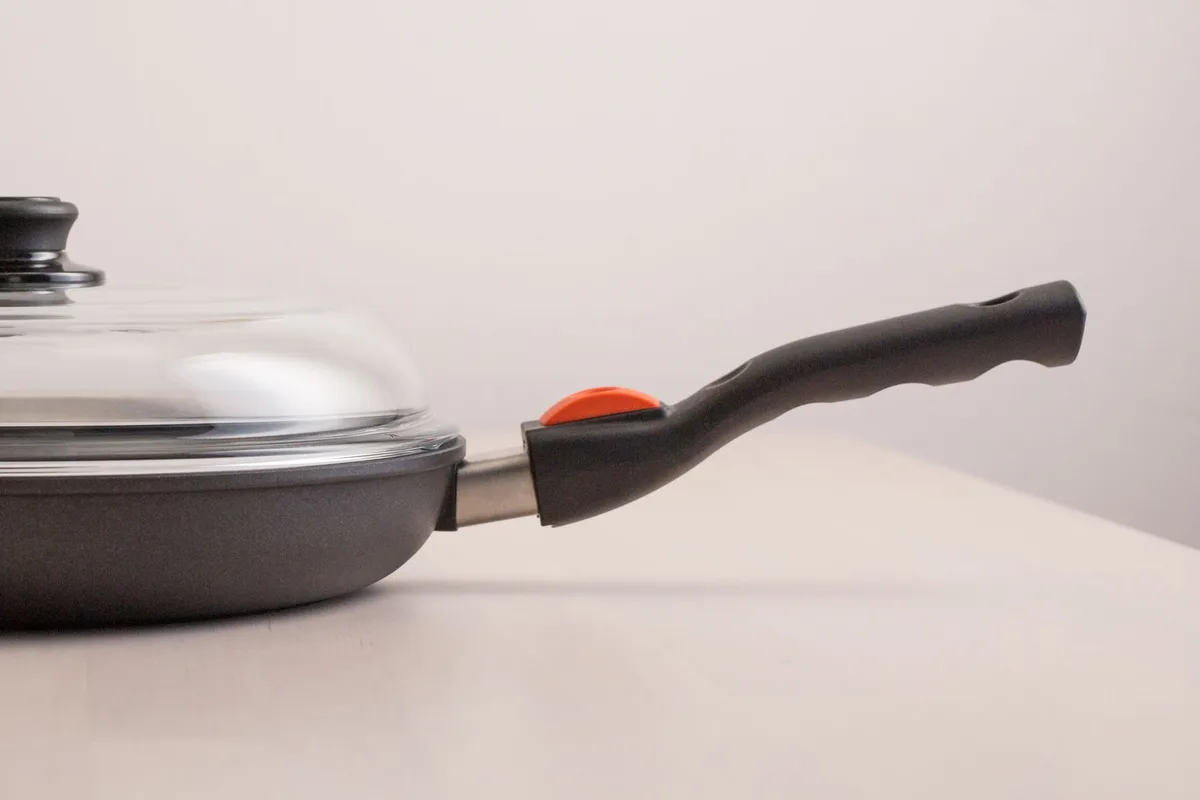
- Forgetting the lid. A lid is useful for steaming vegetables. Not essential, but handy.
Price: How Much Should You Spend?
You don’t need to spend a fortune. A good carbon steel wok costs $30, $60. A decent nonstick stir fry pan costs $30, $50.
High-end brands like Joyce Chen or Craft Wok are around $50, $70. You can find cheap ones for $15, $20, but the build quality is poor.
Cast iron woks are more expensive, $60, $120. I’d only recommend one if you’re a serious cook with a powerful burner.
My Personal Recommendation
After years of testing, I keep coming back to a 14-inch flat-bottomed carbon steel wok. It’s from a brand called Joyce Chen, not an affiliate link, just the one I’ve used for years. It seasons well, heats evenly, and handles everything from chicken lo mein to pad see ew.
If you’re cooking on induction, I’d go with a nonstick ceramic pan. Brands like GreenPan or Cuisinart make decent ones. They won’t last forever, but they’ll get you through a couple of years of weekly stir fries.
For reference, the USDA’s Food Safety and Inspection Service has excellent guidelines on cooking temperatures, make sure your stir fry hits 165°F for poultry and 145°F for beef or pork. That’s a good habit regardless of your pan.
Final Thoughts
Choosing a stir fry pan isn’t complicated. Decide how much maintenance you want. Decide what kind of flavor you want.
Then pick the material that fits.
- For authentic wok hei and easy tossing: Carbon steel flat-bottom wok.
- For convenience and easy cleanup: Nonstick stir fry pan.
- For high heat retention: Cast iron wok (if you have the strength).
Don’t overthink it. Buy a pan that matches your stove and your cooking frequency. Season it properly.
Use high heat and keep moving. You’ll be making restaurant-quality stir fry at home in no time.
Now go cook.