You’ve spent good money on a set of stainless steel pans. They look beautiful. They heat evenly.
They’re practically indestructible. But then you fry an egg and it welds itself to the surface like industrial glue. You scrape, you soak, you curse.
Sound familiar?
Here’s the truth: stainless steel can absolutely be non stick. Not in the same way Teflon is, but in a way that’s actually better, more durable, healthier, and capable of producing a serious sear. The trick is knowing how to make stainless steel cookware non stick, not buying some overpriced gimmick pan.
I’ve been cooking on stainless steel for over a decade. I’ve ruined my share of omelets and learned the hard way. Let me save you the frustration.
This guide covers everything, the science, the technique, the seasoning process, and the daily habits that turn a sticky pan into a slick one.
Why Stainless Steel Sticks in the First Place
Stainless steel is not non stick by nature. It’s a smooth, hard alloy. Unlike cast iron or carbon steel, it doesn’t have a porous surface that holds oil.
When you heat a bare stainless steel pan, the microscopic surface is actually quite rough at the atomic level. Food proteins and starches grab onto those tiny peaks and valleys. That’s why your egg looks like a crime scene.
The good news? That roughness is your friend once you learn to work with it. The goal isn’t to change the metal.
It’s to control the temperature and the oil so that food never touches the metal directly. Instead, it floats on a thin layer of steam and fat.
The Science of a Non-Stick Stainless Steel Surface
You don’t need a chemistry degree, but understanding a few basics helps a lot.
The Leidenfrost Effect
When you drop water onto a hot pan, it either sizzles and evaporates, or it beads up and skates around. That bead-skating is the Leidenfrost effect. It happens when the pan surface is around 380, 400°F (190, 200°C).
The water vaporizes instantly, creating a thin steam cushion. That same cushion can prevent food from sticking, if you time it right.
The key: you want the pan hot enough to create that steam barrier, but not so hot that oil burns. Most non-stick cooking happens in the 325, 375°F range. That’s where oil shimmers and food releases easily.
Oil Polymerization
This is the same principle that makes cast iron non stick. When you heat oil past its smoke point, it breaks down and forms a thin, hard polymer layer on the metal. That layer bonds to the stainless steel.
It’s not permanent like teflon, but it builds up over time with repeated use. That’s the “seasoning” you hear about.
For stainless steel, you don’t need a thick seasoning like cast iron. A thin, even layer is enough to stop food from grabbing.
How to Season Stainless Steel Cookware
Seasoning stainless steel is different from seasoning cast iron. You’re not trying to build a thick black crust. You’re creating a microscopic non-stick layer that fills in the metal’s imperfections.
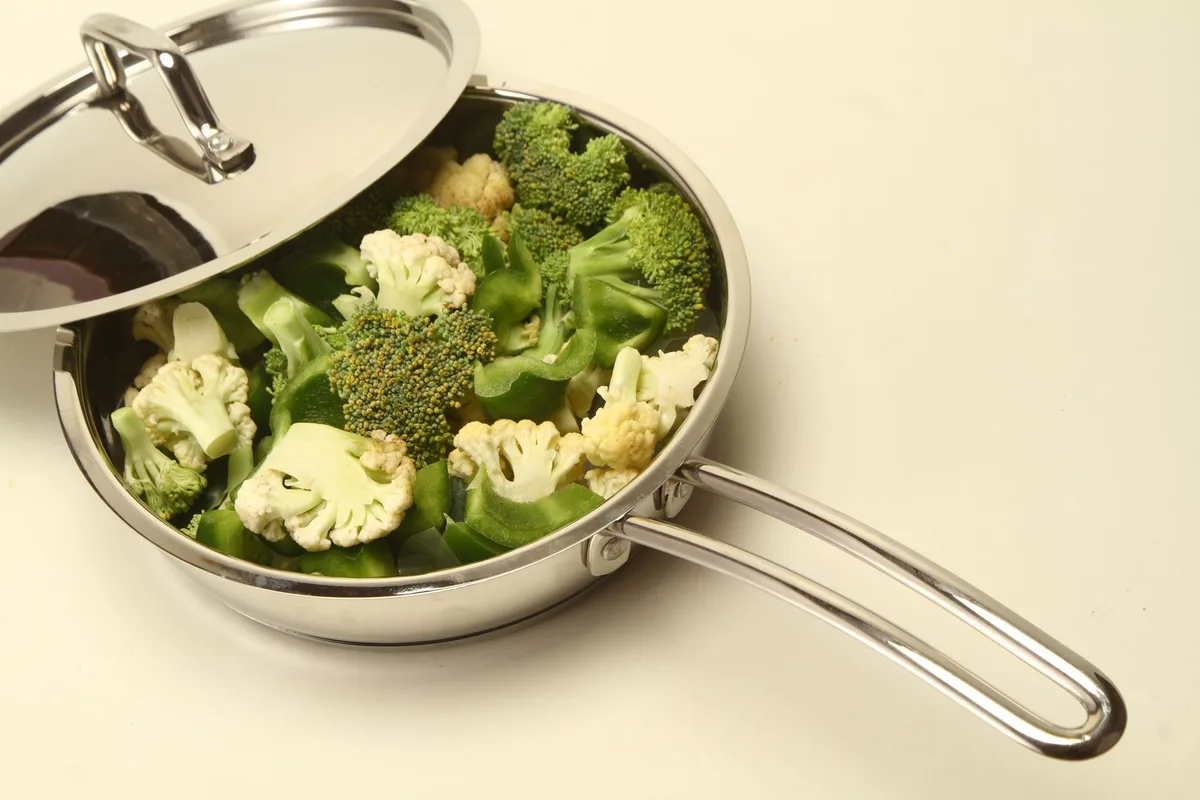
Image source: Pexels / Milton Das (Pexels License)
Step-by-Step Seasoning Process
- Start with a clean pan. Wash it with soap and hot water to remove any manufacturing oils or residue. Dry it completely.
- Heat the pan medium-low. Don’t crank it to high. Patience matters. Let it warm up for about 2 minutes.
- Add a thin layer of oil. Use a high smoke point oil: avocado, grapeseed, or refined coconut oil. Pour in about a tablespoon, then swirl to coat the entire bottom and halfway up the sides.
- Heat until the oil shimmers. You’ll see faint wisps of smoke. That’s the oil starting to polymerize.
- Wipe out the excess oil. Use a paper towel to remove most of the oil. You want just a microscopic film left. The pan will look dry and slightly glossy.
- Let it cool naturally. Don’t run it under cold water. Let it sit on the burner until it’s cool enough to touch.
That’s one seasoning cycle. For a new pan, repeat this process 2, 3 times. It won’t look like cast iron.
It’ll just look slightly yellowed or bronze in the right light. That’s fine.
How Often to Season
You don’t need to season your stainless steel every time you cook. Do it once when the pan is new, then touch it up after you cook something acidic or scour the pan raw. If eggs start sticking again, run one quick seasoning cycle.
It takes 5 minutes.
Cooking Techniques That Prevent Sticking
Seasoning helps, but technique is what really makes stainless steel non stick. You can have a perfectly seasoned pan and still ruin a meal if you don’t control heat and oil properly.
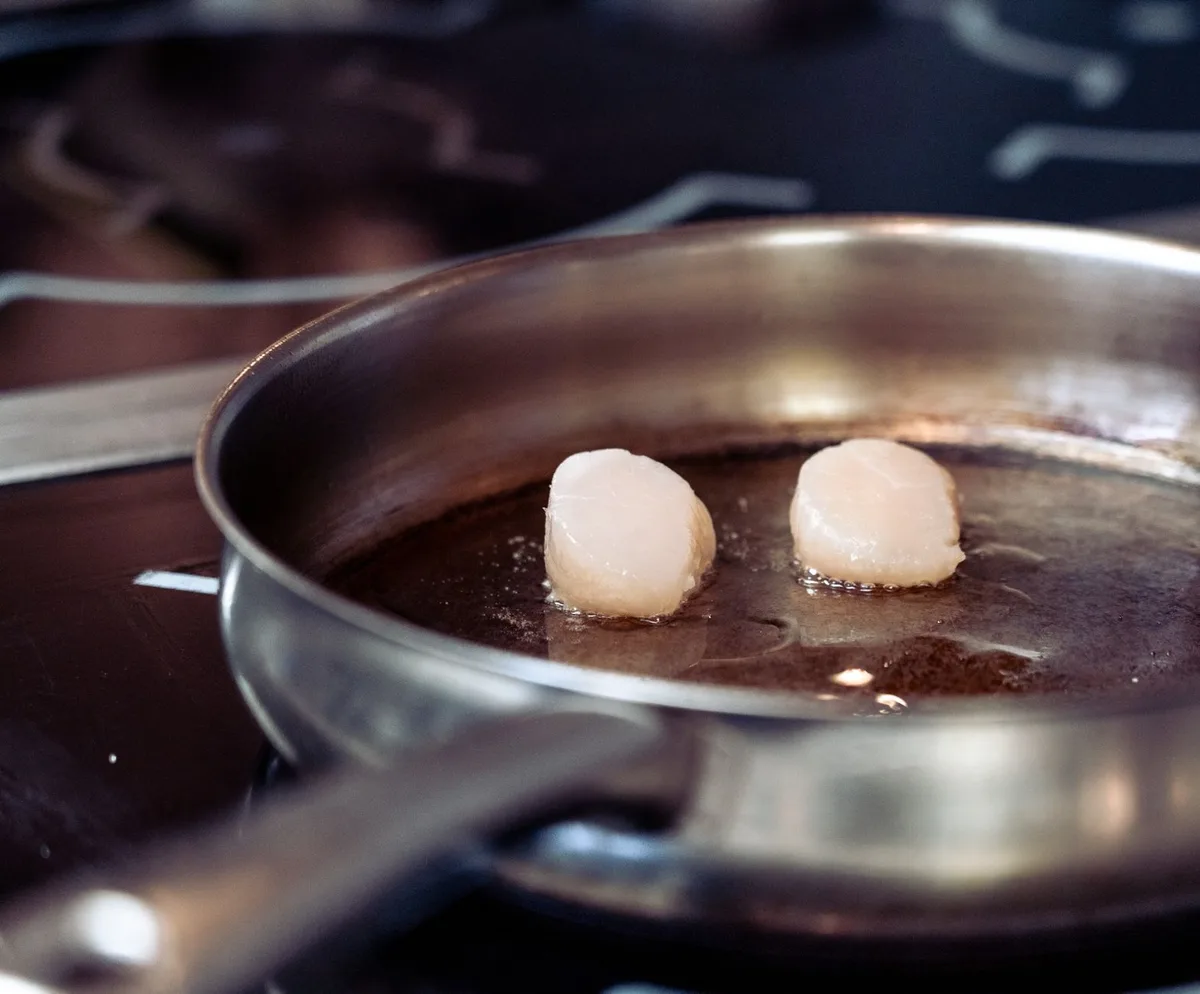
Image source: Pexels / Arthur Swiffen (Pexels License)
The Water Drop Test
This is the single most reliable method to know when your pan is ready. Heat the pan dry for about 2 minutes over medium heat. Flick a few drops of water onto the surface.
- If the water sizzles and evaporates instantly, the pan is too cold.
- If the water forms beads that skate around the pan like tiny marbles, you’re at the right temperature.
That skating action tells you the Leidenfrost effect is active. Now add oil. Swirl it.
Then add your food. Proteins will release cleanly.
Preheating Matters
Stainless steel heats unevenly if you rush it. Always preheat the pan on medium-low for 3, 5 minutes. Then increase to your cooking temperature.
This gives the metal time to expand evenly. Hot spots cause sticking.
The Right Oil and Amount
Use oils with a smoke point above 400°F: avocado, grapeseed, sunflower, or high-oleic safflower. Olive oil is fine for low-heat cooking, but it burns at higher temperatures. Burnt oil = sticky residue.
You don’t need a pool of oil. A thin, even coating is enough. Swirl to coat, then add food.
For eggs, add a little extra butter after the oil, the milk solids help create a release layer.
Don’t Move Food Too Early
This is the biggest mistake beginners make. You put a chicken breast or a fish fillet into the pan. It sticks.
You try to flip it. It rips. That’s because the food hasn’t formed a crust yet.
The crust naturally releases from the surface when it’s ready.
Wait. Let it cook undisturbed for 2, 4 minutes. When the bottom is browned and caramelized, the food will slide free with barely a nudge.
If it still sticks, give it another minute. Patience.
Deglazing to Clean
Even with perfect technique, some bits will stick. That’s normal. Don’t scrub.
Deglaze. Pour in a splash of water, broth, wine, or vinegar while the pan is still hot. The liquid will bubble and lift the stuck bits.
Scrape with a wooden spoon. You’ll get a clean pan and a tasty fond for a pan sauce.
Step-by-Step Guide: How to Make Stainless Steel Cookware Non Stick for Everyday Use
Let’s put it all together into a repeatable routine. Follow these steps every time you cook, and your stainless steel will behave like a non-stick dream.
Step 1: Wash and Dry
Start with a clean pan. Even a tiny bit of leftover food residue creates sticking points. Wash with soap and a soft sponge.
Dry thoroughly.
Step 2: Preheat Gradually
Place the pan on the burner. Set heat to medium-low. Let it warm for 3 minutes.
Then increase to medium or medium-high if needed. Never go straight to high heat.
Step 3: Perform the Water Drop Test
Flick a few drops of water. Watch for the beads to skate. That’s your green light.
Step 4: Add Oil Immediately
Once the water test passes, add your oil. Swirl to coat the bottom. Let it heat for 15, 30 seconds until it shimmers but doesn’t smoke.
Step 5: Add Food
Place your protein or vegetables in the pan. Don’t overcrowd. Give each piece room to brown.
If you crowd the pan, the temperature drops and food sticks.
Step 6: Let It Cook
Don’t touch the food until it releases naturally. This usually takes 3, 5 minutes. You’ll see the edges brown and lift.
Step 7: Flip or Stir
Once the food releases, you can flip or stir. If you’re making a stir-fry, work in batches. Keep the pan hot.
Step 8: Clean Immediately
After cooking, while the pan is still warm, deglaze with a little liquid. Then wash with warm soapy water. Dry immediately.
If needed, apply a thin coat of oil before storing.
Common Mistakes That Ruin the Non-Stick Surface
You’re doing everything right, but still getting sticking. Check these traps.
Using Too High Heat
Stainless steel conducts heat differently than non-stick or cast iron. High heat doesn’t cook faster, it burns oil and causes sticking. Medium heat is usually enough.
Use high heat only for boiling water or searing large cuts of meat.
Adding Cold Food to a Hot Pan
Cold food instantly drops the pan temperature. That kills the Leidenfrost effect. Bring eggs, meat, and fish to room temperature for 15, 20 minutes before cooking.
It makes a huge difference.
Cooking Acidic Foods Too Often
Tomatoes, vinegar, citrus, and wine can strip the thin seasoning layer. That’s why acidic sauces often stick. If you cook a lot of tomato-based dishes, reseason your pan afterward.
Or use a dedicated stainless steel pan for acidic sauces and a different one for eggs and proteins.
Using Metal Utensils
Stainless steel is tough, but metal spatulas and forks can scratch the surface. Those scratches create more places for food to grab. Use wooden, silicone, or nylon utensils.
They’re gentler and still durable.
Not Using Enough Oil
Some people think they can use the same scant oil as a non-stick pan. You can’t. Stainless steel needs a thin film of oil to create the release layer.
If you’re counting calories, use a spray oil or brush a thin layer. But don’t skip it.
Maintenance Tips for Long-Lasting Non-Stick Performance
Your stainless steel pan can stay non stick for years if you care for it properly.
Avoid Dishwasher Detergent
Dishwasher detergents are harsh. They can strip seasoning and dull the surface. Hand wash with soft sponge and mild soap.
Remove Stains without Scouring
White spots or rainbow discoloration? That’s mineral buildup or heat tint. Use a mixture of white vinegar and water (1:3 ratio) to wipe it away.
Then wash and dry. For stubborn stains, use a dedicated stainless steel cleaner like Bar Keepers Friend. But use it sparingly.
Store with Care
Pans stacked together can scratch. Place a paper towel or microfiber cloth between each pan. If you hang them, make sure they’re dry to prevent water spots.
Re-season as Needed
After you cook something sticky, wash the pan and do a quick oil wipe. If food starts sticking consistently, spend 10 minutes doing a full season cycle. It’s like resetting the non-stick properties.
Frequently Asked Questions
Can I use butter in a stainless steel pan?
Yes, for low-to-medium heat. Butter burns at around 350°F. Clarified butter or ghee works better for higher heat.
For eggs, a pat of butter added after the oil gives extra release.
Is seasoning stainless steel forever?
No, it’s temporary. But it lasts longer if you avoid acidic foods, use wooden utensils, and hand wash. I reseason my pans about once a month.
Does the brand of pan matter?
Not really. The technique works on any stainless steel pan, cheap or expensive. The key is heat control and oil management.
Why does my stainless steel pan turn brown?
That’s polymerized oil. It’s the seasoning you want. It may look brownish or golden.
That’s normal. If it turns black and flaky, you’ve built up too much burnt oil. Scrub it off with a stainless steel cleaner and start fresh.
Can I use cooking spray?
You can, but cooking sprays often contain lecithin and propellant that leave a sticky residue. That residue bakes onto the pan and becomes hard to remove. Stick with liquid oil.
Final Thoughts on Making Stainless Steel Non Stick
You don’t need a special coating or a magic pan. The secret to how to make stainless steel cookware non stick is simple: temperature control, proper oil, and patience. Learn the water drop test.
Preheat gradually. Let food release naturally. That’s it.
Once you get the hang of it, you’ll never go back to non-stick pans that wear out after a year. Stainless steel is durable, safe, and versatile. It can handle high heat, oven use, and metal utensils (though I recommend wooden).
And with a little practice, it becomes just as non stick as anything with a coating.
So go ahead. Fry that egg. Sear that fish.
Make a pan sauce without the stuck-on mess. Your stainless steel is ready, you just need to unlock its potential.
Now go cook something. And don’t forget the water drop test.