You’ve probably seen the infomercials. Pots and pans that promise to cook a whole meal without a drop of added water. It sounds like magic.
But it’s not. It’s engineering. Waterless cookware uses tight-fitting lids, specialized materials, and precise heat control to trap steam and cook food in its own natural moisture.
The result? More nutrients, better flavor, and zero waste.
Let’s cut through the hype. In this article, I’ll explain exactly what waterless cookware is, how it works, whether it’s safe, and who should use it. No fluff.
No affiliate pitch. Just the facts.
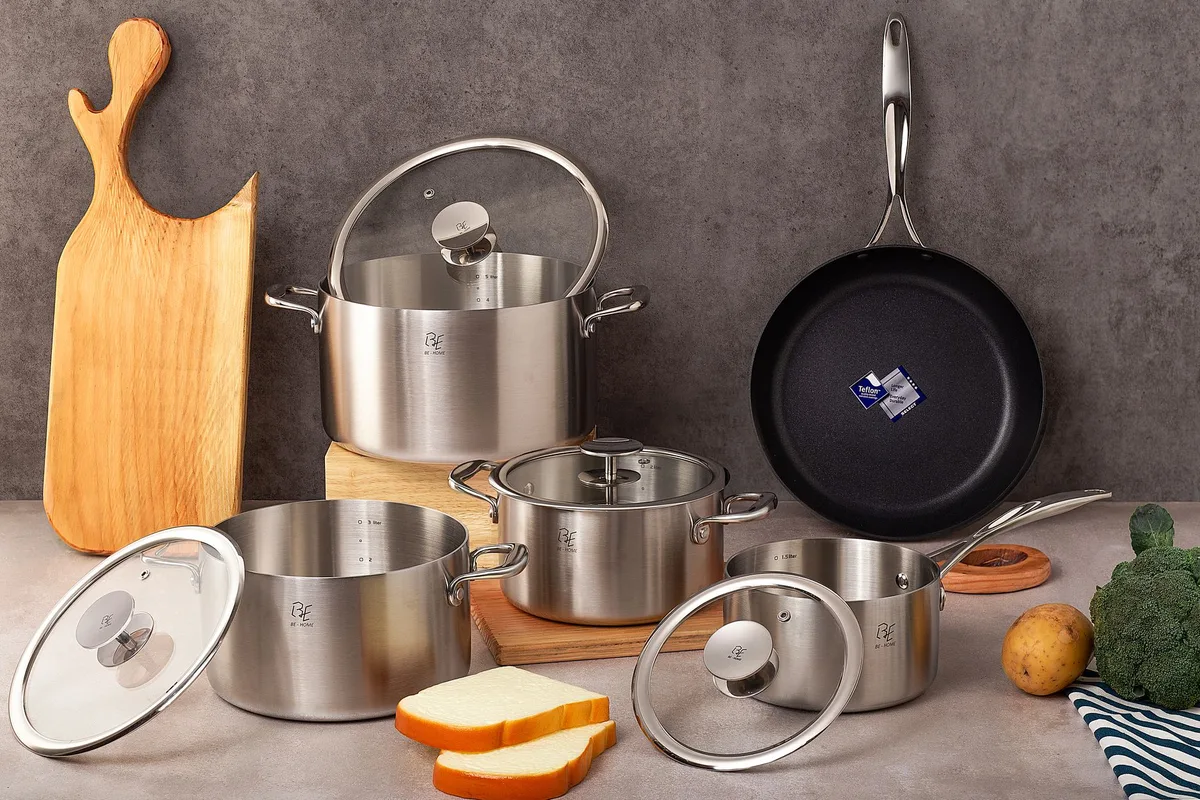
Image source: Pexels / Đậu Photograph (Pexels License)
What Exactly Is Waterless Cookware?
Waterless cookware is a set of pots, pans, and lids designed to cook food using only the moisture naturally present in the ingredients. No added water. No oil (in most cases).
The cookware is typically made of surgical-grade stainless steel with an aluminum or copper core for even heat distribution.
The key feature is the lid. Waterless lids create a near-hermetic seal. They often have a special rim or a weighted design that self-bastes.
As the food heats, steam rises, hits the cooler lid, condenses, and drips back down. This continuous cycle keeps food moist without drowning it in a pot of boiling water.
Traditional cookware is designed to allow steam to escape. Waterless cookware is designed to trap it. That’s the entire difference.
Most waterless sets come from brands like Saladmaster, Kuhn Rikon, or Demeyere. But you don’t need a branded set to use the technique. Any heavy-bottomed pot with a tight-fitting lid can work.
The principle is universal.
How Does Waterless Cookware Work?
The magic happens at the lid. But let’s look at the full system.
Place food in a cold pan. Turn the heat to medium. The aluminum or copper core spreads heat rapidly and evenly across the bottom and up the sides.
Food begins to release steam. The steam fills the space between the food and the lid. Because the lid fits snugly, steam cannot escape.
Pressure builds slightly inside the pan.
When the lid reaches the right temperature, the steam condenses on its inner surface. The droplets fall back onto the food, basting it. This self-basting cycle prevents burning and distributes heat gently.
You control the process by listening. Once you hear a light sizzle or see a few wisps of steam at the edge, you reduce the heat to low. That’s the sweet spot.
The internal temperature stabilizes, and the food cooks in its own juices.
Image source: Pexels / Mohsen Naranjani (Pexels License)
This technique works for vegetables, meats, fish, rice, and even eggs. You can cook a whole meal in one pot: potatoes on the bottom, chicken on a rack, and broccoli on top. Each layer holds its flavor.
No mixing. No mess.
The Science Behind the Vapor Seal
Waterless cookware relies on basic physics. Water boils at 212°F (100°C) at sea level. In a sealed vessel, steam traps heat more efficiently than dry air.
The condensing steam transfers latent heat to the food, cooking it faster and more evenly than plain convection.
But there’s another factor: the Leidenfrost effect. When a pan is hot enough, a drop of water skitters across the surface on a cushion of steam. In waterless cookware, the lid stays cooler than the pan, so steam condenses and falls back as liquid.
This cycle prevents the pan from reaching the Leidenfrost point where food would stick.
The tight seal also minimizes oxygen exposure. That means less oxidation of vitamins like vitamin C and B-complex. According to a study cited by the USDA, cooking without excess water can preserve up to 50% more nutrients than boiling.
The U.S. Food and Drug Administration sets safety standards for cookware materials. Stainless steel grades like 304 and 316 are non-reactive and won’t leach metals into your food.
[FDA guidance on cookware safety] (https://www.fda.gov/food) confirms that high-quality stainless steel is safe for all cooking methods.
Key Benefits of Cooking Without Water
Better Nutrient Retention
When you boil vegetables, water-soluble vitamins leach into the water. Then you pour that water down the drain. Waterless cooking keeps those nutrients inside the food or trapped in the small amount of liquid that remains.
You eat what you cooked. Nothing lost.
Intensified Flavor
Without dilution, the natural sugars and savory compounds concentrate. Carrots taste sweeter. Chicken stays juicier.
Soups and stews develop deeper flavors because you use less liquid. The condensation cycle also redistributes flavors evenly.
Energy Efficiency
Waterless cookware requires lower heat. Once the pan reaches the cooking temperature, you turn the burner down to low or even off. The retained heat finishes the job.
This saves electricity or gas. Many users report 30, 40% lower energy bills compared to conventional cooking.
Less Cleanup
Because food doesn’t burn or stick (when used correctly), you rarely need scrubbing. A quick wipe with a sponge is enough. No stubborn residue.
No scraping.
No Added Fats or Oils
You can sauté without oil. The steam and natural juices prevent sticking. For health-conscious cooks, this is a major advantage.
How to Use Waterless Cookware
Getting started is simple but requires a mindset shift. Forget everything you learned about boiling potatoes in an inch of water.
Step 1: Rinse vegetables to keep them moist. Don’t dry them completely. That thin film of water is all you need.
Step 2: Place food in a cold pan. Don’t preheat. Add salt or spices directly.
Step 3: Cover with a tight-fitting lid. Turn heat to medium.
Step 4: Wait for the vapor seal indicator. On many sets, this is a small valve that pops up when the seal is engaged. On standard pans, listen for a gentle hiss or see a thin ring of condensation around the lid.
Step 5: Immediately reduce heat to low. Let the food cook undisturbed for the recommended time. Most vegetables take 5, 10 minutes.
Chicken breasts take 12, 15 minutes. Rice takes 15, 20 minutes.
Step 6: Turn off the heat and let the pan rest. The residual heat finishes the cooking.
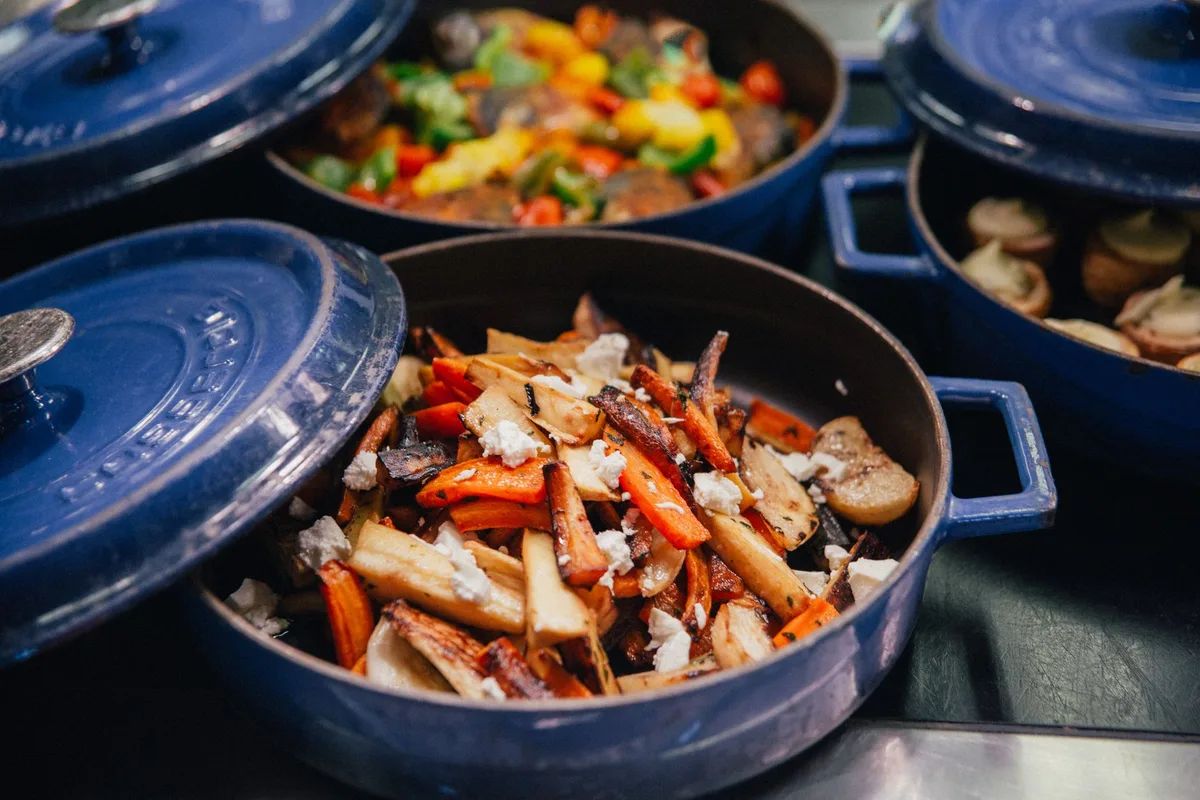
Image source: Pexels / Denys Gromov (Pexels License)
Pro tip: Use a timer. Overcooking can dry out food despite the self-basting cycle. Once you learn the correct times, you’ll get consistent results.
Is Waterless Cookware Safe?
Yes. Waterless cookware is made from materials that meet strict safety standards. The FDA regulates food-contact surfaces, and stainless steel is one of the safest materials you can use.
It doesn’t react with acidic foods like tomatoes or citrus. It doesn’t leach chemicals like some nonstick coatings.
Many waterless sets are also certified by NSF International. [NSF certification] ensures that the cookware has undergone rigorous testing for safety, durability, and performance.
One common concern: Does the tight seal create a vacuum? No. The pan is never fully airtight.
A small amount of steam can escape around the rim. Modern lids have a vapor-release valve to prevent pressure buildup. They are not pressure cookers.
Another question: Can you use them on induction cooktops? Yes. Most waterless cookware has a magnetic stainless steel base that works with induction.
Check the manufacturer’s specs.
Who Should Consider Waterless Cookware?
Waterless cookware isn’t for everyone. But it fits certain lifestyles perfectly.
Health-conscious cooks. If you prioritize nutrient density and avoid added oils, this method aligns with your goals.
Busy families. One-pot meals cut down on prep and cleanup. You can throw a whole dinner together in 20 minutes.
Campers and RVers. Waterless cookware reduces the need for carrying jugs of water. Lower heat also conserves fuel.
People with gas stoves. Gas burners work fine with waterless cookware, though you may need a diffuser to spread heat evenly.
Anyone with hard water. Boiling with hard water leaves white mineral deposits on pots. Waterless cooking avoids that problem entirely.
On the flip side, waterless cookware has a learning curve. You can’t cook pasta or boiled eggs in it (they need submersion in water). And the upfront cost is higher than typical discount sets.
But the quality lasts decades.
Common Myths About Waterless Cookware
Myth: Waterless cookware is a gimmick.
Reality: The science is sound. The same principle is used in commercial steam ovens and professional kitchens. It’s not magic.
It’s thermodynamics.
Myth: You can’t use it with frozen food.
Reality: You can. Frozen vegetables release extra moisture during thawing, so reduce the heat even earlier. For meats, thaw first to avoid uneven cooking.
Myth: All waterless cookware is the same.
Reality: Quality varies. Cheap sets may have thin aluminum cores that cause hot spots. Look for a minimum 3-ply construction: two layers of stainless steel sandwiching an aluminum core. 5-ply is even better.
Myth: You never need any water at all.
Reality: Some foods are naturally dry. Potatoes, rice, and lentils benefit from a splash of water or broth. But you use far less than conventional methods.
Myth: It’s impossible to burn food.
Reality: You can burn food if you leave the heat on high. The vapor seal only works when the lid is on and heat is low. Opening the lid during cooking releases the steam and can cause scorching.
Making the Switch
If you decide to try waterless cooking, you don’t need a full set. Start with one good stainless steel skillet or saucepan with a tight-fitting lid. Test it with a batch of green beans or carrots.
Watch the condensation form. Listen for the hiss. Once you feel the control, you’ll understand why so many cooks swear by it.
The investment pays off. A quality waterless cookware set can last 30 years or more. Compare that to nonstick pans that need replacement every few years.
The total cost of ownership is lower, and the health benefits are real.
Remember: waterless cookware is a tool, not a miracle. It changes how you think about heat and moisture. It encourages patience and attention.
But the reward is food that tastes exactly like itself, no dilution, no added fat, no wasted energy.
That’s the truth about waterless cookware. Nothing less.