Stir-frying vegetables is one of the fastest ways to cook, but it’s also one of the easiest to mess up. You want that bright color, that slight crunch, that just-cooked sweetness. Go too long, and you get limp, gray, sad vegetables.
Pull them too early, and they’re raw and hard to chew.
So how long do you actually stir fry vegetables in a pan? The real answer is: it depends. But I’ll give you a solid starting point.
Most chopped vegetables take between 2 and 5 minutes over high heat. That’s it. Two to five minutes.
But within that window, every vegetable behaves differently. And the pan you use, the heat level, and how you cut them all change the timing.
I’ve been cooking stir-fries for years, and I’ve burned my fair share of garlic and undercooked broccoli. Let me walk you through exactly what you need to know so you nail it every time.
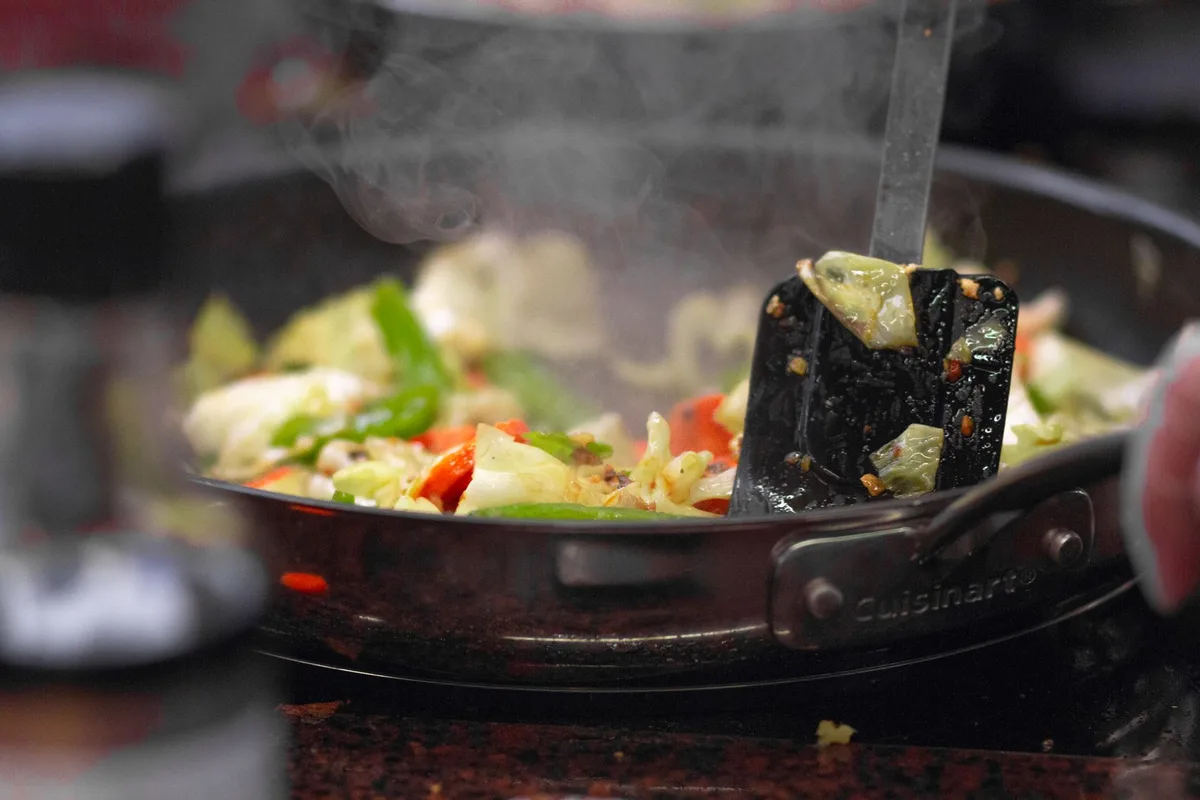
Image source: Pexels / Martin Lopez (Pexels License)
The Factors That Change Stir-Fry Time
Before I give you a chart or a list of times, you need to understand why times vary. These are the levers you can pull. If you know them, you can adjust on the fly without a recipe.
Vegetable Type and Density
Dense, fibrous vegetables like broccoli, carrots, and cauliflower take longer than tender vegetables like bell peppers, mushrooms, and zucchini. A piece of carrot needs heat to soften its cell walls. A slice of bell pepper is almost ready to eat raw.
That difference matters.
Cut Size and Shape
You can drastically change cooking time by how you cut things. A julienned carrot (thin matchsticks) cooks in about 1 minute. A thick chunk of carrot takes 4, 5 minutes.
Uniform cuts are your friend. If you cut broccoli into bite-sized florets, about 1 to 1½ inches, they’ll cook evenly. If you leave the stems thick, they’ll be crunchy while the tops are mushy.
Heat Level
Stir-frying is meant to be done over high heat. Really high. If your pan isn’t hot enough, you’ll steam the vegetables instead of searing them.
That adds time and destroys texture. I crank my burner to the highest setting and let the pan heat for a full minute before adding oil. Then I let the oil shimmer before tossing in the vegetables.
Pan Type
A wok is ideal because of its shape, the sloping sides let you toss food without spilling, and the high heat stays concentrated in the bottom. But a large, heavy-bottomed skillet works fine too. The key is surface area.
If your pan is too small, the vegetables pile up and steam rather than fry. Use the biggest pan you’ve got, and don’t crowd it.
Oil and Moisture
Oil helps transfer heat and prevents sticking. But if you add too much, the vegetables get greasy. If you add too little, they burn.
I use about 1 to 2 tablespoons of a high-smoke-point oil (peanut, avocado, or grapeseed). Also, dry your vegetables before frying. Wet vegetables cool the pan down and create steam.
That pushes your cooking time up and kills the sear.
Stir-Fry Timing by Vegetable Type
Here’s the practical part. I’ve grouped common stir-fry vegetables by their cooking time. Use this as a guide.
Remember, these times assume high heat, medium-sized pieces (about 1-inch chunks or slices), and a single layer in the pan.
Quick-Cook Vegetables (1–2 minutes)
These vegetables are tender or have high water content. They’re often added at the very end of a stir-fry.
- Bell peppers, 1 to 2 minutes. They become slightly soft but still have a snap.
- Mushrooms, 1 to 2 minutes. They release water quickly and shrink. Don’t overcook or they get rubbery.
- Zucchini and summer squash, 1 to 2 minutes. They soften fast. I add them last.
- Snow peas and sugar snap peas, 1 to 2 minutes. They turn bright green and stay crisp.
- Bean sprouts, 30 seconds to 1 minute. They need almost no cooking. Just heat through.
- Spinach, bok choy leaves, and other greens, 30 seconds to 1 minute. They wilt instantly. Add them in the last 30 seconds and toss until just wilted.
Medium-Cook Vegetables (2–4 minutes)
These are the workhorses of stir-fry. They hold up well but still need a little time to soften.
- Broccoli florets, 2 to 3 minutes. If you want them tender but still bright green, blanch them first for 30 seconds, then stir-fry for 1 minute. Otherwise, they need about 3 minutes.
- Cauliflower florets, 2 to 3 minutes. Similar to broccoli.
- Green beans, 2 to 3 minutes. Trimmed and cut into 2-inch pieces. They should be crisp-tender.
- Asparagus, 2 to 3 minutes. Cut into 1-inch pieces. Watch them closely, they go from perfect to mushy fast.
- Cabbage (napa or green), 2 to 3 minutes. Shredded cabbage softens quickly. I like a bit of crunch.
- Onions, 2 to 3 minutes. Sliced onions become translucent and sweet. If you want them caramelized, that’s 5+ minutes, but that’s not stir-fry, that’s a different technique.
Slow-Cook Vegetables (4–5 minutes)
These are dense and need more time. I often pre-cook them or add them first.
- Carrots, 3 to 5 minutes depending on cut. Thin matchsticks: 2 minutes. Thick coins: 4, 5 minutes.
- Celery, 3 to 4 minutes. It stays crunchy but should soften a little.
- Water chestnuts, 3 to 4 minutes. They’re already crunchy; you just heat them through.
- Eggplant, 4 to 5 minutes. It soaks up oil like a sponge. Cook it longer to soften fully. I salt it first to draw out moisture.
- Hard squash (butternut, kabocha), 4 to 5 minutes. Cut into small cubes, and you might need to add a splash of water and cover briefly to steam them tender.
Vegetables That Need Pre-Cooking
Some vegetables are too tough or dense to stir-fry from raw. You’ll get better results if you blanch, steam, or microwave them first.
- Broccoli and cauliflower (if you want them very tender), Blanch in boiling water for 30 seconds, then plunge into ice water. Drain and stir-fry for 1 minute.
- Green beans, Blanch for 1 minute if they’re on the thicker side.
- Carrots, Blanch thick slices for 1 minute.
- Potatoes and sweet potatoes, These need to be parboiled or steamed until almost tender before stir-frying. Otherwise, they’ll burn on the outside and stay raw inside.
How to Tell When Stir-Fry Vegetables Are Done
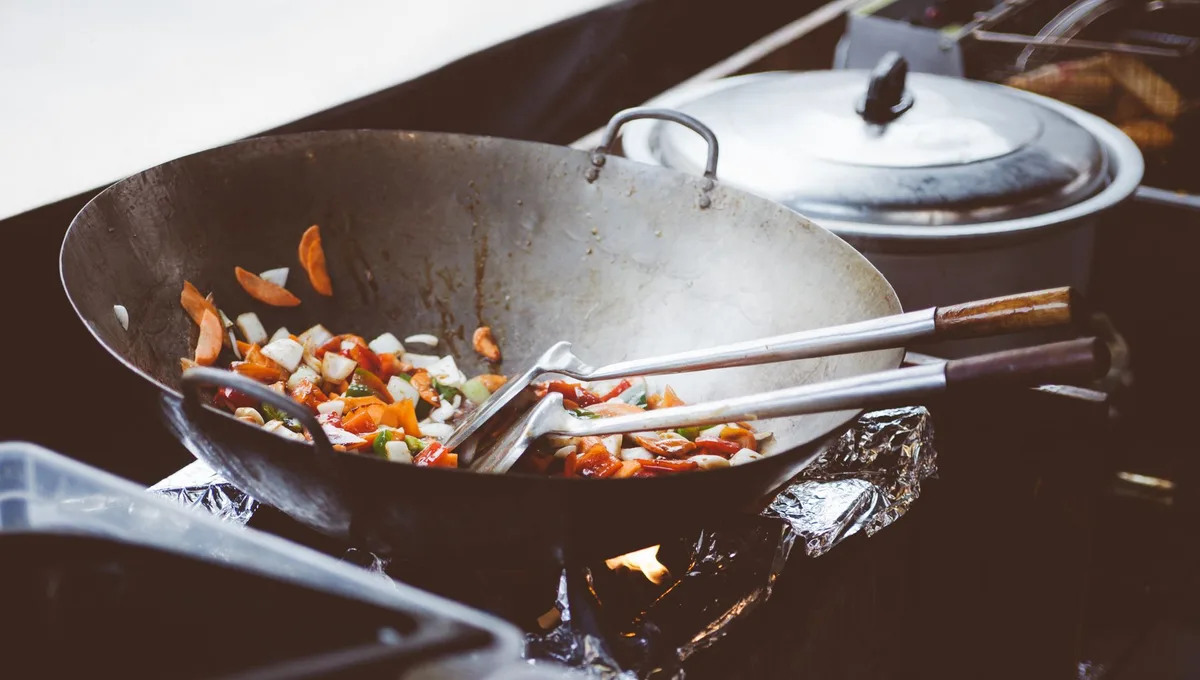
Image source: Pexels / Clem Onojeghuo (Pexels License)
Don’t rely on a timer alone. Use your senses. Here’s what to look for.
Visual Cues
- Color, Vegetables should be bright and vibrant. Broccoli turns a deeper green. Carrots become glossy. If they’re starting to brown or look dull, you’ve gone too far.
- Shrinkage, Mushrooms, spinach, and zucchini will visibly shrink. That’s fine. But if they’re swimming in liquid, the pan wasn’t hot enough.
- Steam, A little steam is normal. A billowing cloud of steam means you’re boiling, not stir-frying.
Texture Test
The best way to check is to grab a piece with tongs and bite it. I do this every time. You want the vegetable to be tender enough to bite through but still have a little resistance, what chefs call al dente for vegetables.
If it’s crunchy and hard to chew, it needs more time. If it’s soft and mushy, you’re past the sweet spot.
Smell
A good stir-fry smells like a mix of caramelized sugars and savory notes. If you smell burning, you’re too late. That’s why I keep things moving, constantly tossing and stirring.
Common Mistakes That Ruin Stir-Fry Timing
I’ve made every mistake in the book. Here’s what to avoid.
Mistake #1: Overcrowding the Pan
This is the number one killer of stir-fry timing. When you pile too many vegetables into the pan, the temperature drops. The vegetables release water and start to steam instead of fry.
They take longer to cook, and they end up soggy.
Fix: Cook in batches if needed. I stir-fry in two batches for a large family meal. Keep the first batch warm in a low oven while you cook the second.
Or use a larger pan.
Mistake #2: Not Preheating the Pan
You need a screaming-hot pan. If you add oil to a cold pan, the oil heats up slowly and the vegetables absorb it before it gets hot. That leads to greasy, slow-cooked vegetables.
Fix: Heat the empty pan over high heat for at least 1 minute. Add the oil and let it shimmer (about 15 seconds), then add the vegetables.
Mistake #3: Adding All Vegetables at Once
Hard vegetables like carrots and broccoli need more time than tender vegetables like bell peppers and mushrooms. If you dump everything in at the same time, the tender ones will be overcooked by the time the hard ones are done.
Fix: Add vegetables in stages. Start with the hardest ones (carrots, onions, broccoli stems), then add medium ones (broccoli florets, bell peppers), and finish with tender ones (mushrooms, greens, bean sprouts). This staggered timing is the secret to perfect stir-fry.
Mistake #4: Using the Wrong Oil
Some oils have a low smoke point and burn at high heat. Olive oil, butter, and unrefined coconut oil are not ideal for stir-frying. They’ll smoke and burn, giving a bitter taste.
Fix: Use oils with a high smoke point: peanut, avocado, grapeseed, canola, or refined coconut oil.
Mistake #5: Not Drying Vegetables
I’ve already mentioned this, but it’s worth repeating. Wet vegetables create steam, which lowers the pan temperature and extends cooking time. They also don’t brown as well.
Fix: After washing, spin or pat dry your vegetables thoroughly. Ideally, wash them an hour ahead and let them air-dry on a towel.
Tips for Perfect Stir-Fry Vegetables Every Time
Let me give you a few pro tips that go beyond timing.
Use the “Yin-Yang” Method
If you want evenly cooked vegetables without batch cooking, use a technique I call the yin-yang method. Add the hard vegetables to one side of the pan and the tender vegetables to the other. The hard side gets more heat (closer to the center), and the tender side stays cooler.
Then toss everything together at the last minute. This works better in a wok, but a large skillet can handle it too.
Add a Splash of Liquid
Sometimes hard vegetables need a little extra help. After you’ve stir-fried them for a couple of minutes, add a tablespoon of water, broth, or soy sauce, then cover the pan for 30 seconds. The steam will soften them without turning them mushy.
Then remove the lid and stir-fry until the liquid evaporates. This is called the “steam-fry” technique, and it’s perfect for broccoli and carrots.
Season at the Right Time
Salt draws moisture out of vegetables. If you salt too early, the vegetables release water and become watery. I add salt and soy sauce near the end, after the vegetables are mostly cooked.
This keeps them crisp and prevents them from getting soggy.
Keep It Moving
Stir-fry is not a set-it-and-forget-it method. You need to keep the vegetables moving. Toss them with a spatula or a pair of tongs every 20 to 30 seconds.
This ensures even cooking and prevents burning.
Finish with Aromatics
Garlic, ginger, and scallions burn easily. I add them in the last 30 seconds of cooking, after the vegetables are almost done. That way, they release their fragrance without turning bitter.
Frequently Asked Questions
Can I stir-fry frozen vegetables?
Yes, but you’ll get a different result. Frozen vegetables are blanched before freezing, so they’re partially cooked. They also release a lot of water when thawed.
To stir-fry frozen vegetables, don’t thaw them first. Add them directly to the hot pan and cook until they’re heated through and any liquid evaporates. The cooking time will be shorter, about 2 to 3 minutes total.
They won’t be as crisp as fresh, but they’re fine for a quick weeknight meal.
What’s the best pan for stir-frying vegetables?
A carbon steel wok is the best choice. It heats up quickly, distributes heat evenly, and has sloping sides that make tossing easy. It also develops a non-stick patina over time.
If you don’t have a wok, use a large stainless steel or cast iron skillet. Avoid non-stick pans for high-heat stir-frying because they can’t withstand the temperature and the coating may break down.
How do I prevent vegetables from getting soggy?
Three things: high heat, don’t overcrowd, and dry your vegetables. Also, avoid adding too much liquid. If you’re using a sauce, add it at the very end and toss quickly.
The vegetables should be almost done before the sauce goes in.
Should I stir-fry vegetables with the lid on?
Generally, no. A lid traps steam, which makes vegetables soft and soggy. The only time I use a lid is when I’m steam-frying hard vegetables for a short burst (30 seconds).
Otherwise, leave the lid off.
Final Thoughts on Stir-Fry Timing
Stir-frying vegetables is a skill anyone can learn. The core principle is simple: high heat, short time, constant motion. The exact number of minutes depends on the vegetable, the cut, and your pan.
But once you know the ranges I’ve given you, you can adjust in real time.
Start with the dense vegetables first. Add the tender ones last. Use your eyes and your taste buds.
And don’t be afraid to pull a piece out and try it. That’s the best test.
For more authoritative guidance on vegetable cooking times and food safety, check out Nutrition.gov’s vegetable cooking tips. It’s a reliable resource from the USDA that covers safe handling and cooking methods.
Now go heat up that pan, get the oil shimmering, and toss in your vegetables. You’ve got this.