You’ve probably seen a Dutch oven sitting on a friend’s stovetop or hanging over a campfire. Maybe you’ve wondered if it’s just a heavy pot or something genuinely worth owning. I’ve cooked with Dutch ovens for years, and I can tell you straight up: this is one of the most versatile pieces of cookware you’ll ever own.
Dutch ovens aren’t a one-trick pony. They’re not just for stews or bread. A good Dutch oven replaces a dozen other pots and pans in your kitchen.
It sears, braises, roasts, bakes, simmers, and fries. And it does all of that with consistent, even heat that cheap cookware can’t touch.
Let me walk you through exactly what Dutch ovens are good for. No fluff. Just practical, real-world cooking applications.
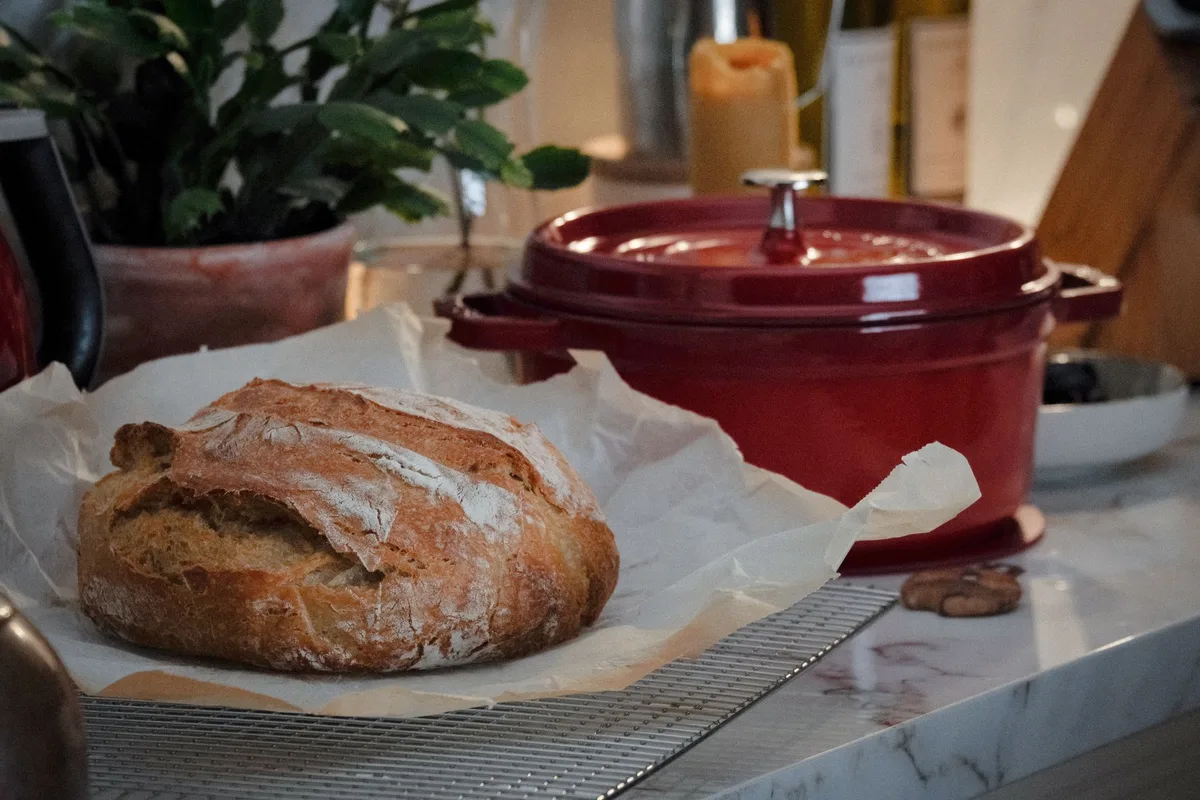
The Science Behind Why Dutch Ovens Work So Well
Before we jump into specific uses, you need to understand why Dutch ovens perform the way they do. It’s not magic. It’s physics.
Dutch ovens are made from cast iron. Cast iron has excellent heat retention. Once it gets hot, it stays hot.
That matters more than most home cooks realize. When you drop cold meat into a thin stainless steel pan, the pan temperature crashes. Your meat steams instead of searing.
With a Dutch oven, the massive iron mass holds its temperature. You get a proper Maillard reaction, that deep brown crust that’s the foundation of flavor.
The heavy lid is equally important. It creates a near-perfect seal. Moisture condenses on the lid’s interior and rains back down onto your food.
That means you can braise a tough cut of beef for hours without adding extra liquid. The pot creates its own microclimate.
And the oven-safe design? Most Dutch ovens handle temperatures from 200°F to 500°F. You can start a dish on the stovetop and transfer it directly to the oven without swapping pans.
That’s fewer dishes to wash and better results.
Braising: The Dutch Oven’s Superpower
If I had to pick one thing Dutch ovens are best at, it’s braising. Braising is the low-and-slow cooking method that transforms tough, cheap cuts of meat into fork-tender perfection.
Think about a beef chuck roast. That cut is loaded with connective tissue. Cook it fast and it’s like shoe leather.
Braise it in a Dutch oven for three hours at 300°F and it falls apart.
Here’s the process that works every time:
- Sear the meat directly in the Dutch oven on high heat. Get that crust dark brown.
- Remove the meat and sauté aromatics, onions, garlic, carrots.
- Deglaze with wine or broth, scraping up the browned bits stuck to the bottom.
- Return the meat, add liquid about halfway up, and cover.
- Transfer to the oven at 300°F for 2, 4 hours depending on the cut.
The Dutch oven maintains steady heat throughout the long cook. The heavy lid traps steam so the environment stays moist. Your collagen breaks down into gelatin.
The meat becomes tender without drying out.
I’ve braised lamb shanks, short ribs, pork shoulder, and chicken thighs this way. Every single one comes out better than any other cooking method I’ve tried.
Baking Bread Without a Steam-Injected Oven
Home bakers often struggle to replicate bakery-quality bread. Professional ovens inject steam to create that crispy, crackling crust. Without steam, your bread develops a thick, dull crust before it fully expands in the oven.
A Dutch oven solves this problem perfectly.
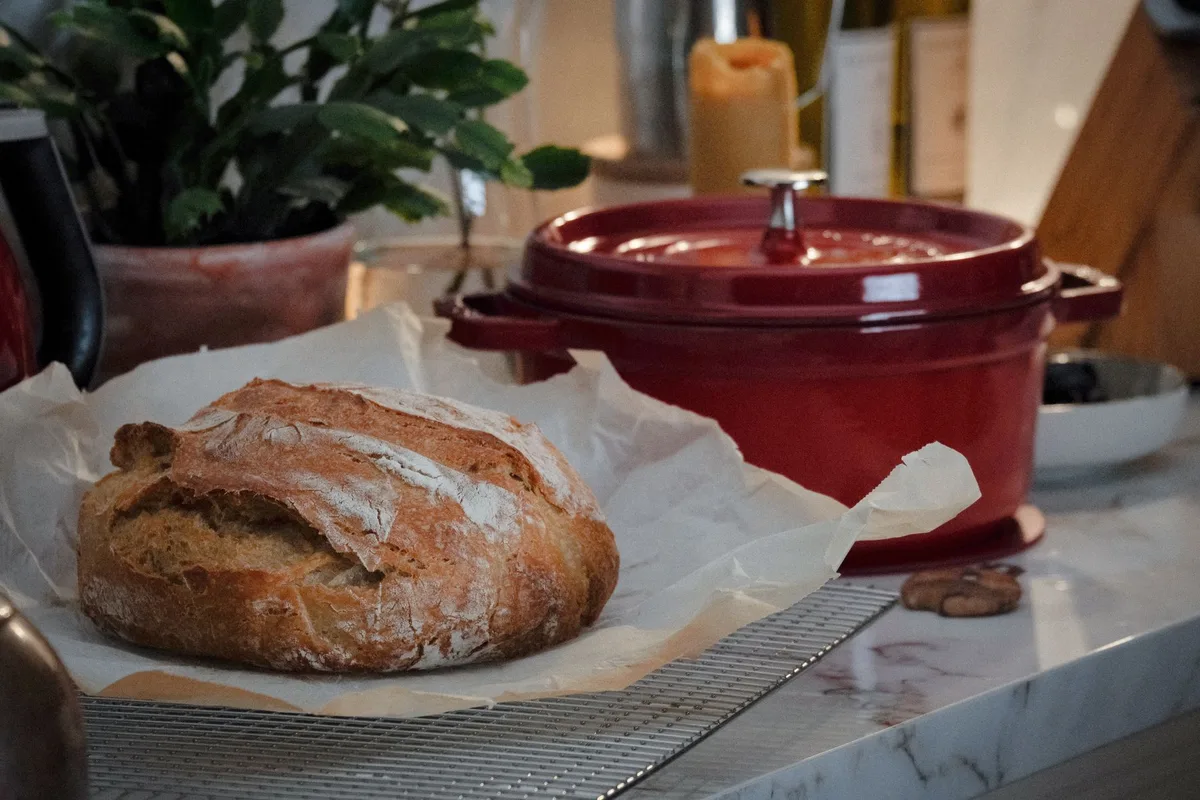
Here’s why it works: The sealed pot traps the moisture that naturally releases from the dough as it bakes. That steam keeps the crust soft and elastic during the first 20 minutes of baking. The dough rises to its full potential inside that humid environment.
Then, when you remove the lid for the final bake, the exposed bread develops a deep golden crust with that satisfying crackle.
The no-knead bread method popularized by Jim Lahey relies entirely on this technique. Mix flour, water, salt, and a tiny amount of yeast. Let it rest for 12, 18 hours.
Shape it. Drop it into a preheated Dutch oven. Bake covered for 30 minutes, then uncovered for 15 more.
That’s it. You get a loaf that looks like it came from a $5 artisan bakery.
You can also bake sourdough, rye loaves, focaccia, and even certain types of cakes in a Dutch oven. The even heat distribution prevents hot spots that burn the bottom of your bread. I’ve baked hundreds of loaves in mine, and the results are consistently excellent.
Deep Frying Without the Mess
Deep frying at home is usually a pain. You need a dedicated deep fryer or a heavy pot. The oil splatters.
The temperature fluctuates. Cleanup takes forever.
A Dutch oven makes deep frying simpler and safer.
The thick cast iron walls hold oil temperature steady. When you drop in a batch of chicken wings or French fries, the oil temp barely dips. That means your food cooks evenly and doesn’t absorb excess oil.
You get crispy, not greasy.
The high walls prevent oil splatter from coating your stovetop. And the weight of the pot keeps it stable, no tipping hazards.
I use my Dutch oven for:
- Fried chicken, stays juicy inside, crunchy outside
- Donuts, even browning, no raw dough centers
- Tempura vegetables, light, not heavy
- Homemade french fries, double-fry method works perfectly
The only catch is that your Dutch oven’s enamel coating might darken over time from high-heat oil. That’s cosmetic. It doesn’t affect performance.
And you can clean it with baking soda paste if the staining bothers you.
Cooking Over a Campfire or Off-Grid
Dutch ovens have been cooking over campfires for centuries. That tradition continues today because the design is still perfect for outdoor cooking.
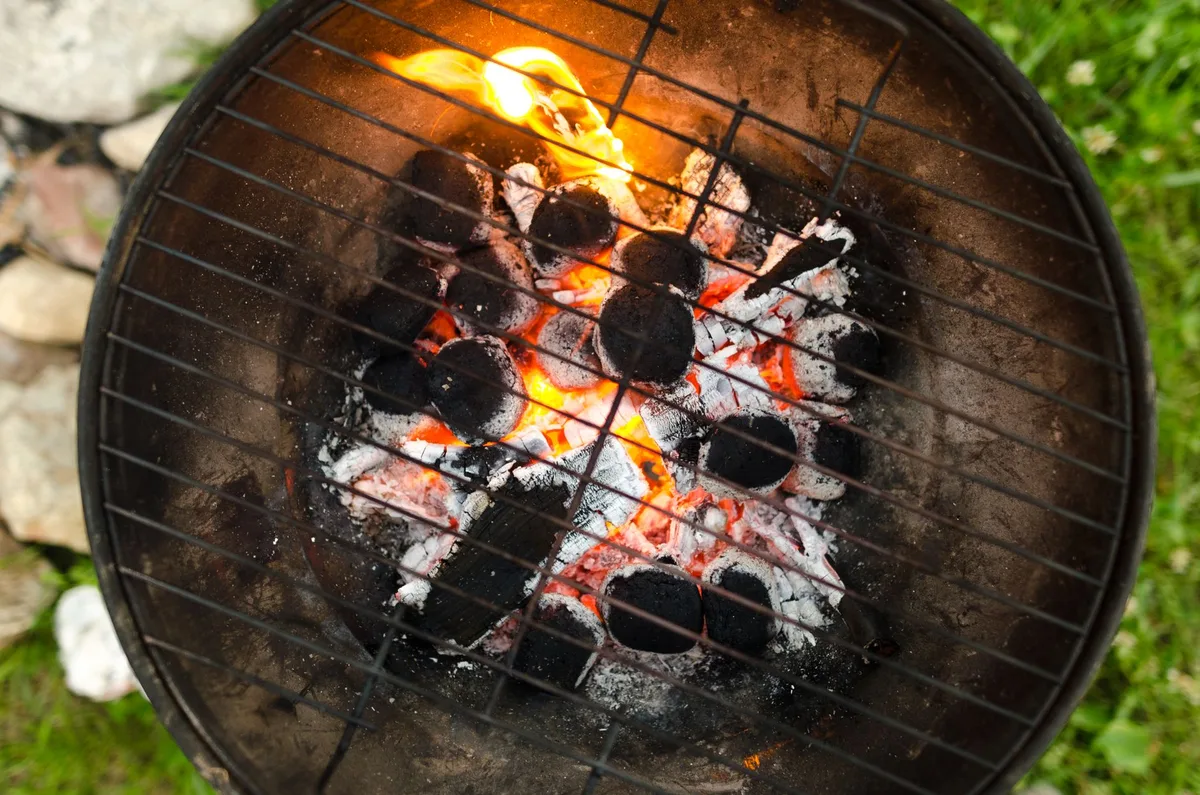
The legs on camp-style Dutch ovens elevate the pot above the coals. The flat lid holds additional coals on top. This gives you heat from above and below, similar to a conventional oven.
You can bake biscuits, roast chicken, or simmer chili without any modern equipment.
Even if you have a flat-bottom enameled Dutch oven (the kind for home kitchens), you can still use it on a camp stove or grill. I’ve cooked entire meals on a propane camp stove using mine. The heat retention means you don’t need constant flame.
Get it hot, add your food, stack on the lid, and let the residual heat do the work.
For car camping, a Dutch oven is unbeatable. You can prep your ingredients at home, pack the prepped food in a cooler, and have a hot, satisfying meal ready in under an hour at the campsite. No dehydrated backpacker meals required.
Soups, Stews, and Chili — But Better
Any pot can make soup. A Dutch oven makes better soup.
The difference comes down to browning. Most soup recipes start with sautéing aromatics. A thin pot heats unevenly.
You end up with burnt garlic in one spot and raw onions in another. The Dutch oven’s even heat distribution means every piece of onion hits the same temperature. You get consistent caramelization.
When you’re making a beef stew, the ability to sear the meat in the same pot you’ll simmer the stew in is a game changer. Those browned bits from the meat, called fond, dissolve into the broth. That’s flavor that a slow cooker can’t replicate.
The same applies to chili. Browning ground meat, toasting spices, and simmering tomatoes all happen in one vessel. The heavy lid helps meld flavors together over a long simmer without evaporation.
Your chili stays thick and rich, not watery.
Roasting Meats and Vegetables
You might not think of a Dutch oven as a roasting pan. It works better than most.
The enclosed environment roasts meat faster than an open pan because heat transfers through the cast iron walls. A whole chicken roasted in a Dutch oven cooks more evenly than in a standard roasting pan. The dark cast iron absorbs heat and radiates it back, so the breast and thighs finish at the same time.
Potatoes, carrots, and root vegetables benefit too. Toss them with olive oil and salt, spread them in a single layer in the Dutch oven, and roast at 425°F. The cast iron gives them crispy edges and creamy centers.
For a one-pot meal, I’ll sear chicken thighs skin-side down in the Dutch oven, pull them out, add vegetables, nestle the chicken back in, and roast everything together. The chicken fat renders into the vegetables. The vegetables release moisture that keeps the chicken juicy.
Nothing goes to waste.
One-Pot Pasta and Rice Dishes
Dutch ovens excel at dishes where you cook starch and aromatics together. The even heat prevents scorching on the bottom.
Try making a risotto in a Dutch oven. The wide surface area lets rice cook in a single layer. You can stir comfortably without splashing hot liquid everywhere.
And the heat retention keeps the broth simmering steadily as you add it ladleful by ladleful.
One-pot pasta works the same way. Brown some sausage, add onions and garlic, pour in tomatoes and uncooked pasta, add water, and cover. The Dutch oven does the rest.
The pasta absorbs the flavorful liquid as it cooks. You get a cohesive dish from a single pot with minimal stirring.
Jambalaya, paella (the stovetop version), pilafs, and macaroni and cheese all benefit from the Dutch oven’s even heat distribution. No more burnt rice at the bottom of the pot.
Slow Cooking Without a Slow Cooker
Slow cookers are convenient, but they have limitations. They don’t sear meat properly. They can’t reach high temperatures for browning.
You often need a separate pan anyway.
The Dutch oven eliminates that problem. You can brown, deglaze, and slow cook in the same pot. And the results are better.
Set your Dutch oven in a 250°F oven for six to eight hours. The gentle, surrounding heat cooks food more evenly than a slow cooker’s bottom heating element. You don’t get that ring of overcooked meat along the walls of the crock.
Collagen-rich cuts like oxtail, brisket, and pork shoulder become incredibly tender. Beans cook through without splitting. Stocks and broths develop deep flavor without reducing too quickly.
I’ve retired my slow cooker entirely. The Dutch oven does everything better.
What About Cleanup and Maintenance?
People often worry about Dutch oven maintenance. It’s simpler than you think.
Enameled Dutch ovens (like Le Creuset or Staub) require minimal effort. Soak them in warm water. Use a non-abrasive sponge.
Stuck-on food comes off with a paste of baking soda and water. Don’t use metal scrubbers. Don’t put them in the dishwasher.
Hand wash only.
Bare cast iron Dutch ovens need seasoning. After washing, dry them thoroughly over low heat on the stovetop. Rub a thin layer of oil over the interior and heat until it smokes.
Let it cool. That’s it. The seasoning builds up over time and becomes naturally non-stick.
Neither type is as fragile as people claim. I’ve used my enameled Dutch oven for years without chipping. Just don’t drop it or thermal shock it (never add cold water to a screaming hot pot).
Which Size Dutch Oven Should You Get?
If you’re buying your first Dutch oven, get a 5- to 6-quart size. That handles a whole chicken, a batch of chili, a loaf of bread, and most braises. It fits in a standard home oven.
A 7- to 9-quart Dutch oven is better for large families or batch cooking. You can fit a large roast or a whole chicken with vegetables. But it’s heavy, around 15 pounds or more.
Lifting it in and out of the oven takes some strength.
Smaller 2- to 3-quart Dutch ovens are useful for sides, sauces, or cooking for one or two people. They heat faster and are easier to handle.
Final Thoughts on What Dutch Ovens Are Good For
A Dutch oven is not just another pot. It’s a workhorse that handles more cooking tasks than any other single piece of cookware you can buy.
You’ll use it for:
- Braising tough cuts to tenderness
- Baking artisan bread with perfect crust
- Frying without temperature swings
- Camp cooking over fire or coals
- Soups and stews with deep, layered flavor
- Roasting meats and vegetables evenly
- One-pot meals that save time and cleanup
- Slow cooking that actually develops flavor
If you cook regularly, a Dutch oven will quickly become your most-used pot. It’s the kind of tool that makes you a better cook without any extra effort. The heat is even.
The results are consistent. And the range of things you can do with it is genuinely impressive.
Buy a quality one from a reputable manufacturer. Take reasonable care of it. It’ll outlast every other pot in your kitchen.
And it’ll make almost everything you cook taste noticeably better.
That’s what Dutch ovens are good for.