You’ve probably grabbed a cast iron skillet at a store and been genuinely surprised. These pans aren’t just cookware, they’re basically fitness equipment that happens to make incredible cornbread.
But here’s the thing: that weight is exactly why people love them. And hate them. There’s no in-between.
So how heavy is a cast iron skillet, really? The short answer? Most common sizes weigh between 3 and 8 pounds.
But that’s like saying a car “weighs a few tons”, technically true but not particularly helpful.
Let’s get into the actual numbers, what causes the weight differences, and why it all matters for your cooking.
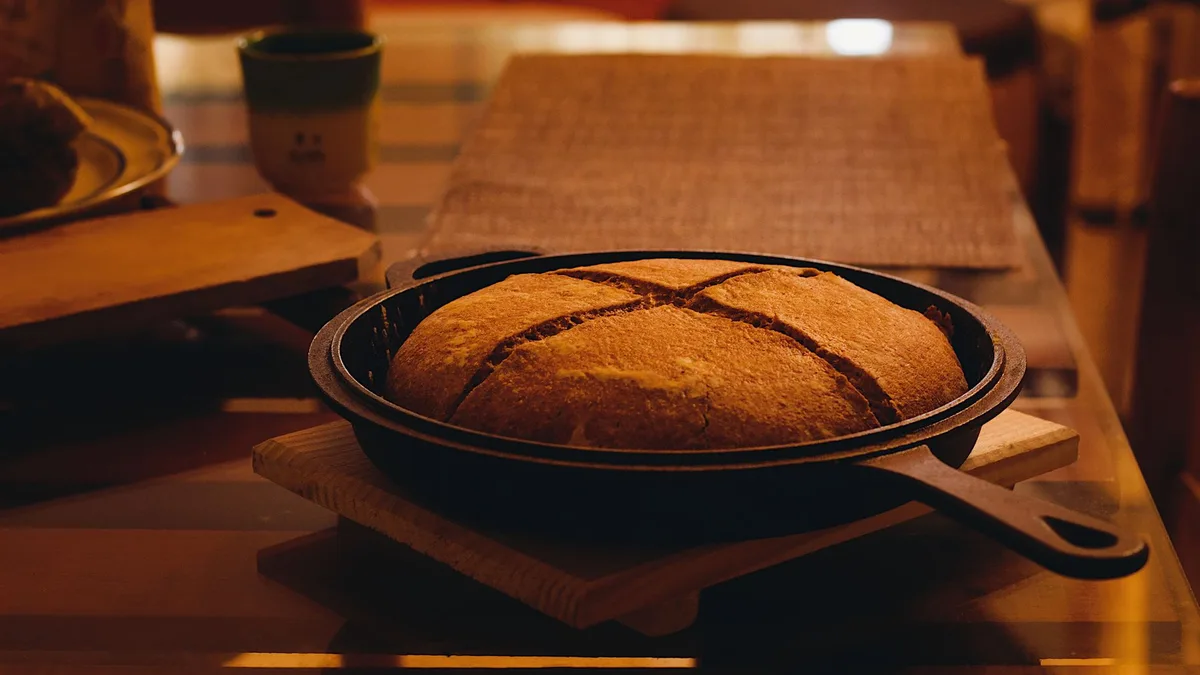
Image source: Pexels / Silva Montanis (Pexels License)
The Straightforward Answer: Weight by Size
Cast iron skillets come in standard sizes, and each size has a predictable weight range. Here’s what you need to know:
| Pan Size (inches) | Typical Weight | Common Use |
|---|---|---|
| 8-inch | 3–3.5 lbs | Eggs, single servings, small sides |
| 10-inch | 4.5–5.5 lbs | Everyday cooking, 2–3 people |
| 12-inch | 6.5–8 lbs | Family meals, searing larger cuts |
| 14-inch | 8.5–11 lbs | Big batches, outdoor cooking |
Those numbers are for standard, classic skillets. But here’s where it gets interesting.
The 10-Inch Skillet Is the Benchmark
Most households own a 10-inch skillet. It’s the Goldilocks size, big enough for real cooking, small enough to store. And it typically weighs around 5 pounds.
Lodge, the most popular brand in America, lists their 10.25-inch skillet at 5.4 pounds. That’s a solid reference point. If someone asks “how heavy is a cast iron skillet” and you only remember one number, make it 5 pounds for the 10-inch.
The 12-Inch Skillet Is a Workhorse
That jump from 10 to 12 inches doesn’t seem like much visually. But in terms of weight? It’s a huge leap.
A 12-inch Lodge skillet weighs about 7.5 pounds. Empty. Before you add food.
Now, think about lifting it with a full roast chicken or a pile of seared steaks. You’re easily moving 10+ pounds one-handed if you try to hold it with a towel.
That’s why proper technique matters. Two hands. Always two hands for a loaded 12-inch pan.
Factors That Affect a Cast Iron Skillet’s Weight
Not all skillets are created equal. Two pans of the same diameter can differ by more than a pound. Here’s why.
Brand-Specific Thickness
Lodge makes thick, robust pans. Their walls and bases are substantial. This makes them durable and excellent at holding heat, but it also makes them heavier.
European brands like Le Creuset (enameled cast iron) and Staub tend to be slightly thinner. A 10-inch Le Creuset skillet weighs around 4.5 pounds, roughly a pound less than its Lodge counterpart. Still heavy, but noticeably easier to maneuver.
Other American heritage brands like Victoria and Field Company sit somewhere in between. Field Company specifically markets “lightweight” cast iron, and their 10-inch skillet comes in at around 3.4 pounds. Same cooking surface, dramatically less heft.
Number of Handles
This feels minor, but it adds up. A standard skillet has one long handle. A double-handled pan (often called a “grill pan” or “braiser”) adds another chunk of iron to the opposite side.
Those extra handles can add half a pound or more.
Manufacturing Methods
This is where things get technical. Traditional sand casting produces thicker, rougher pans. The molten iron fills a sand mold, and the resulting surface is textured, you’ve seen that pebbly finish on Lodge pans.
Modern precision casting or machining creates thinner walls. Field, Butter Pat, and Smithey grind down the surface after casting. They remove material (and weight) to create a smoother finish that’s theoretically more non-stick.
You’re paying for the extra machining step and shaving off ounces.
Enameled vs. Bare Cast Iron
Enameled cast iron has a glass-like coating fused to the surface. It prevents rust and eliminates the need for seasoning. But that coating isn’t weightless.
An enameled pan will typically weigh slightly more than a bare pan of the same size and thickness.
Vintage Pans Weigh Less
Here’s a fun fact: old cast iron pans (pre-1960s) are typically lighter than modern ones. Manufacturers ground the cooking surfaces smooth back then, which removed material. That’s why vintage Wagner and Griswold pans are so beloved, they perform like modern pans but weigh less.
Image source: Pexels / Abdullah Öğük (Pexels License)
Why Is Cast Iron So Heavy Anyway?
Cast iron is heavy because it’s made from, well, iron. And iron is dense. Really dense.
- Pure iron weighs about 7.87 grams per cubic centimeter
- For comparison, aluminum weighs 2.70 grams per cubic centimeter
- Stainless steel is around 8.0 grams per cubic centimeter
Think of it this way: a cubic foot of cast iron weighs roughly 450 pounds. Pan manufacturers shape that material into a cooking vessel, and they don’t use thin sheets of it. They cast it thick, usually with walls that are 3, 5 millimeters thick.
That’s not a material you can make ultra-thin without it becoming brittle or warping.
The Casting Process Creates Bulk
Manufacturers pour molten iron into sand molds. The iron fills every corner of that mold. To make a pan that won’t crack during manufacturing or cooking, the mold needs enough material.
Thin castings cool unevenly, which leads to stress fractures. So the process inherently produces thick, chunky cookware.
It’s a Feature, Not a Bug
That weight is precisely what makes cast iron such a phenomenal cooking surface.
Cast iron has a high heat capacity. When you preheat your skillet, you’re not just heating a thin layer of metal. You’re heating a dense slab of iron that stores thermal energy.
When you drop a cold steak into the pan, the temperature barely drops. The pan keeps delivering searing heat.
A light aluminum pan can’t do that. It cools down instantly when food hits it. You end up steaming rather than searing.
That’s why professional chefs put up with the weight. There’s no free lunch. The performance you get from cast iron is directly tied to its mass.
How Cast Iron Compares to Other Cookware
To appreciate the weight of a cast iron skillet, it helps to compare it with what else is out there.
| Cookware Type | 10-inch Weight | Heat Retention |
|---|---|---|
| Cast Iron | 5–5.5 lbs | Excellent |
| Carbon Steel | 3–3.5 lbs | Great |
| Stainless Steel | 2.5–3 lbs | Good |
| Aluminum | 2–2.5 lbs | Poor |
| Ceramic/Nonstick | 2–3 lbs | Fair |
Carbon Steel Is Cast Iron’s Lighter Cousin
Carbon steel has a very similar composition to cast iron, just less carbon. It’s lighter because it’s rolled into sheets rather than cast in molds. You can get a 10-inch carbon steel pan at around 3 pounds.
But here’s the trade-off. Because it’s thinner, carbon steel heats less evenly and doesn’t hold heat as well. It’s more responsive (quick to heat, quick to cool), which appeals to some cooks.
But it requires the same seasoning care as cast iron and doesn’t have that bulletproof durability.
Stainless Steel Keeps It Simple
A 10-inch stainless steel pan is about half the weight of cast iron. It’s not non-stick, and it doesn’t retain heat exceptionally well. But it doesn’t rust, it’s dishwasher-safe, and you don’t have to season it.
Many kitchens keep one stainless pan for acidic sauces and one cast iron pan for searing.
The “Lightweight Cast Iron” Alternative
A few modern brands have figured out how to make thinner cast iron. Field Company and Netherton Foundry are the most recognized names. Their pans weigh roughly 30, 40% less than traditional Lodge skillets.
But they cost more. A lot more. A Field Company skillet runs $115, $155.
A Lodge costs $25, $35. So you’re paying a premium to reduce weight without losing the material’s heat properties.
Image source: Pexels / Abdullah Öğük (Pexels License)
How Much Can You Handle?
Let’s be practical. What can you actually lift?
Consider Your Wrist Strength
This isn’t about being weak. It’s about biomechanics. Holding a 5-pound skillet at arm’s length while flipping vegetables is a workout.
Your wrist, forearm, and shoulder are all engaged. For people with grip issues, wrist problems, or arthritis, that’s a genuine barrier.
If wrist strength is a concern, stick with an 8-inch skillet (around 3 pounds). Or look at the modern lightweight brands. You’ll still get cast iron performance without the strain.
Consider the Total Weight Cooked
A 12-inch skillet weighs 7.5 pounds empty. Add a pound of bacon, some potatoes, and a little oil, you’re easily at 10 pounds. Now you need to move that from the stove to the table.
That’s where accidents happen.
A loaded pan is a serious project. Don’t test your limits. Use the oven to keep food warm or transfer to a serving dish instead of carrying the whole skillet.
Consider Cooking for Others
If you’re cooking for one or two, a 10-inch pan works fine. But for a family of four, you’ll want the extra surface area of a 12-inch pan. That means resigning yourself to the weight.
The alternative? Cook in batches. Use the 10-inch skillet and cook things sequentially.
That works fine for some dishes but not for things like fried chicken where you need room for multiple pieces.
Does Weight Affect Seasoning?
The seasoning process is the same regardless of weight. You apply a thin layer of oil, heat it until the oil polymerizes, and repeat. The weight of the pan doesn’t change how seasoning bonds to the surface.
However, heavier pans season more evenly. Because they hold more heat, there are fewer hot spots. That means the oil polymerizes at a consistent rate across the entire surface.
Lighter pans are more prone to uneven heating, which can create patchy seasoning.
So if you’re struggling with seasoning issues, a heavier pan might actually serve you better.
Is a Heavier Skillet Better?
Not necessarily.
A heavier skillet holds heat better. That’s a fact. If you’re searing a thick ribeye, the pan won’t lose temperature when the cold meat hits it.
You get a deeper, more uniform crust.
A lighter skillet is easier to handle. You can toss vegetables, flip pancakes, and move the pan from burner to sink without drama.
So which matters more to you?
For Searing and Deep Frying: Heavier Wins
If you’re making steak, burgers or fried chicken, recipes that need sustained high heat, go heavy. The mass helps maintain temperature. A 12-inch cast iron pan is the king of this domain.
The weight is a small price for that performance.
For Eggs and Everyday Cooking: Lighter Is Fine
If you’re making omelets, sautéing vegetables, or cooking chicken breasts, the weight matters less. You don’t need massive heat retention for quick cooking. A lighter pan is more comfortable and easier to work with.
For Baking: Heavier Wins Again
You know what’s heavy? The cast iron skillet you use for cornbread, cobblers, and skillet cookies. The heaviness isn’t a drawback.
It’s a benefit.
The weight acts as a thermal mass, protecting your baked goods from oven temperature fluctuations. It encourages even browning on the bottom and edges. That’s why cast iron skillets make superior cornbread, the weight creates a crisp, beautifully browned crust.
How to Check the Weight Before You Buy
When shopping online, the weight is listed in the product specifications. Easy. But if you’re at a store, you can still figure it out.
Method 1: Check the bottom. Most skillets have the size marked on the underside. Most pans are sold in 8, 10, and 12-inch sizes. Use the weight chart from earlier in this article to get a rough estimate.
Method 2: Read the packaging. Manufacturers list the weight on the box. This is the most reliable way to confirm what you’re buying.
Method 3: Pick it up. Trust your hands. If it feels comfortable, it’s fine. Your body knows what weight works for you.
Frequently Asked Questions
How much does a 12-inch cast iron skillet weigh?
A standard 12-inch Lodge skillet weighs about 7.5 pounds. Lighter brands can get it down to around 5 pounds, and older vintage pans often weigh less.
Is a 5-pound skillet heavy?
For daily cooking, 5 pounds is manageable for most people. It’s about the same as a full laptop bag. It’s only when you’re holding it one-handed, loaded with food, that it becomes challenging.
Why is my cast iron skillet so much heavier than my other pans?
Because cast iron is denser than stainless steel, aluminum, and ceramic. It’s not just about wall thickness, the material itself is heavier. It’s the price you pay for superior heat retention.
Can you put a heavy cast iron skillet in the oven?
Yes, absolutely. The iron handles are oven-safe. Actually, the pan is more oven-friendly than most cookware because there’s nothing that can melt.
Just remember to use an oven mitt, the handle gets hot too.
Does a warm skillet weigh more?
Marginally. But honestly, the difference is so small you’d need a lab scale to notice. Wait, that’s not exactly true either.
The weight does increase when you add oil and food, and that’s the weight you should watch out for when lifting.
What if I have wrist or shoulder problems?
Consider an 8-inch pan or look into lightweight cast iron options. Skip the traditional Lodge if weight is a concern. Your health matters more than tradition.
The Bottom Line
So, how heavy is a cast iron skillet?
Most home cooks will encounter pans weighing anywhere from 3 to 8 pounds, with the ubiquitous 10-inch Lodge at around 5.4 pounds as the most common reference point.
The weight of a cast iron skillet isn’t a flaw. It’s the entire design philosophy. You trade arm strength for heat management capability.
You sacrifice ease of lifting for perfect sears and crispy crusts on everything.
If you can handle the weight, cast iron is arguably the most versatile pan you’ll ever own. It sears, fries, bakes, roasts, and broils. It lasts decades with minimal care.
And yes, it’ll occasionally make your arm sore.
That’s the trade-off. For most people, it’s worth it.