Walk into any kitchenware store and you’ll see walls lined with frying pans, sauté pans, and skillets. Ask ten cooks what separates them and you’ll get eleven opinions. Some say it’s the height of the sides.
Others insist it’s the handle. A few will tell you the words are pure marketing fluff.
Here’s the truth: the terms overlap more than most people admit, but there are real differences that affect how you cook. Understanding them helps you pick the right tool for the job, and stops you from buying three pans when one would do.
Let’s settle this once and for all.
The Short Answer: What Defines a Pan vs a Skillet
A skillet has sloped sides, a wide flat bottom, and typically comes without a lid. A pan is the broader category, it includes skillets, sauté pans, saucepans, and frying pans. When someone says “pan” in everyday cooking, they usually mean a frying pan, which has the same sloped sides as a skillet.
The real distinction cooks care about comes down to three things:
- Side height, sloped and short (skillet) vs straight and tall (sauté pan)
- Lid availability, skillets usually go lidless; pans often come with covers
- Heat control, the shape changes how moisture and heat behave
That’s the core. Everything else is nuance, brand naming, and regional habits.
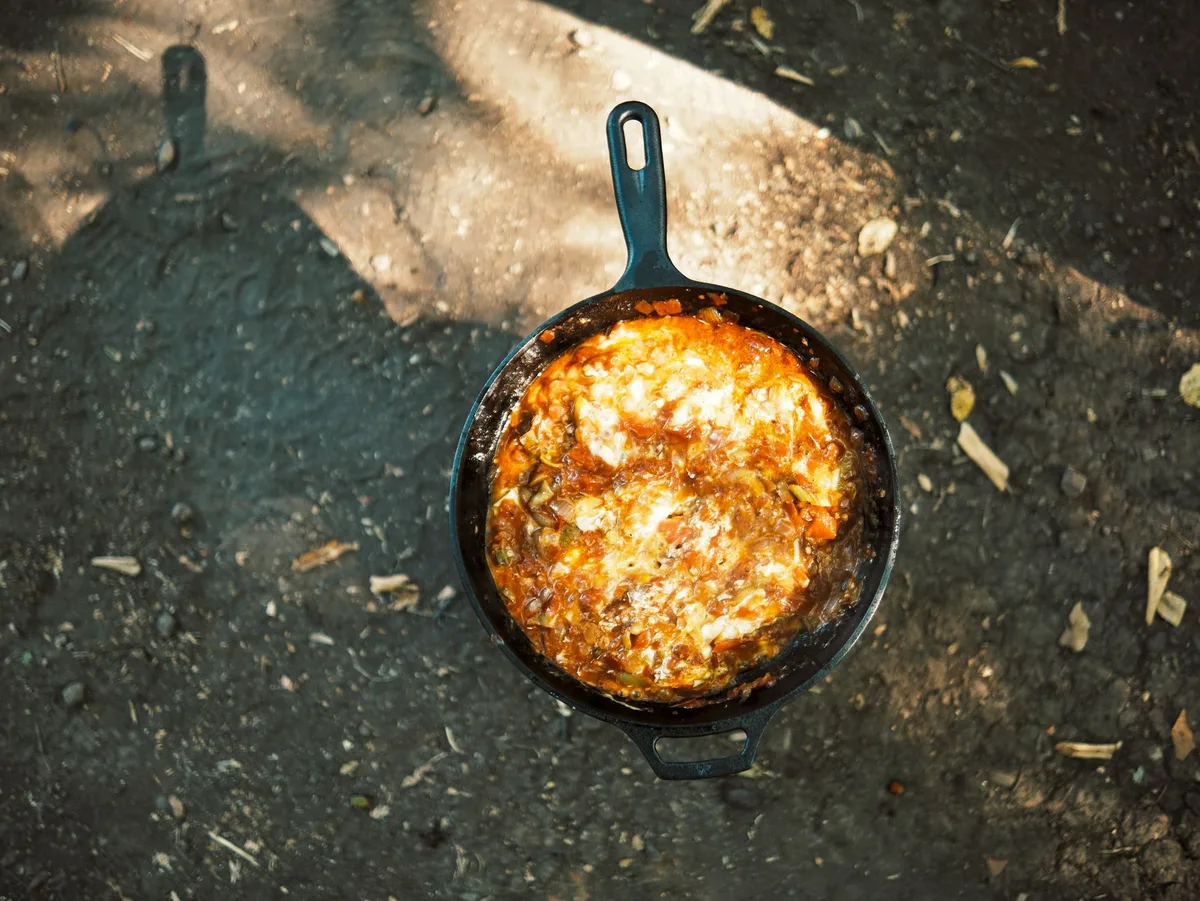
Image source: Pexels / Abdullah Öğük (Pexels License)
A Quick History Lesson (Because Words Matter)
The word “skillet” comes from the Old French escuelette, meaning a small dish or platter. It crossed into English hundreds of years ago as a term for any shallow cooking vessel. Colonial Americans used cast iron skillets for everything, frying, baking, even serving at the table.
“Pan” traces back to the Old English panne, which simply meant a cooking vessel. It’s the older, more generic word. That’s why we say “saucepan,” “frying pan,” and “sheet pan”, but never “sauceskillet.”
The confusion grew in the 20th century when manufacturers started stamping “skillet” on packaging to sound more rustic and “frying pan” on others to sound more refined. Same product, different label. That’s when the real headache began.
Size and Shape: The Section Where Most People Get Confused
Grab a tape measure and look at the actual geometry. This is where the differences become obvious.
Skillet Characteristics
- Low, sloped sides, usually 1 to 2 inches tall
- Wide cooking surface that flares outward
- Handles are long, often with a hole at the end for hanging
- Almost never ships with a lid (though universal lids fit)
- Built for high-heat searing and quick tossing
Because the sides slope, you can slide a spatula under food at a shallow angle. You can flip ingredients by tilting the pan and flicking your wrist, that classic chef move. The wide surface means more food touches hot metal directly, which creates better browning.
Frying Pan Characteristics
Here’s where it gets messy: most English-speaking cooks use “frying pan” and “skillet” interchangeably. The French call them poêle. The Italians say padella.
They all describe that same shallow, sloped-sided vessel.
In strict culinary terms, a frying pan is a type of pan with:
- Sloped sides, just like a skillet
- A long handle
- No lid
- A flat bottom for even oil distribution
So yes, a skillet and a frying pan are the same pan. I’ll say it plainly: if someone argues they’re different, they’re splitting hairs over branding, not cooking function.
The True Contrast: Skillet vs Sauté Pan
If you want an actual geometric difference, compare a skillet to a sauté pan. That’s where the lines are real.
| Feature | Skillet | Sauté Pan |
|---|---|---|
| Side angle | Sloped outward | Straight up and down |
| Side height | Low (1–2 in) | Tall (2–3 in) |
| Lid | Usually no | Usually yes |
| Capacity | Smaller | Larger |
| Best for | Searing, frying, flipping | Braising, sauces, cooking with liquid |
The sauté pan’s straight walls hold more volume. You can braise chicken thighs in stock without splashing over the rim. You can make a pan sauce that doesn’t slosh out.
You can cook rice pilaf with a tight-fitting lid.
That’s a functional upgrade, not a marketing gimmick.
Material Matters: Cast Iron, Stainless, Nonstick
Once you’ve settled the shape debate, material becomes the next big fork in the road. The same “skillet” name gets stamped onto vastly different pieces of metal.
Cast Iron Skillets
Cast iron is the heavyweight champion. It’s thick, heavy, and takes forever to heat up, but once hot, it stays hot. That thermal mass gives you a consistent sear on a steak that thin pans just can’t match.
The catch? Cast iron needs seasoning. That means coating it with oil and baking it to create a polymerized layer.
This layer gives you a natural nonstick surface over time. Skip the maintenance and your eggs will cement themselves to the pan.
Modern enameled cast iron from brands like Le Creuset skips the seasoning requirement. The porcelain coating handles acidic foods like tomatoes without reacting. But enameled versions are heavy and expensive.
Stainless Steel Skillets
Stainless steel pans are the workhorses of professional kitchens. They don’t react with acidic ingredients. They’re dishwasher-safe.
They handle metal utensils without flinching.
The downside is sticking. Eggs will glue to an ungreased stainless surface. You need proper heat management, preheat the pan, add oil, wait until it shimmers, to get that release.
Many stainless skillets come with an aluminum or copper core sandwiched between steel layers. That’s the “tri-ply” or “multi-clad” design you see on product labels. It improves heat distribution because steel alone conducts heat poorly.
Nonstick Skillets
Nonstick pans have a coating, usually PTFE (Teflon) or ceramic, that lets food slide right off. They’re perfect for eggs, delicate fish, and crepes.
The trade-off is durability. Nonstick coatings scratch easily. Metal utensils will wreck them.
High heat (over 500°F) can cause the coating to break down. Most nonstick pans last two to three years before the coating starts peeling.
Pro tip: reserve a nonstick skillet for delicate foods, and use stainless or cast iron for high-heat searing. That combination covers everything.
Image source: Pexels / khairul nizam (Pexels License)
Handles: The Underrated Difference
Nobody walks into a store thinking about handles. Then they buy a skillet with a thin metal grip, grab it hot, and regret every life choice that led to that moment.
Common Handle Materials
- Stainless steel, stays cool on the stovetop but conducts heat from the pan body over time. Usually has a hollow core or riveted design.
- Cast iron, the handle is part of the pan itself. Gets scalding hot. Always need a towel or mitt.
- Bakelite or silicone, plastic-like coatings that stay cooler but can melt near open flames or under a broiler.
- Wood, traditional and attractive, but prone to cracking in the dishwasher and absorbing moisture.
Handle Length and Weight
A skillet’s handle should feel balanced. The pan should not tip forward when you grip it. Long handles give you leverage for tossing, but they also create more torque, which means more arm strength required.
Oven-safe handles matter too. If your skillet has a rubber-coated handle, it’s safe to 350°F. Cast iron and stainless go straight from stovetop to a 500°F oven without issue.
Heat Distribution: The Science of Even Cooking
Here’s a test you can do at home right now. Heat a dry skillet on medium for three minutes. Sprinkle flour over the bottom.
Watch where it browns first.
On a cheap pan, you’ll see hot spots, rings or patches where flour browns quickly and other spots that stay pale. On a quality skillet, the flour browns evenly across the entire surface.
Why Thickness Matters
Thicker metal means more even heat. A thin aluminum pan conducts heat quickly but unevenly. It develops scorch zones over the burner flames.
Thick cast iron or tri-ply stainless spreads heat across the whole surface before cooking your food.
This is why restaurant skillets are heavy. Heavy means thick, thick means even, even means consistent browning.
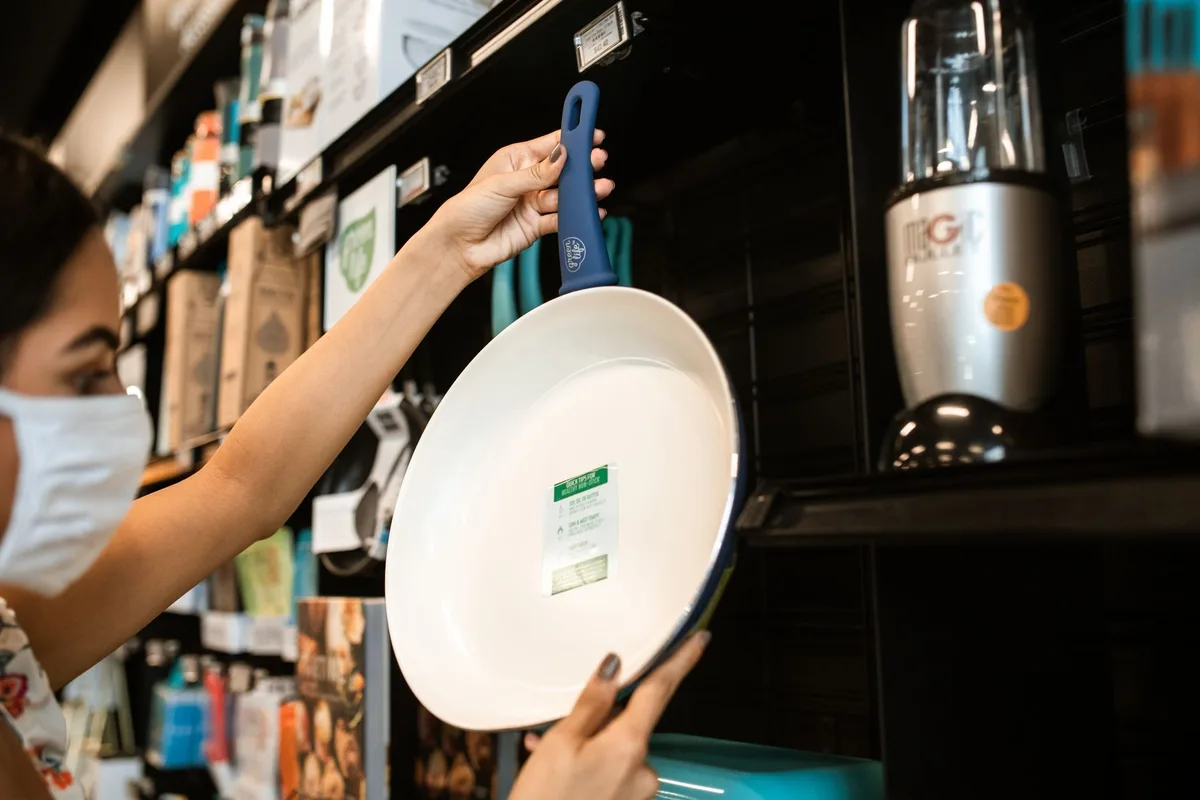
Image source: Pexels / RDNE Stock project (Pexels License)
The Electric Stovetop Problem
Electric burners cycle on and off to maintain temperature. When the burner is “off,” a thin pan’s surface cools rapidly. When it kicks back on, you get a hot surge.
Thick pans smooth out those cycles, keeping the cooking temperature steady.
Gas stoves reward a different design. You can modulate flame instantly, so you don’t need as much thermal mass, but it doesn’t hurt.
Sautéing vs Searing: Which Pan Does What?
Now we get into practical cooking. Different techniques favor different pan geometry.
Searing — Skillet Wins
Searing needs maximum surface contact and high heat. Sloped sides mean a steak lies flat with nothing crowding it. Moisture evaporates quickly because the shallow sides don’t trap steam.
That dry environment is exactly what you want for a crispy crust.
Sautéing — Toss the Skillet
The word “sauté” means “jump” in French. It refers to flipping food in the air. Scalloped sides make this easy, the curve lets food slide up and arc back down.
Use a skillet for sautéing vegetables, shrimp, or anything you want to toss.
Braising — The Sauté Pan’s Domain
When you braise, you brown food first, then add liquid and simmer with a lid. Straight, tall sides hold that liquid without splashing. The lid traps moisture.
This is a situation where a skillet struggles, those shallow sloped walls just don’t hold enough.
One Pan, Many Jobs: The Versatility Argument
Here’s where I’ll throw a curveball. Most home cooks own one workhorse skillet and use it for 80% of their stovetop cooking. That’s not laziness, it’s practicality.
A good 10-inch cast iron skillet can:
- Fry chicken without sticking
- Bake cornbread in the oven
- Sear steaks and finish in butter
- Roast vegetables at high heat
- Cook eggs if well-seasoned
- Serve at the table as a rustic presentation piece
A quality stainless skillet covers similar ground with less maintenance. It deglazes beautifully for pan sauces because the browned bits release easily.
The question isn’t “pan vs skillet”, it’s “which material and size suits how you actually cook.”
What About Sizes and Capacities?
Skillet sizes get measured by the diameter across the top, not the cooking surface, not the volume. That trips people up.
A 12-inch skillet sounds huge, but the cooking surface is roughly 9 inches once you account for the sloped sides. If you’re frying two eggs, a 10-inch works. For family dinners, step up to 12 inches.
For single portions, an 8-inch is plenty.
Watch the weight budget. A 12-inch cast iron skillet weighs about 7 to 8 pounds empty. Add food and liquid, and you’re hefting over ten pounds every time you move it.
Your wrists will notice.
Care and Maintenance: What Each Pan Demands
Your pan will outlive you if you treat it right. Here are the ground rules for each material.
Cast Iron Care
- Never put it in the dishwasher
- Dry immediately after washing to prevent rust
- Apply a thin layer of oil after each cleaning
- Avoid cooking highly acidic foods for long periods
- Re-season occasionally in the oven
Cast iron gets better with age. A well-used pan develops a nonstick surface that rivals modern coatings. That’s not nostalgia, it’s the polymerized oil physically filling microscopic pores.
Stainless Steel Care
- Preheat properly, the Leidenfrost effect (water beads and dances) means it’s ready
- Soak stubborn residue instead of scrubbing
- Barkeeper’s Friend removes discoloration and brown film
- Dishwasher-safe, though hand-washing extends the finish
Nonstick Care
- Never heat empty over high heat
- Use wood, silicone, or plastic utensils only
- Hand-wash with a soft sponge
- Replace when you see scratches or peeling
Nonstick pans are consumables. Budget for replacing them every few years.
How to Choose the Right Pan for Your Kitchen
Let’s skip the marketing and get practical. Here’s my honest recommendation based on your cooking habits.
You Want One Pan to Do It All
Get a 10-inch cast iron skillet. It sears, bakes, fries, and roasts. Season it once, use it daily, and it becomes the most reliable tool in your kitchen.
It costs less than a good stainless pan and lasts for generations.
You Cook Mostly Eggs and Delicate Food
Buy a 9-inch or 10-inch nonstick skillet. Slide your eggs, flip your crepes, and don’t sweat the cleanup. Just avoid high heat and metal utensils, and plan to replace it every two years.
You Make Pan Sauces and Heavy Cooking
Get a stainless steel skillet with tri-ply construction. The fond (browned bits) releases properly for deglazing. It handles wine, vinegar, and tomatoes without metallic tastes.
A 12-inch version gives you room to work.
You Want the Perfect Second Pan
Skip the skillet, grab a 3-quart sauté pan. The straight sides and lid turn it into a mini-Dutch oven. Braise short ribs, make one-pot pasta, simmer curry, it does everything a skillet can plus a bunch it can’t.
The Verdict: Should You Care About the Label?
No, you shouldn’t care about naming conventions. Yes, you should care about geometry and material.
A “pan” and a “skillet” are functionally identical when they share the same shape. A sauté pan with straight walls is genuinely different. Cast iron and stainless steel cook differently regardless of what they’re called.
Next time you shop, look at the shape, not the label. Measure the side height. Check if it comes with a lid.
Weigh it in your hand. Those physical properties will tell you far more than whether the box says “pan” or “skillet.”
Buy the pan that fits your cooking style and your kitchen setup. If you treat it well, it’ll serve you for years. The terminology can sort itself out later.