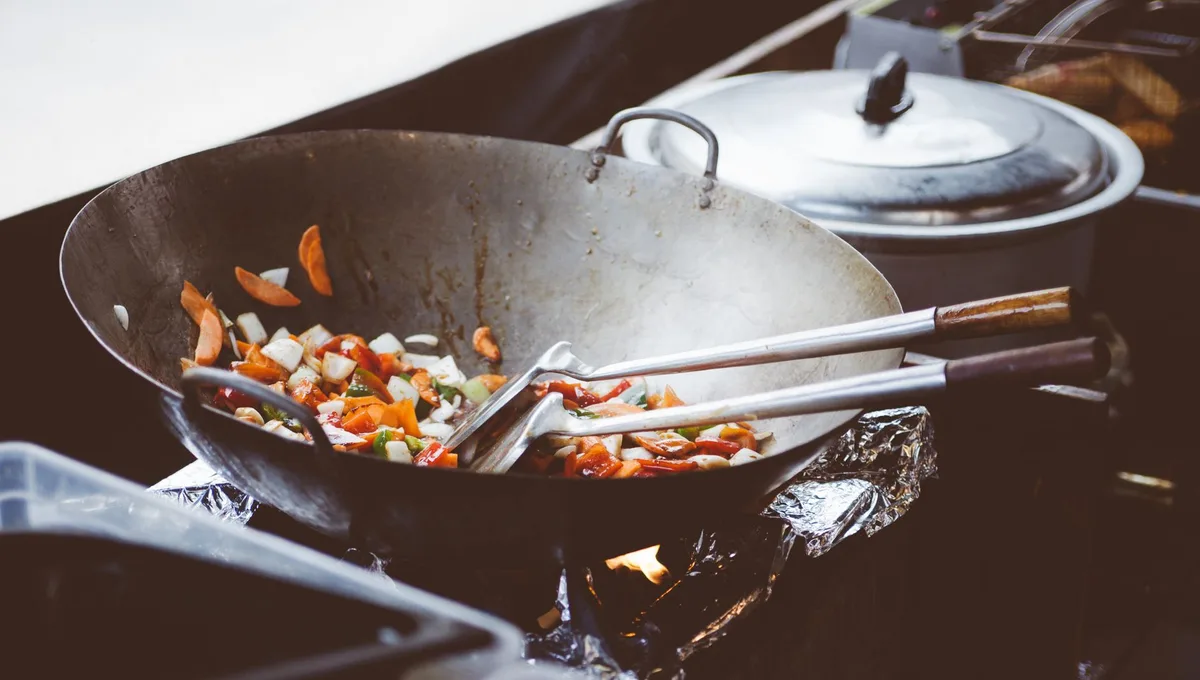
Image source: Pexels / Clem Onojeghuo (Pexels License)
how do you use a wok
I’ve been cooking with woks for over a decade. The first time I picked one up, I was intimidated. It’s big, it’s round, and it doesn’t sit flat on a Western stove.
But after a few burns, and one very smoky kitchen, I realized the wok is actually one of the most forgiving, versatile tools you can own.
If you’ve ever asked yourself “how do you use a wok?”, you’re in the right place. This isn’t a history lesson or a shopping list. It’s a straight-up, practical guide to getting the most out of your wok, whether you’re stir-frying, deep-frying, steaming, or just trying not to set off the smoke alarm.
Let’s start with the basics, then move to the techniques that’ll make your wok your most-used pan.
What Makes a Wok Different from Other Pans
Before you use a wok, understand why you’d reach for it over a skillet or a sauté pan.
A wok’s shape, wide, sloping sides, a small flat bottom or fully round bottom, does three things:
- Even heat distribution with a gradient. The bottom gets the hottest. The sides stay cooler. That means you can sear meat at the bottom, then push it up the side to keep warm while you cook vegetables in the remaining fat.
- High heat, fast cooking. Woks are designed for intense heat. The thin carbon steel (which most traditional woks are made of) responds instantly. You turn the burner up, and the wok is screaming hot in seconds.
- Less oil needed. The curved sides let you toss ingredients without flinging food everywhere. A tiny drizzle of oil coats the entire surface.
That’s the theory. The practice? You need to match the wok to your stove, season it properly, and learn a few moves.
Let’s do that now.
Choosing the Right Wok for Your Stove
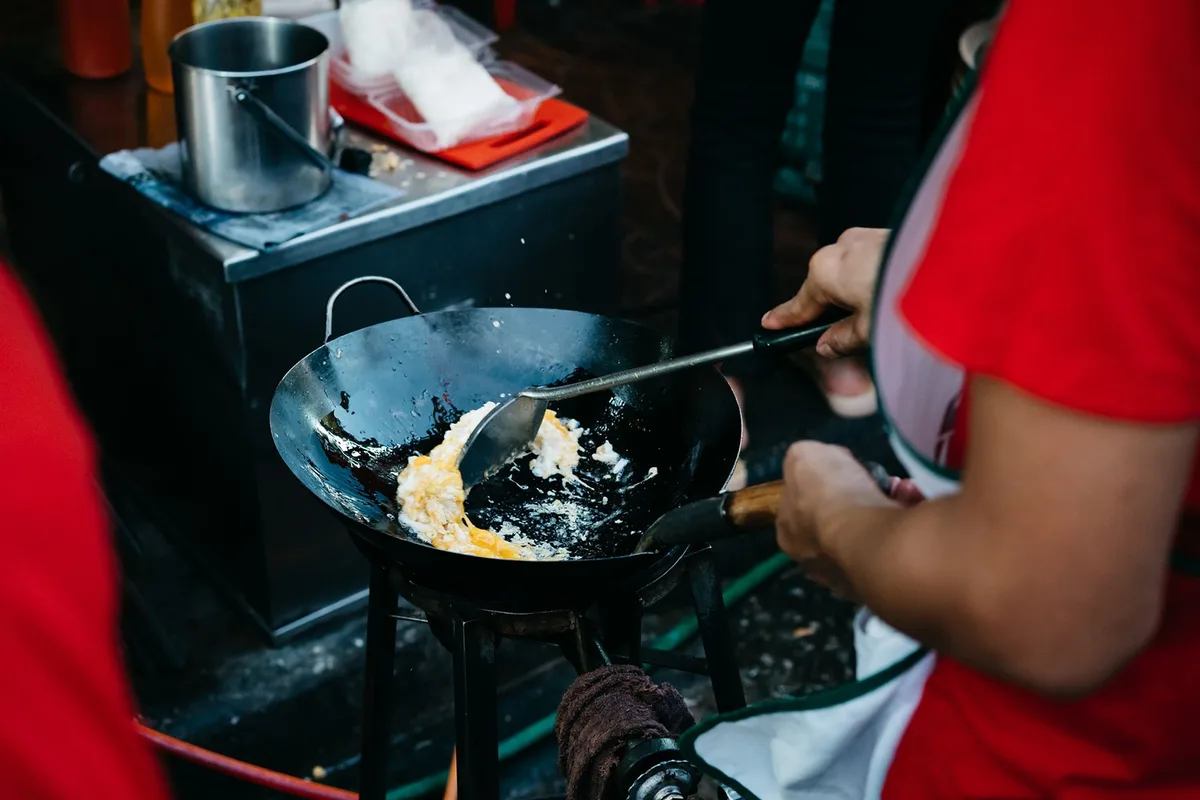
Image source: Pexels / Markus Winkler (Pexels License)
Not all woks work on all cooktops. If you pick the wrong one, you’ll fight it every time you cook.
Flat-bottom vs. Round-bottom
- Round-bottom wok, Classic. Requires a wok ring or a high-output gas burner that can cradle the round base. If you have a standard home gas stove, you’ll need a ring (most cheap stoves include one). The ring lifts the wok so the flames wrap around the sides. Without a ring, the wok wobbles.
- Flat-bottom wok, Designed for electric, induction, and ceramic cooktops. The flat base makes contact with the heating element. It works, but you lose some of the heat-gradient magic because the sides don’t get as hot. For most home cooks, a flat-bottom carbon steel wok is the best compromise.
I use a flat-bottom 14-inch carbon steel wok on a gas stove. It’s not traditional, but it’s practical. If you have induction, get a compatible flat-bottom wok, carbon steel works if the base is magnetic.
Material Matters
- Carbon steel, The standard. Light, heats fast, develops a non-stick patina with seasoning. Cheap and durable. This is what you want.
- Cast iron, Heavy, holds heat well, but slow to heat up and hard to toss. Great for deep-frying, lousy for fast stir-frying.
- Stainless steel, Doesn’t season. Food sticks. Avoid.
- Non-stick coated, Won’t take high heat. The coating degrades. Not a wok.
Bottom line: get a carbon steel wok. Flat or round depends on your stove.
Seasoning Your Wok
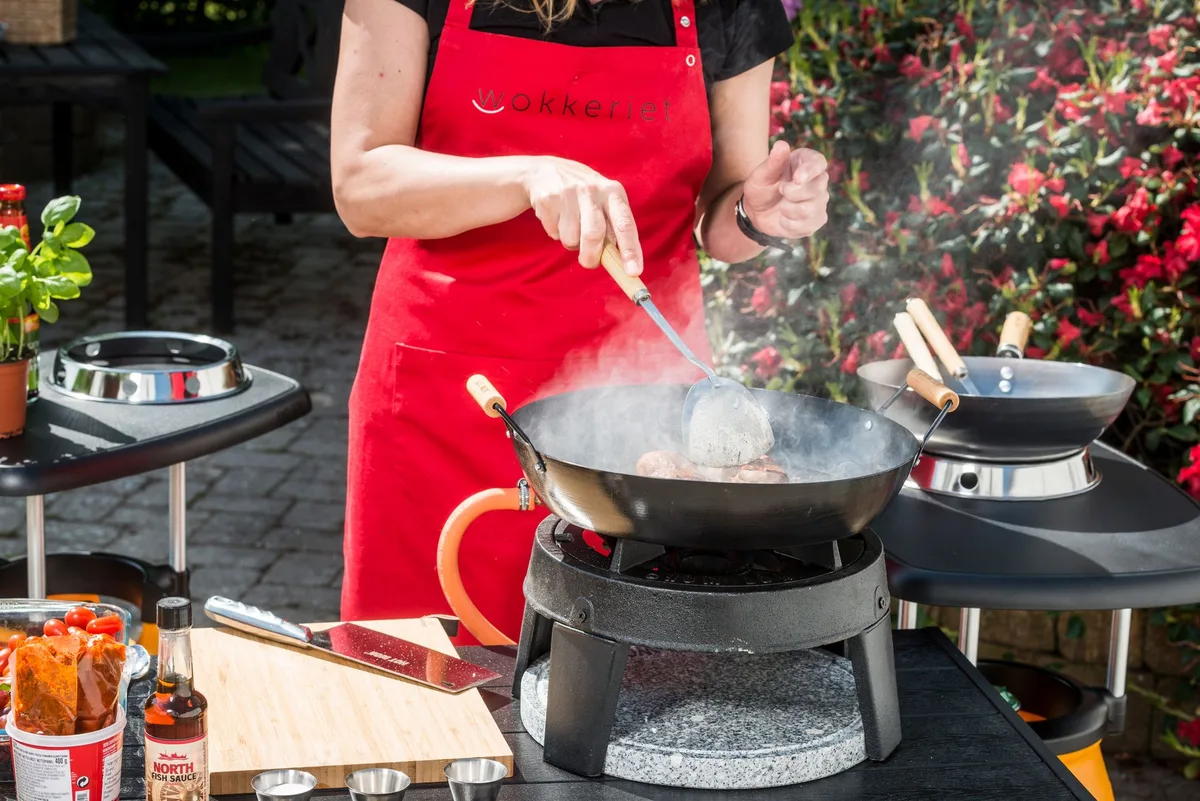
Image source: Pexels / HOT WOK (Pexels License)
A brand-new carbon steel wok is raw, grey, and prone to rust. You must season it before first use. Seasoning creates a thin polymerized layer of oil that makes the wok non-stick and protects it.
Here’s the exact process I use.
What you’ll need: Your dry wok, a high-smoke-point oil (grape seed, avocado, or canola), paper towels, and a stove.
Step 1: Scrub off the factory coating. Manufacturers often apply a protective wax or oil. Wash the wok with hot soapy water and a stiff brush. Rinse thoroughly.
Step 2: Dry completely. Place the wok on a high flame. Heat until it starts to smoke. This burns off any residue and opens the metal pores.
Step 3: Oil and heat. Remove from heat. Add about 1 tablespoon of oil. Use a folded paper towel to rub the oil over the entire interior surface, bottom, sides, rim.
You want a thin, even coat. Too much oil will get sticky.
Step 4: Heat again. Return the wok to high heat. Wait until it smokes again. Let it smoke for about 1 minute, then turn off the heat.
Allow it to cool slightly.
Step 5: Repeat. Repeat Step 3, 4 three to four times. The wok will darken from grey to a deep bronze or brownish-black. That’s the patina forming.
Step 6: Final wipe. Once cool, give it a light wipe with a dry cloth. You’re done.
Now your wok is ready. Don’t wash it with soap after seasoning; just rinse with hot water and dry immediately.
How to Use a Wok: The Core Techniques
Once seasoned, the real fun begins. The wok is a multitool. Here are the essential ways to use it.
High-Heat Stir-Frying
This is what a wok is famous for. The Chinese term wok hei, “breath of the wok”, describes that smoky, charred flavor you get from cooking at extreme heat.
Preheat the wok. Place it on high heat for a full 2, 3 minutes. Drop a few water droplets in; they should sizzle and evaporate immediately. That means it’s hot enough.
Add oil. Swirl a tablespoon of oil down the sides. Wait about 10 seconds until it shimmers or barely smokes.
Cook in batches. Overcrowding kills wok hei. Sear meat first, remove it, then cook vegetables. Combine at the end.
Keep everything moving, toss or stir constantly.
Use a metal spatula. A wooden spoon doesn’t scrape the fond off the sides. A metal spatula does, and that fond adds flavor.
Finish with a splash. Soy sauce, rice wine, or broth at the last minute deglazes the pan and creates a quick sauce. Toss to coat.
Steaming
A wok is perfect for steaming. The wide, deep shape holds a steamer basket or a bamboo steamer nicely.
Setup. Add about 2 inches of water to the wok. Place a steaming rack or a heatproof bowl upside down to keep the basket above the water line. Bring to a boil.
Place your food in the basket, cover with the wok lid, and steam.
Tip: Line the basket with cabbage leaves or parchment to prevent sticking.
Deep-Frying
The high sides and broad surface mean less oil splatter. You also need less oil than a deep pot because the wok’s shape funnels the oil into a deep pool at the center.
Oil quantity. Use enough to submerge the food by at least an inch. With a wok, that might be only 3, 4 cups of oil, far less than a Dutch oven.
Temperature control. Use a thermometer. The oil temperature drops when you add food. Keep the heat high enough to maintain 350°F.
The wok’s quick response is a huge advantage here.
Braising and Simmering
Yes, you can braise in a wok. The wide surface area evaporates liquid quickly, which concentrates flavors.
Technique. Sear meat in the wok, then add liquid (broth, soy sauce, aromatics). Bring to a boil, then reduce to a low simmer. Cover with the wok lid, or a large plate if you don’t have a lid, and let it bubble for 20, 40 minutes.
The shallow depth means you won’t have as much volume as a Dutch oven, but it works beautifully for small portions.
Smoking and Dry-Roasting
Some cooks use a wok for dry-roasting spices or nuts. Because the heat is high and the surface large, you can toast cumin seeds or peanuts in minutes. Keep them moving.
For smoking, line the wok with foil, add a mixture of uncooked rice, tea leaves, sugar, and star anise. Heat until smoking, place a rack over it, add your food, and cover tightly. That’s a classic tea-smoked duck technique.
Common Mistakes (and How to Fix Them)
Even experienced cooks mess up. Here are the biggest wok pitfalls.
Mistake #1: Not Heating the Wok Long Enough
If your food sticks or doesn’t get that smoky char, the wok wasn’t hot enough. Carbon steel needs a serious preheat. On a gas stove, that’s 2, 3 minutes on high.
On electric, give it 4, 5 minutes. The Leidenfrost effect, water droplets skittering across the surface, is your signal.
Mistake #2: Using Too Much Oil
You don’t need a pool of oil. A tablespoon is enough for a stir-fry if the wok is hot enough. Excess oil makes everything greasy and prevents the sear.
Mistake #3: Overcrowding
This kills the heat instantly. Instead of searing, you’re steaming. Cook in batches.
Remove finished ingredients to a bowl, then add them back at the end.
Mistake #4: Washing with Soap
After seasoning, soap strips the patina. Instead, scrub with hot water and a stiff brush. If food sticks badly, boil a little water in the wok to loosen the bits, then scrub.
Dry immediately, don’t let it air-dry or it will rust.
Mistake #5: Using Acidic Ingredients Early
Tomatoes, vinegar, wine, these can strip a new seasoning. If you’re cooking with acid, make sure the patina is well-established (after a dozen uses). Or use a well-seasoned cast iron pan instead.
Cleaning and Maintaining Your Wok
A wok is low maintenance, but not no maintenance.
After each use: Rinse with hot water and a brush. No soap (unless you have to, if the wok is very oily, a tiny drop won’t ruin it, but re-season afterward). Dry over low heat on the stove for 30 seconds.
Rub a tiny amount of oil on the surface with a paper towel.
If rust appears: Don’t panic. Scrub the rust with steel wool or a scouring pad. Wash with soap, rinse, dry, and re-season the affected area.
The rest of the patina will remain.
Deep cleaning: Once a month, give the wok a deep scrub with coarse salt and oil to remove buildup. Rinse, dry, and re-season.
Storage: Keep it in a dry place. If you stack pans, place a paper towel inside the wok to absorb moisture.
Frequently Asked Questions
Can I use a wok on an induction cooktop?
Yes, but only a flat-bottom wok made of magnetic material. Carbon steel flat-bottom woks with a magnetic base work fine. Round-bottom woks don’t.
Do I need a wok ring?
For a round-bottom wok on a gas stove, yes. It stabilizes the wok and allows flames to reach the sides. Most gas stoves come with a wok ring in the drawer.
Why does my wok smoke so much?
That’s normal at high heat. The oil you seasoned with can smoke. Open a window, turn on the exhaust fan.
If it’s excessive, you may be using too much oil or an oil with a low smoke point.
How do I get wok hei at home?
You need extreme heat. A home gas stove can’t reach restaurant levels, but you can get close by preheating the wok thoroughly, cooking in small batches, and using a high-smoke-point oil. Some cooks cheat with a blowtorch, but that’s optional.
Can I use my wok in the oven?
Carbon steel woks with metal handles are oven-safe up to about 500°F. Wooden or silicone handles are not. Check your wok’s handle material.
My wok is rusted. Is it ruined?
No. Rust is surface-level. Scrub it off, season again, and keep cooking.
It’s a tool, not a trophy.
Final Thoughts on Using a Wok
You don’t need a restaurant-grade burner or a secret family recipe to use a wok well. You need a decent carbon steel wok, a hot stove, and the willingness to make a mess. The first few stir-fries might be smoky or a little charred.
That’s okay. You’ll learn the timing.
A wok rewards speed and confidence. Toss your ingredients. Don’t baby them.
Keep the heat up. And when you taste that first stir-fry with real wok hei, even if it’s from a home stove, you’ll understand why people have been using these pans for two thousand years.
Now go light that burner.
For more information on wok materials and care, check the manufacturer’s website at Joyce Chen. For science-backed cooking tips, the USDA Food Safety and Inspection Service has excellent guidelines on high-temperature cooking safety.