We have all been there. You just cooked the perfect omelet, and now the pan sits on the stove with a stubborn layer of egg stuck to the bottom. Your first instinct might be to grab the steel wool and scrub.
Stop. That is the fastest way to ruin a perfectly good pan.
Learning how to clean non stick pan surfaces properly changes everything. It extends the life of your cookware and keeps your food tasting right. We are going to walk through the exact steps to clean your pan, the tools you must avoid, and how to rescue a burnt pan without destroying the coating.
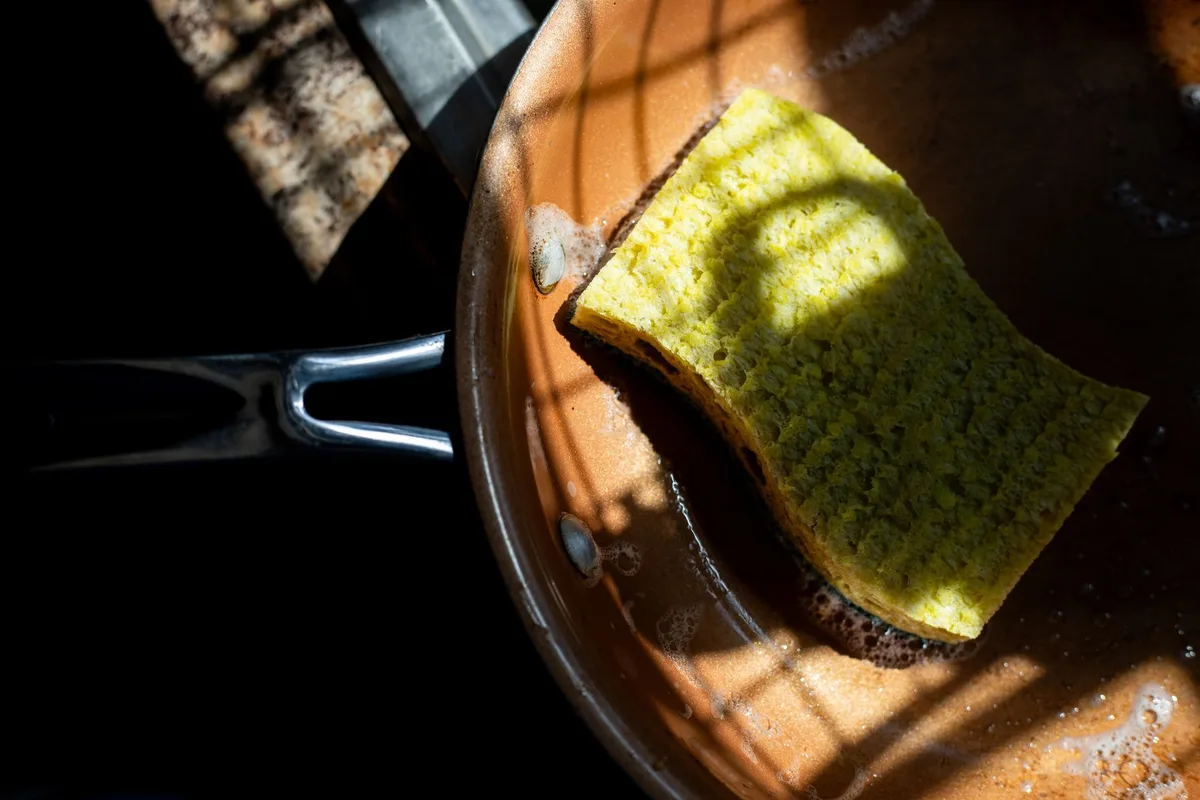
Image source: Pexels / Meaghan (Pexels License)
How to Clean a Non-Stick Pan
Cleaning a non-stick pan is straightforward. You do not need fancy tools or harsh chemicals. You just need a little patience and the right technique.
First, let the pan cool down. Never put a hot non-stick pan under cold water. The sudden temperature change warps the metal.
Warping creates uneven hot spots, and food will stick to those spots forever. Let the pan sit until you can comfortably hold your hand an inch above the surface without feeling heat.
Once it is cool, add a few drops of mild dish soap and warm water. Use a soft sponge or a dishcloth to wipe the interior. Non-stick coatings release food easily, so a gentle wipe usually does the job.
Rinse the pan thoroughly with warm water. Dry it immediately with a soft towel. Leaving it to air dry can cause water spots, and standing water can degrade the coating over time.
Tools That Damage Non-Stick Coatings
The coating on your pan is delicate. It is designed to withstand the heat of cooking, but it cannot survive abrasive scrubbing. Using the wrong tools strips the coating away.
Once the coating is gone, the pan is trash.
You need to know exactly what to keep out of your sink.
Image source: Pexels / RDNE Stock project (Pexels License)
Steel Wool and Metal Scourers
Steel wool is the number one enemy of non-stick cookware. Those tiny metal fibers act like a saw blade on the coating. They leave microscopic scratches.
Over time, these scratches deepen, and the coating peels away. If you see steel wool in a kitchen, keep it far away from your non-stick pans. The same goes for metal scourers and stiff-bristled brushes.
Abrasive Powders
Powdered cleaners like Comet or Bar Keepers Friend are too harsh for non-stick surfaces. They contain gritty particles meant to scour stainless steel and porcelain. On a non-stick pan, they dull the surface and create a rough texture.
Rough surfaces defeat the entire purpose of a non-stick pan.
What to Use Instead
Stick to soft tools. A standard kitchen sponge with a soft side works perfectly. Microfiber cloths are excellent for wiping away grease without scratching.
For stubborn spots, use a nylon scrubber. Nylon is tough enough to lift burnt food but soft enough to protect the coating.
How to Deep Clean a Burnt Non-Stick Pan
Sometimes, you get distracted. The pan sits on the heat too long, and you end up with a layer of burnt, blackened food. Do not panic.
You can deep clean a burnt non-stick pan without ruining it. You just need a gentle, chemical reaction to do the work for you.
Image source: Pexels / Los Muertos Crew (Pexels License)
The Baking Soda Method
Baking soda is a mild alkali. It breaks down burnt carbon without scratching the pan. This is the safest and most effective way to deep clean your cookware.
- Rinse the loose debris. Wash out any loose food particles with warm water.
- Add baking soda. Sprinkle a generous layer of baking soda over the burnt areas. Do not be shy. Cover the entire burnt spot.
- Add water. Pour just enough water over the baking soda to form a thick paste.
- Let it sit. Leave the paste on the burnt areas for 15 to 20 minutes. This gives the baking soda time to break down the carbon bonds.
- Scrub gently. Use a soft sponge or a nylon scrubber to wipe away the paste. The burnt food should lift right off.
- Rinse and repeat. If some spots remain, repeat the process. Do not resort to metal tools.
The Boiling Water Trick
For severe burns, the baking soda paste might not be enough. You can use the boiling water trick.
- Fill the pan with water until the burnt area is submerged.
- Add half a cup of baking soda.
- Place the pan on the stove and bring the water to a boil.
- Let it boil for 10 minutes. The heat activates the baking soda, loosening the burnt food rapidly.
- Remove the pan from the heat and let it cool.
- Pour out the water and wash the pan with a soft sponge. The burnt residue will slide right off.
The Right Way to Wash Your Non-Stick Pan
We touched on the basics earlier, but let us get specific about the washing routine. A consistent routine prevents buildup and keeps the pan performing like new.
Hand Wash Only
Never put a non-stick pan in the dishwasher. Dishwasher detergents are highly concentrated and caustic. They eat away at the non-stick coating.
The high-pressure water jets and extreme heat inside the machine also degrade the surface. Always wash your non-stick pans by hand.
The Washing Sequence
Follow this sequence every time you cook:
- Cool the pan. Let it drop to room temperature.
- Wipe out excess oil. Use a paper towel to wipe away excess cooking oil before washing. This prevents greasy buildup in your sink.
- Wash with warm soapy water. Use a soft sponge and mild dish soap.
- Rinse thoroughly. Make sure all soap residue is gone. Soap residue affects the taste of your food.
- Dry immediately. Use a soft dish towel to dry the pan completely.
Common Cleaning Mistakes to Avoid
Even well-meaning cooks make mistakes. These errors shorten the lifespan of your cookware dramatically.
Using Cooking Spray
Cooking sprays like PAM contain lecithin. Lecithin is an emulsifier that prevents the spray from separating. Unfortunately, it also builds up on non-stick surfaces.
This buildup creates a sticky, gummy layer that burns onto the pan. It is incredibly difficult to remove without damaging the coating. Use a small amount of butter or oil instead.
If you must use spray, wipe the pan immediately after applying it.
Stacking Pans Without Protection
Stacking pans directly on top of each other scratches the bottom of the upper pan against the coating of the lower pan. Always place a soft cloth, a paper towel, or a pan protector between stacked pans.
Using Metal Utensils
Metal spatulas and forks gouge the non-stick coating. Once the coating is gouged, food gets trapped in the scratches. It burns onto those spots, and the pan starts sticking.
Use wooden, silicone, or plastic utensils. They are gentle on the surface and get the job done.
When choosing cleaning products, it is wise to check for safety. The Environmental Protection Agency provides guidelines on choosing cleaning agents that are safe for your home and the environment. Sticking to mild dish soap and baking soda aligns perfectly with these safety standards.
Maintaining Your Non-Stick Pan for Longevity
Cleaning is only half the battle. How you maintain the pan between washes determines how long it lasts.
Season the Pan
Some modern non-stick pans benefit from occasional seasoning. This is not the same as cast iron seasoning, but the principle is similar. After washing and drying the pan, rub a tiny drop of cooking oil onto the interior surface with a paper towel.
This fills in microscopic pores and keeps the surface slick.
Control the Heat
High heat destroys non-stick coatings. Never preheat an empty non-stick pan on high. The coating breaks down rapidly at high temperatures, releasing fumes and losing its non-stick properties.
Cook on low to medium heat. If you need high heat for searing, use a cast iron or stainless steel pan instead.
Store Properly
As mentioned, do not stack pans directly. Hang them if you have the space. If you must stack them, use protectors.
Keep the pan away from sharp objects in drawers. A single knife scraping against the bottom of the pan can ruin the surface.
Taking care of your non-stick pan does not require much effort. It requires the right habits. Avoid the steel wool.
Skip the dishwasher. Use baking soda for the tough spots. Follow these steps, and your pan will stay slick and functional for years.
For more detailed advice on household cleaning and maintenance, the University of Minnesota Extension offers excellent, research-backed resources on keeping your home and cookware in top shape. Stick to these methods, and you will never have to scrub a ruined pan again.