I’ve cooked hundreds of stir-fries in both a wok and a flat-bottomed stir fry pan. Let me save you the trial and error: they’re not the same tool, and the right choice depends on your stove, your cooking style, and what you’re willing to tolerate in the kitchen.
The classic wok has been the workhorse of Asian cooking for centuries. The stir fry pan (often called a “wok pan” or “flat-bottom wok”) is a Western adaptation designed to sit flat on electric and induction cooktops. But does that compromise actually matter?
Or is it just marketing fluff?
I’ll break down every angle, shape, heat, material, technique, so you can make the call for your own kitchen.
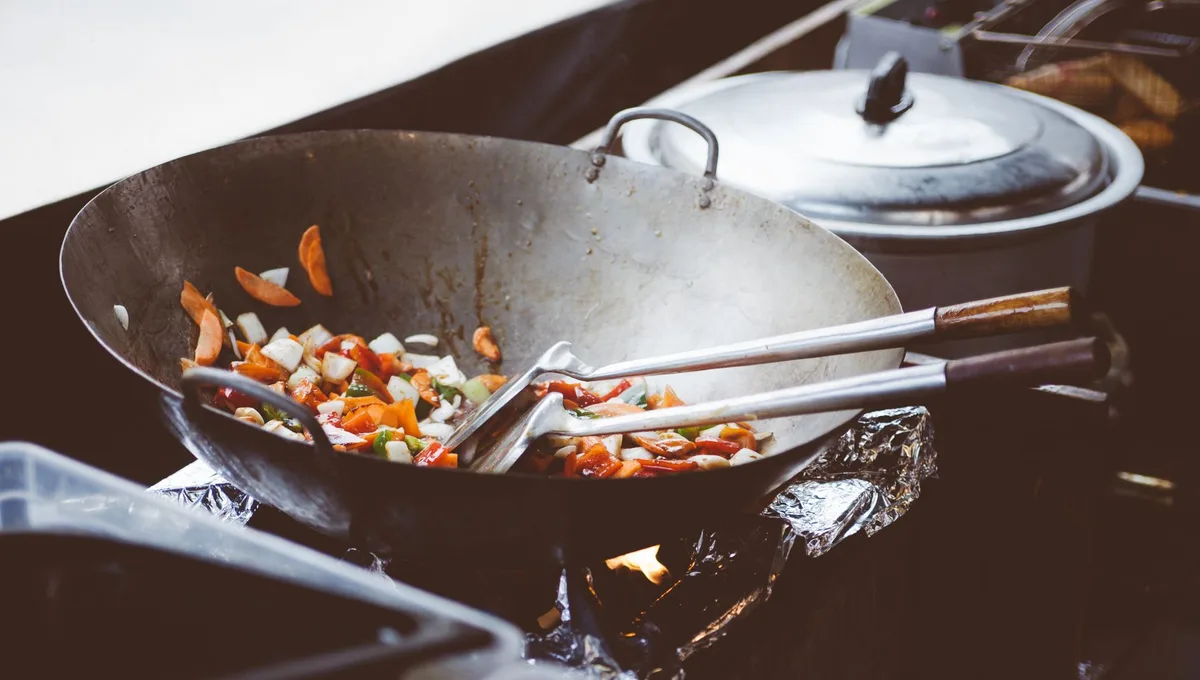
Image source: Pexels / Clem Onojeghuo (Pexels License)
Shape and Design – The Core Difference
The most obvious difference is the bottom. A traditional wok has a rounded, bowl-like bottom. A stir fry pan has a flat base with sloped sides.
This isn’t just cosmetic. The shape changes how heat behaves, how oil pools, and how easy it is to toss ingredients.
Wok advantages from shape:
- The round bottom concentrates heat at the very center. That’s where you get the intense, localized heat needed for searing. The sides stay cooler, so you can push cooked food up and out of the way while new ingredients hit the hot spot.
- Oil naturally pools in the deepest part of the bowl. That means you can shallow-fry with far less oil than a flat pan would require.
- The high, flared sides make tossing easy. You can flip ingredients in the air with a simple wrist motion. No spatula needed for many dishes.
- Steam escapes upward rather than condensing on a flat lid, which helps keep vegetables crisp.
Stir fry pan trade-offs:
- A flat bottom sits flush on any cooktop. No wok ring needed. That’s a huge convenience for electric, induction, and glass-top ranges.
- Oil spreads out evenly across the flat base. That means less deep pooling, but also less ability to sear small batches in a concentrated spot.
- The sloped sides still help with tossing, but the flat base limits the “hot zone” to the entire bottom rather than a pinpoint. You lose some of that dynamic heat control.
- Many stir fry pans come with nonstick coating. That makes them easier to clean but limits the high-heat cooking that creates wok hei.
If you cook on gas, the traditional wok wins for pure performance. If you cook on electric or induction, a flat-bottomed pan is a practical necessity.
Heat Distribution and the Elusive Wok Hei
Wok hei, literally “breath of the wok”, is that smoky, charred, almost nutty flavor you get from high-end stir-fry cooked over screaming-hot flames. It’s not just heat; it’s the combination of intense radiant heat, vaporized oil, and the carbon steel seasoning reacting with the food.
A traditional carbon steel wok on a powerful gas burner (ideally 15,000 BTU or more) is the only reliable way to achieve real wok hei at home. The thin metal (typically 1.5, 2 mm thick) responds instantly to temperature changes. You can go from searing to steaming in seconds just by lifting the wok off the flame.
A stir fry pan, especially a nonstick one, simply can’t get hot enough without damaging the coating. Even stainless steel or cast iron stir fry pans retain heat differently. They’re thicker, so they take longer to heat up and cool down.
That makes it harder to control the rapid temperature swings that define good stir-fry.
Here’s the practical takeaway: if you’re chasing that restaurant-level wok hei, you need a carbon steel wok and a gas burner strong enough to warp the metal slightly. A stir fry pan won’t get you there. But for 90% of home cooks, the difference is subtle.
A well-preheated stir fry pan still produces excellent browning and char.
For authoritative information on cookware safety and high-heat cooking, check the FDA guidelines on cookware materials. They cover which materials are safe at different temperatures.
Material Choices – Carbon Steel, Cast Iron, Nonstick
The material matters as much as the shape. Let’s look at the most common options for both woks and stir fry pans.
Carbon Steel (Best for Woks)
This is the gold standard for traditional wok cooking. Carbon steel is thin, lightweight, and conducts heat almost as well as cast iron but with much less weight. It seasons naturally over time, building up a nonstick patina that also adds flavor.
Pros: Excellent heat responsiveness, can take extreme temperatures, develops wok hei, affordable (usually $20, 40).
Cons: Requires seasoning and hand washing, rusts if not dried immediately, can warp on high heat if too thin.
Cast Iron (Works in Both)
A cast iron wok is thick, heavy, and retains heat like a battery. It’s great for deep-frying and braising but lousy for quick tossing. The weight makes it hard to flip with one hand.
A cast iron stir fry pan (essentially a deep skillet) is more common. It holds heat well for searing meats but responds slowly when you add cold ingredients.
Pros: Unmatched heat retention, natural nonstick when seasoned, nearly indestructible.
Cons: Very heavy, slow to heat and cool, can crack if shocked with cold water.
Nonstick (Stir Fry Pan Territory)
Most stir fry pans on the market are nonstick. That’s because flat-bottomed pans are marketed toward convenience-oriented home cooks who want easy cleanup.
Pros: Eggs and delicate fish won’t stick, quick cleaning, no seasoning required.
Cons: Cannot handle high heat (most coatings degrade above 500°F), no wok hei, coating wears out after 1, 3 years, can off-gas if overheated.
Stainless Steel
Some premium stir fry pans are stainless steel with an aluminum or copper core. They’re durable and oven-safe but have no nonstick properties. You need good technique and plenty of oil to prevent sticking.
Pros: Indestructible, no coating to wear off, even heat distribution.
Cons: Sticks like crazy if not preheated correctly, heavy, expensive.
My recommendation: buy a carbon steel wok if you have gas. Buy a nonstick stir fry pan if you need flat-bottom convenience and value easy cleanup. Buy cast iron only if you want a multi-purpose pan that also works for searing steaks and baking cornbread.
Stir-Fry Techniques – Heat Control and Wok Tossing
The techniques differ significantly between a wok and a stir fry pan. If you’ve only used one, the other will feel awkward at first.
Wok tossing:
- Hold the wok handle with your dominant hand, palm up.
- Use a quick upward and backward motion to slide ingredients up the side, then let them fall back into the center.
- You’re not flipping like a pancake; you’re constantly moving food in and out of the hot zone.
- The curved sides catch ingredients and guide them back. No spatula required for most dishes.
- You can add ingredients one at a time and push cooked items up the wall.
Stir fry pan technique:
- Because the bottom is flat, you can’t slide food up the sides as effectively. You rely on a spatula or tongs to move ingredients.
- Heat is more evenly distributed across the entire bottom, so you don’t have a distinct hot zone and cool zone. You have to adjust heat by moving the pan on and off the burner.
- Tossing is possible but more limited. You can only flip ingredients that are in the shallow area near the edge. Deep piles of food can’t be tossed without spilling.
- You’ll typically cook in batches (meat first, then vegetables, then combine) to avoid overcrowding.
For the best results with either pan, preheat it until a drop of water dances across the surface (the Leidenfrost effect). Then add oil, swirl to coat, and immediately add your aromatics. That initial blast of heat is what creates the fond and flavor.
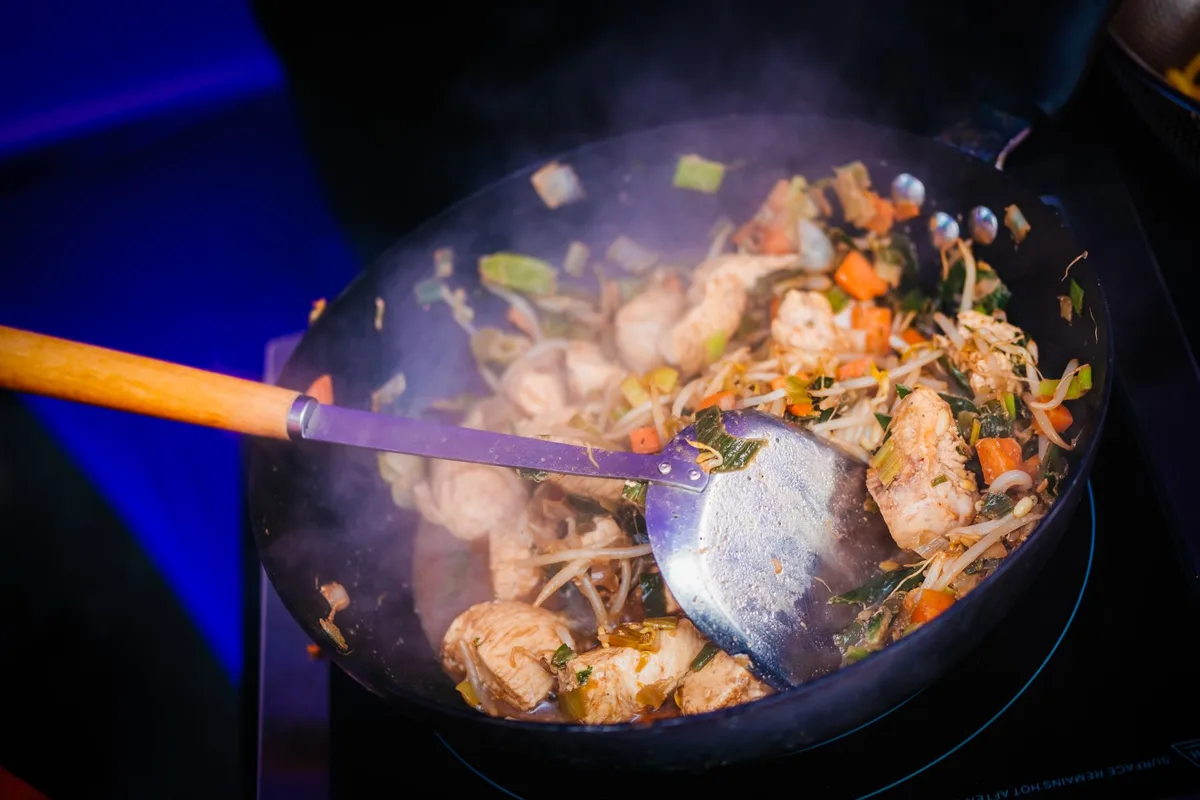
Image source: Pexels / atelierbyvineeth . . . (Pexels License)
Can You Get Wok Hei on a Regular Stove?
Short answer: not really, but you can get close.
A standard home gas stove puts out about 10,000, 12,000 BTU. Professional wok burners can hit 80,000, 100,000 BTU. That’s a massive gap.
To compensate, many cooks use a wok ring to lift the wok closer to the flame. This helps channel heat around the rounded bottom.
But even with a wok ring, you won’t get the same volume of fire licking up the sides. You can still get good charring by:
- Using a carbon steel wok (thin metal heats faster).
- Cooking in small batches (no more than one handful of ingredients at a time).
- Letting the wok preheat for at least 3 minutes on high heat.
- Not overcrowding (steam kills the heat).
- Tossing frequently to expose all surfaces to the metal.
On an induction stove, the situation is trickier. Induction only works with magnetic cookware. Most carbon steel woks are magnetic (check with a magnet), but the curved bottom doesn’t make full contact.
Induction needs flat contact for the electromagnetic field to couple. A flat-bottomed carbon steel wok is your best bet on induction, but you lose the concentrated heat zone.
Some induction cooktops now have a “wok setting” that simulates the hot center, but it’s not the same.
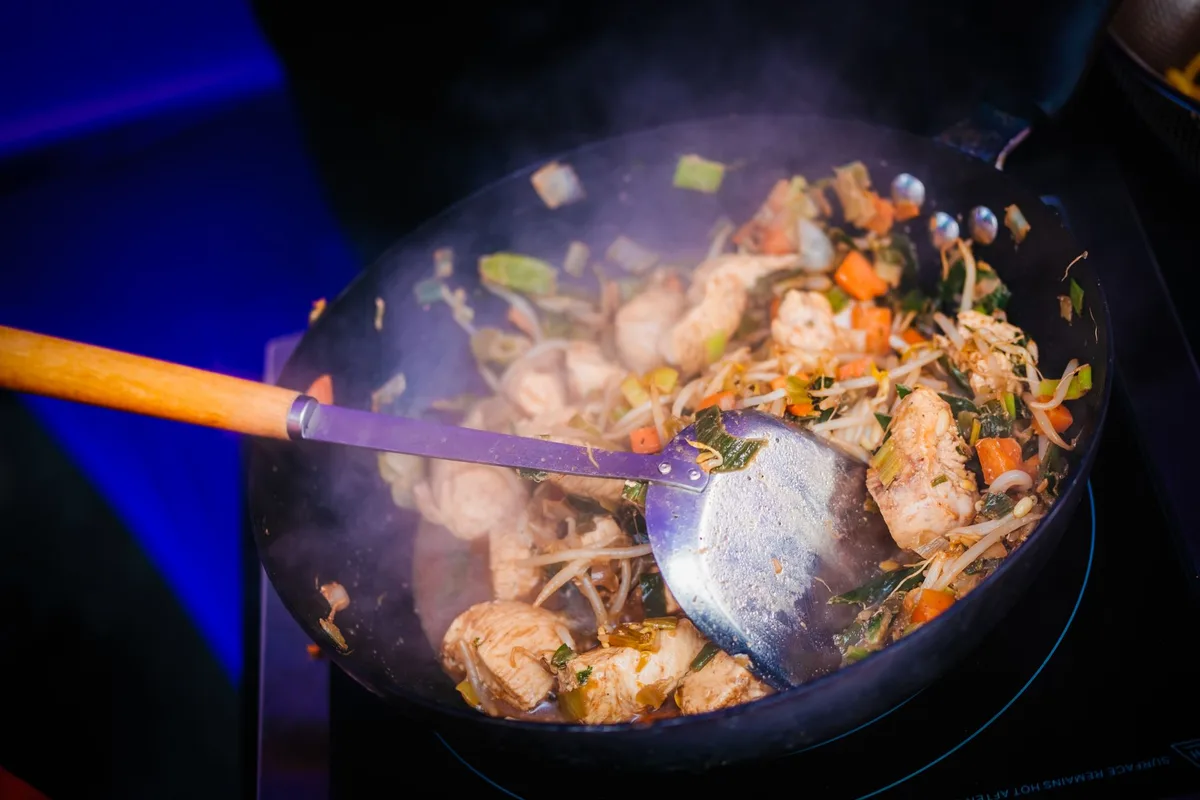
Image source: Pexels / atelierbyvineeth . . . (Pexels License)
Ease of Use and Cleaning
This is where the stir fry pan wins decisively for most people.
Stir fry pan:
- Stably on the stovetop. No wobbling, no need for a ring.
- Nonstick versions wipe clean with a sponge.
- Can go in the dishwasher (though hand washing extends the coating life).
- Lighter weight makes it easier to handle for people with wrist issues.
- Can be used with metal utensils if it’s stainless or cast iron, but nonstick requires silicone or wood.
Wok:
- Needs a wok ring or a specially designed burner to stay stable on most stoves.
- Carbon steel and cast iron require hand washing with minimal soap (or just hot water and a brush).
- Must be dried immediately and oiled lightly after each use to prevent rust.
- Seasoning requires regular maintenance. If you cook acidic foods (tomatoes, vinegar), the seasoning can degrade.
- The high sides make it harder to clean with a standard scrub brush. A bamboo wok brush works best.
- Heavier to lift and toss, especially if you’re using a cast iron wok.
If you cook stir-fry once a week and hate cleanup, the nonstick stir fry pan is the easier path. If you cook stir-fry every other day and want the best flavor, the wok’s maintenance becomes a routine that you don’t even think about.
Versatility Beyond Stir-Fry
Both pans can do more than just stir-fry. Let’s compare.
Wok versatility:
- Deep-frying: The deep bowl uses less oil than a Dutch oven. The sloped sides let you slide food in without splashing.
- Steaming: Place a bamboo steamer or a metal rack inside the wok, add water, and you’ve got a steamer.
- Boiling: The large surface area and depth make it great for blanching vegetables or cooking noodles.
- Smoking: You can put a small rack in the wok, add tea leaves and rice to the bottom, and hot-smoke meat.
- Roasting nuts: The constant tossing motion works perfectly for toasting sesame seeds or peanuts.
Stir fry pan versatility:
- Searing: Flat bottom is excellent for getting a good crust on steaks or chicken breasts.
- Sautéing: Works like a large skillet, good for one-pan meals.
- Frying eggs: Nonstick versions are great for scrambled eggs or omelets.
- Braising: You can brown meat, add liquid, and simmer with a lid.
- Limited deep-frying: The shallower sides mean more splatter, and you need more oil to submerge food.
The wok is more versatile overall, especially for Asian cooking techniques. But if you already own a Dutch oven and a skillet, the stir fry pan adds less new capability.
Cost and Durability
Wok (carbon steel): $20, 50. Lasts a lifetime if maintained. Can be re-seasoned if it rusts.
The handle might loosen over time, but it’s easy to tighten.
Wok (cast iron): $30, 60. Heavy, lasts forever, but prone to cracking if dropped.
Stir fry pan (nonstick): $25, 60. Cheap to replace, but you’ll replace it every 1, 3 years. The coating scratches and peels.
Stir fry pan (stainless): $60, 150. Durable and oven-safe, but requires more cooking skill.
For pure value, a carbon steel wok is unbeatable. You get professional-level performance for the price of a dinner out. A nonstick stir fry pan costs less upfront but needs frequent replacements, which adds up.
Which One Should You Choose?
Here’s a quick decision guide based on your setup and preferences.
Buy a carbon steel wok if:
- You have a gas stove (or a portable butane burner).
- You want authentic wok hei.
- You don’t mind hand washing and seasoning.
- You cook stir-fry at least twice a week.
- You want a single pan that can deep-fry, steam, and smoke.
Buy a nonstick stir fry pan if:
- You have an electric or induction stove.
- You want something that works immediately with no learning curve.
- You hate cleaning carbon steel.
- You cook stir-fry occasionally and value convenience.
- You also want to fry eggs and sear fish without sticking.
Buy a cast iron stir fry pan if:
- You want a hybrid: heavy-duty heat retention with a flat bottom.
- You cook on induction.
- You like the idea of a single pan that can go from stovetop to oven.
- You don’t mind the weight.
Avoid if:
- You have a glass-top stove but want a traditional round-bottom wok. The weight concentrated on the round contact point can crack the cooktop. Get a flat-bottom carbon steel wok instead.
The Verdict – It Depends
There’s no universal winner in the stir fry pan vs wok debate. The wok excels in performance and tradition. The stir fry pan excels in convenience and accessibility.
If I had to pick one for my home kitchen, I’d take a carbon steel flat-bottom wok. That gives me the best of both worlds: traditional wok material, wok hei potential, plus stability on my induction stove. It’s the compromise that works for modern kitchens without sacrificing too much flavor.
But if you never cook on high heat and just want a quick weeknight stir-fry with easy cleanup, grab a nonstick stir fry pan. It’ll do the job well enough, and you won’t spend ten minutes scrubbing afterwards.
The right pan is the one you actually use. Don’t get hung up on perfection. Get the tool that fits your stove and your habits, and start cooking.