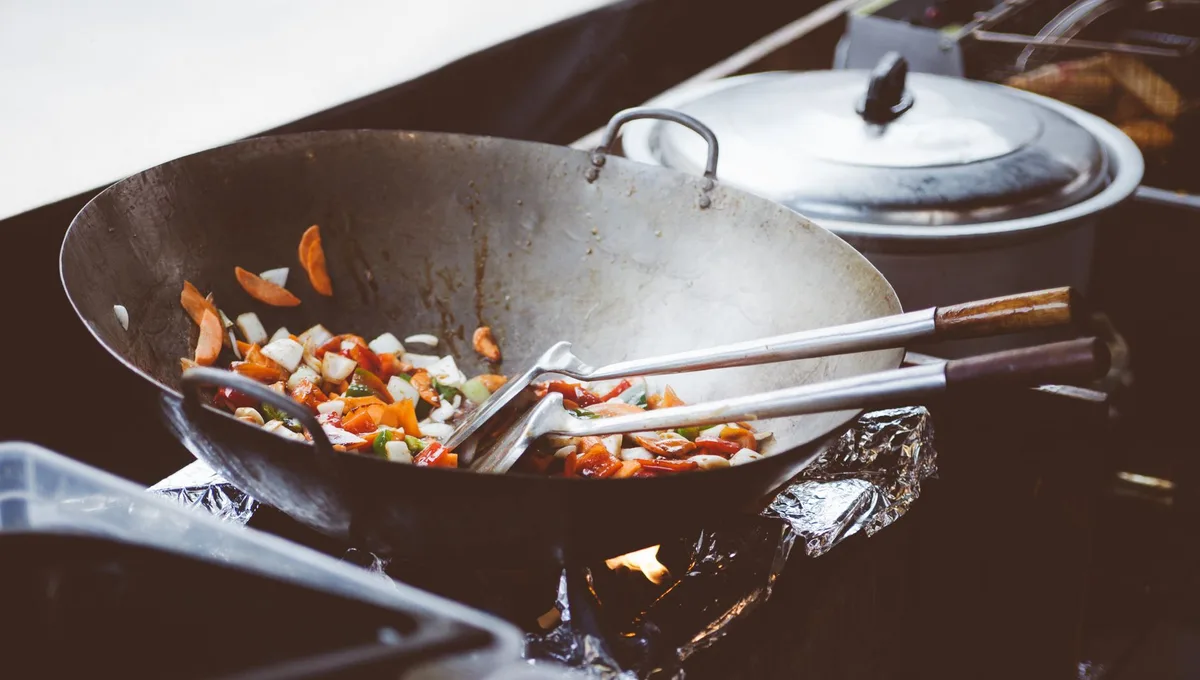
Image source: Pexels / Clem Onojeghuo (Pexels License)
You’ve seen them in kitchen stores. Maybe you’ve wondered if you actually need one. Let me settle that right now.
A stir fry pan is a deep, wide skillet with sloped sides designed specifically for high-heat, fast cooking. It’s the Western kitchen’s answer to the wok, engineered to work on flat cooktops while still delivering that signature sear and quick cooking that stir-frying demands.
But here’s the thing, most people confuse it with a wok or a regular frying pan. That mistake costs them flavor. I’ve tested dozens of pans over the years, and I can tell you: the right tool genuinely changes your cooking.
This guide covers everything you need to know about stir fry pans. What they are. How they differ from other pans.
What to look for when buying one. And how to use it properly.
Let’s get into it.
What Exactly Is a Stir Fry Pan?
A stir fry pan sits somewhere between a frying pan and a wok. It has the wide cooking surface of a skillet but the deep, curved sides of a wok. That combination matters more than you’d think.
Most stir fry pans measure 12 to 14 inches in diameter. The sides slope outward at a gentle angle, usually 30 to 45 degrees. This slope serves two purposes.
First, it lets you toss ingredients easily without flinging them everywhere. Second, it creates a temperature gradient, the bottom stays screaming hot while the sides stay cooler for holding cooked ingredients.
The depth typically runs 3 to 4 inches. That’s deeper than a standard frying pan but shallower than a traditional wok. This depth gives you room to stir and toss without spilling oil or ingredients over the edge.
You’ll find stir fry pans made from several materials. Carbon steel is the traditional choice. It heats fast, responds quickly to temperature changes, and develops a natural non-stick seasoning over time.
Stainless steel with an aluminum or copper core offers better heat distribution and won’t react with acidic ingredients. Non-stick coatings work well for beginners but limit the high heat that makes stir-frying effective.
The flat bottom is the key feature. Unlike a round-bottomed wok that needs a wok ring to stay stable, a stir fry pan sits flat on any cooktop. Electric, induction, glass, ceramic, it works on all of them.
That’s why so many home cooks prefer it over a traditional wok.
Stir Fry Pan vs. Wok: Key Differences
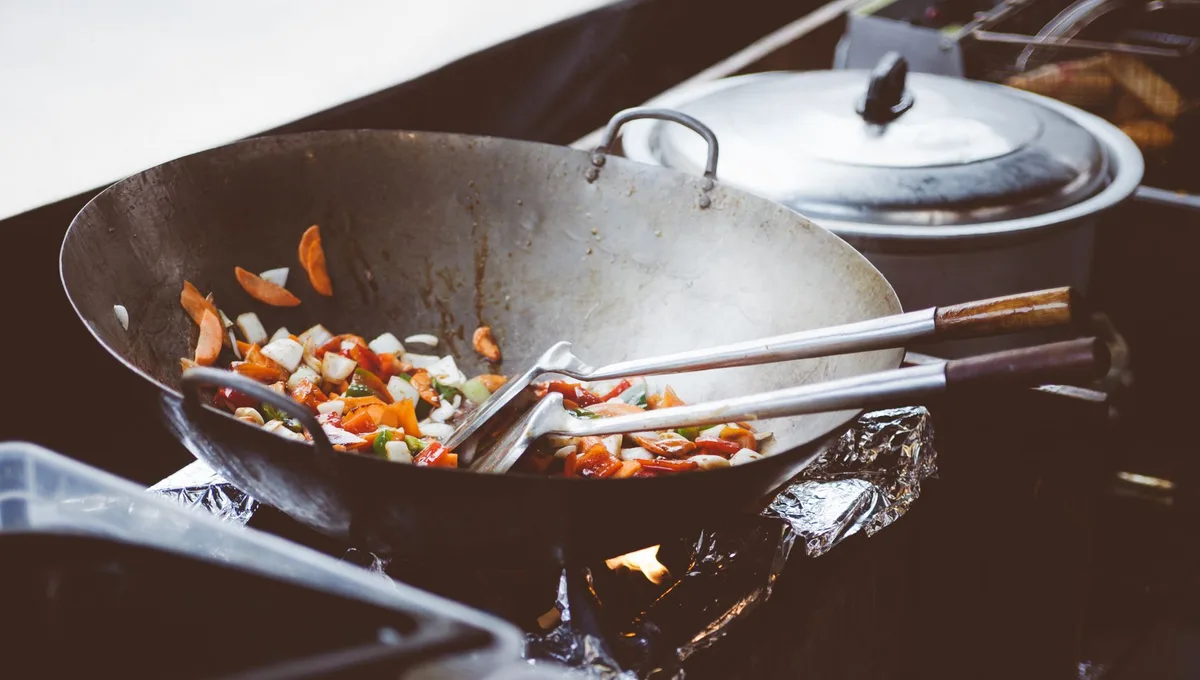
Image source: Pexels / Clem Onojeghuo (Pexels License)
This is where most people get confused. Let me clear it up.
A wok is round-bottomed. It concentrates heat at the very center, creating a small, intensely hot zone. That’s perfect for the rapid-fire cooking technique used in professional Chinese kitchens.
But it’s a disaster on a flat electric or induction cooktop without a wok ring.
A stir fry pan has a flat bottom. The heat distributes across the entire surface, not just the center. That means you get even cooking without hot spots.
Here’s a quick comparison:
| Feature | Stir Fry Pan | Wok |
|---|---|---|
| Bottom shape | Flat | Round |
| Side angle | 30-45° | 45-60° |
| Depth | 3-4 inches | 4-6 inches |
| Cooktop compatibility | All types | Needs wok ring on flat surfaces |
| Heat concentration | Even across bottom | Concentrated at center |
| Ease of tossing | Easy | Requires practice |
| Best for | Home cooks, flat cooktops | Professional kitchens, gas burners |
The cooking technique differs too. With a wok, you constantly move ingredients from the center to the sides. The center sears.
The sides keep things warm. With a stir fry pan, you can use a more traditional skillet technique, sear in batches, then combine.
Neither is better. They’re different tools for different situations. If you have a gas stove and want authentic wok hei (that smoky flavor), get a wok.
If you have any other cooktop or want easier handling, get a stir fry pan.
Key Features of a Good Stir Fry Pan
Not all stir fry pans perform equally. Here’s what separates the winners from the disappointments.
Material Matters Most
Carbon steel is the gold standard for stir fry pans. It heats quickly, gets screaming hot, and develops a natural non-stick surface through seasoning. It’s also lightweight compared to other options.
The downside? It requires maintenance. You need to dry it thoroughly after washing and oil it occasionally to prevent rust.
Stainless steel with a multi-ply construction (aluminum or copper core sandwiched between stainless layers) offers excellent heat distribution. It won’t rust or react with acidic ingredients like tomatoes or vinegar. But it’s heavier and more expensive.
Food also sticks to it more easily unless you use enough oil.
Cast iron retains heat like a champ. Once it’s hot, it stays hot. That’s great for searing meat.
But it’s heavy, slow to heat up, and slow to cool down. Not ideal for the quick temperature adjustments that stir-frying demands.
Non-stick coatings make cooking and cleanup easy. Food slides right off. But you can’t use high heat with non-stick pans, the coating degrades above 500°F.
That limits your ability to get that proper sear.
Handle Design
A long handle keeps your hand away from the heat. Look for a handle that stays cool, either through silicone coating or a long metal shaft. A helper handle on the opposite side makes lifting a full pan much easier.
Weight and Balance
You’ll be tossing and stirring with this pan. A heavy pan tires your arm out fast. Aim for something around 3 to 4 pounds.
The pan should feel balanced when you hold it with one hand.
Heat Capacity
The pan needs to hold heat well. When you add cold ingredients, the temperature drops. A good pan recovers quickly.
Thicker materials (3mm or more for carbon steel) help maintain temperature during cooking.
How to Use a Stir Fry Pan
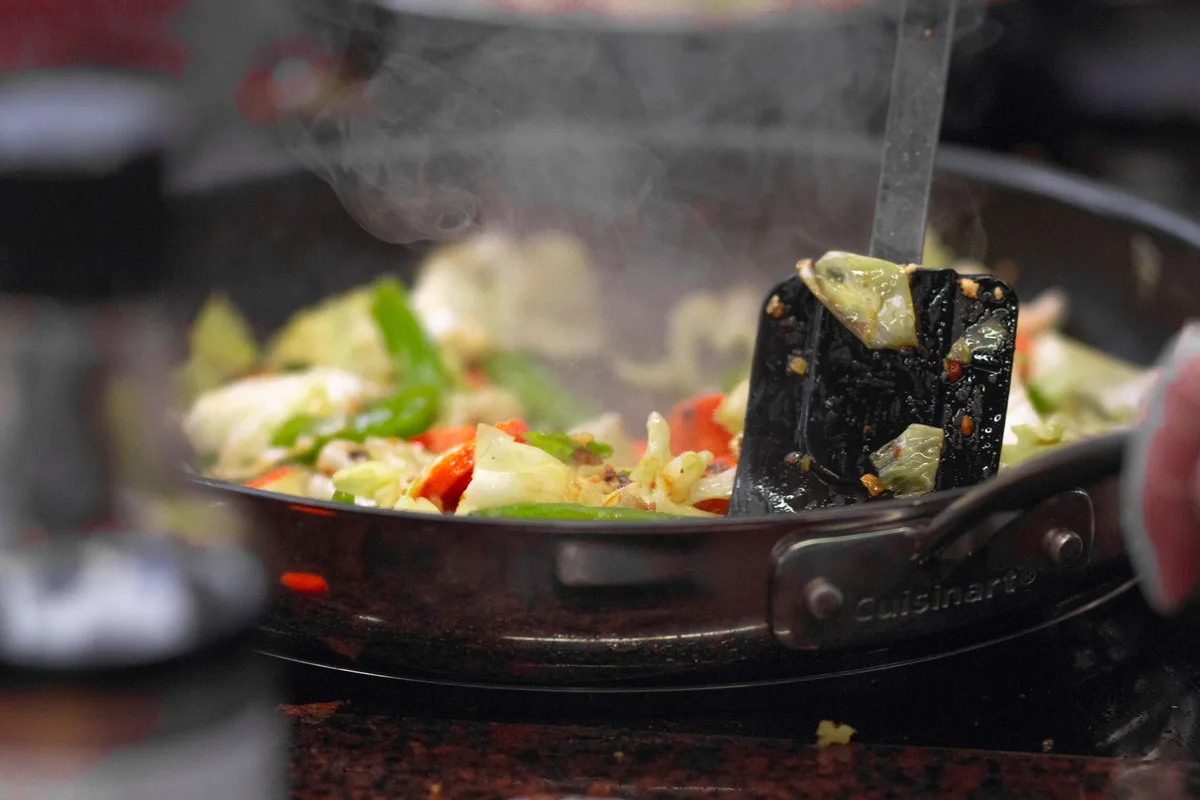
Image source: Pexels / Martin Lopez (Pexels License)
Using a stir fry pan correctly makes the difference between soggy vegetables and perfectly charred stir-fry. Here’s the method I’ve developed over years of testing.
Preheat Properly
This is the most common mistake. People throw ingredients into a cold pan.
Heat your stir fry pan on medium-high to high heat for 2 to 3 minutes before adding oil. The pan should be hot enough that a drop of water dances across the surface (called the Leidenfrost effect). For carbon steel pans, you’ll see the metal start to smoke slightly.
Add your oil and swirl it around. The oil should shimmer immediately. If it smokes, the pan is too hot, back off the heat slightly.
Work in Batches
Don’t crowd the pan. This is rule number one for good stir-fry.
Cook ingredients in small batches. Meat first. Then vegetables, starting with the hard ones (carrots, broccoli stems) and finishing with the soft ones (bell peppers, mushrooms).
Remove each batch to a bowl before starting the next.
Why? Crowding drops the pan temperature. Your ingredients steam instead of sear.
That’s how you get gray, rubbery chicken and limp vegetables.
Keep Things Moving
Stir fry pans are designed for constant motion. Use a spatula or wooden spoon to keep ingredients moving. Toss if you’re comfortable with it.
The constant movement ensures even cooking and prevents burning.
Build Your Sauce
After cooking all ingredients, remove them from the pan. Add aromatics like garlic, ginger, and chili, they cook in about 30 seconds. Then add your sauce ingredients.
Let them bubble and thicken for a minute. Return the cooked ingredients, toss everything together, and serve immediately.
Clean Immediately
Stir fry pans clean best when still warm. Run hot water over the pan right after serving. Use a soft sponge, no steel wool unless you want to ruin your seasoning or non-stick coating.
For carbon steel, dry thoroughly and apply a thin layer of oil before storing.
How to Choose the Right Stir Fry Pan
Your choice depends on three factors: your cooktop, your cooking style, and your budget.
For Gas Cooktops
Carbon steel is your best bet. It handles the direct flame well and responds instantly to temperature changes. You can get a high-quality carbon steel stir fry pan for $30 to $60.
For Electric or Induction Cooktops
You need a flat, stable bottom. Stainless steel multi-ply pans work best here. The aluminum or copper core spreads heat evenly across the surface.
Expect to pay $80 to $150 for a good one.
For Beginners
A non-stick stir fry pan is fine while you learn the technique. You can use less oil and clean up easily. But don’t expect the same sear quality as carbon steel or stainless.
Budget $40 to $70.
For Heavy Users
Invest in a high-end carbon steel pan from a reputable brand. Look for 3mm thickness or more. These pans last decades if maintained properly.
Budget $60 to $120.
Caring for Your Stir Fry Pan
Different materials need different care. Here’s what works.
Carbon steel needs seasoning, just like cast iron. After each wash, dry it on the stove over low heat. Apply a thin layer of oil and heat until it just starts to smoke.
Let it cool, then wipe off excess oil. This builds up the non-stick layer over time.
Stainless steel is dishwasher safe but hand washing is better. Use a stainless steel cleaner occasionally to maintain the shine. For stuck-on food, boil water in the pan for a few minutes to loosen it.
Non-stick needs gentle handling. No metal utensils. No high heat.
No abrasive cleaners. Hand wash with soft sponge only. Replace every 2 to 3 years as the coating degrades.
Cast iron is similar to carbon steel. Season regularly. Dry thoroughly.
Never soak in water.
Common Mistakes to Avoid
I’ve seen home cooks make these errors repeatedly. Avoid them and your stir-fry game improves overnight.
Using too low heat. Stir-frying is high-heat cooking. If you’re not seeing wisps of smoke, you’re not cooking right.
Adding wet ingredients. Pat your meat dry. Drain your vegetables. Water in the pan drops the temperature and creates steam.
Overcooking vegetables. They should still have crunch. The entire stir-fry process takes 5 to 7 minutes from start to finish.
Using the wrong oil. Use oils with high smoke points, avocado, peanut, grapeseed, or vegetable oil. Olive oil burns at stir-fry temperatures.
Not seasoning carbon steel. A new carbon steel pan needs 3 to 5 rounds of seasoning before it becomes non-stick. Don’t skip this step.
Is a Stir Fry Pan Worth It?
Yes, if you cook stir-fry regularly. No, if you only make it once a month.
If you’re in the first group, a stir fry pan outperforms both a regular skillet and a wok on most home cooktops. You get the wide cooking surface of a skillet with the depth and tossing room of a wok. That combination is genuinely useful.
If you’re in the second group, your existing skillet or wok will work fine. Save your money.
For everyone in between, people who cook Asian food regularly but want something that works on their modern cooktop, a stir fry pan is the perfect compromise. It’s practical. It’s effective.
And once you get the technique down, it produces restaurant-quality results at home.
Frequently Asked Questions
Can I use a stir fry pan on induction cooktops?
Yes, as long as the pan is magnetic. Carbon steel and cast iron work on induction. Stainless steel works only if the manufacturer specifies induction compatibility.
Check the base with a magnet before buying.
What size stir fry pan should I buy?
12 inches is the standard size for most home cooks. It fits 2 to 4 servings comfortably. Go with 14 inches if you cook for larger groups or want more room for tossing.
Do I need to season a non-stick stir fry pan?
No. Non-stick pans come ready to use. Seasoning is only for carbon steel and cast iron.
Can I use metal utensils in a stir fry pan?
Only in carbon steel, stainless steel, or cast iron. Never use metal in non-stick pans, it scratches the coating.
What’s the best oil for stir-frying?
Avocado oil has the highest smoke point at 520°F. Peanut oil is second at 450°F with a nice nutty flavor. Vegetable and grapeseed oils work well too.
Avoid olive oil, coconut oil, and butter, they burn at stir-fry temperatures.
How do I get smoky wok hei flavor at home?
Crank the heat to maximum. Get your pan smoking hot. Use a carbon steel pan.
Add a small amount of oil. Sear ingredients in small batches. The combination of high heat, carbon steel, and proper technique creates that smoky flavor.
Final Verdict
A stir fry pan is a specialized tool that solves a specific problem. It brings the benefits of wok cooking to flat cooktops without the instability and learning curve of a traditional round-bottomed wok.
If you cook stir-fry on electric or induction, it’s the best tool for the job. If you have gas, a wok still wins for authenticity. But for versatility and ease of use, the stir fry pan is hard to beat.
Choose carbon steel for performance. Choose stainless for durability. Choose non-stick for convenience.
But whatever you choose, commit to the technique, preheat properly, work in batches, keep things moving, and clean immediately.
That’s the difference between good stir-fry and great stir-fry. And now you know exactly what pan to use.
1 thought on “What Is A Stir Fry Pan”