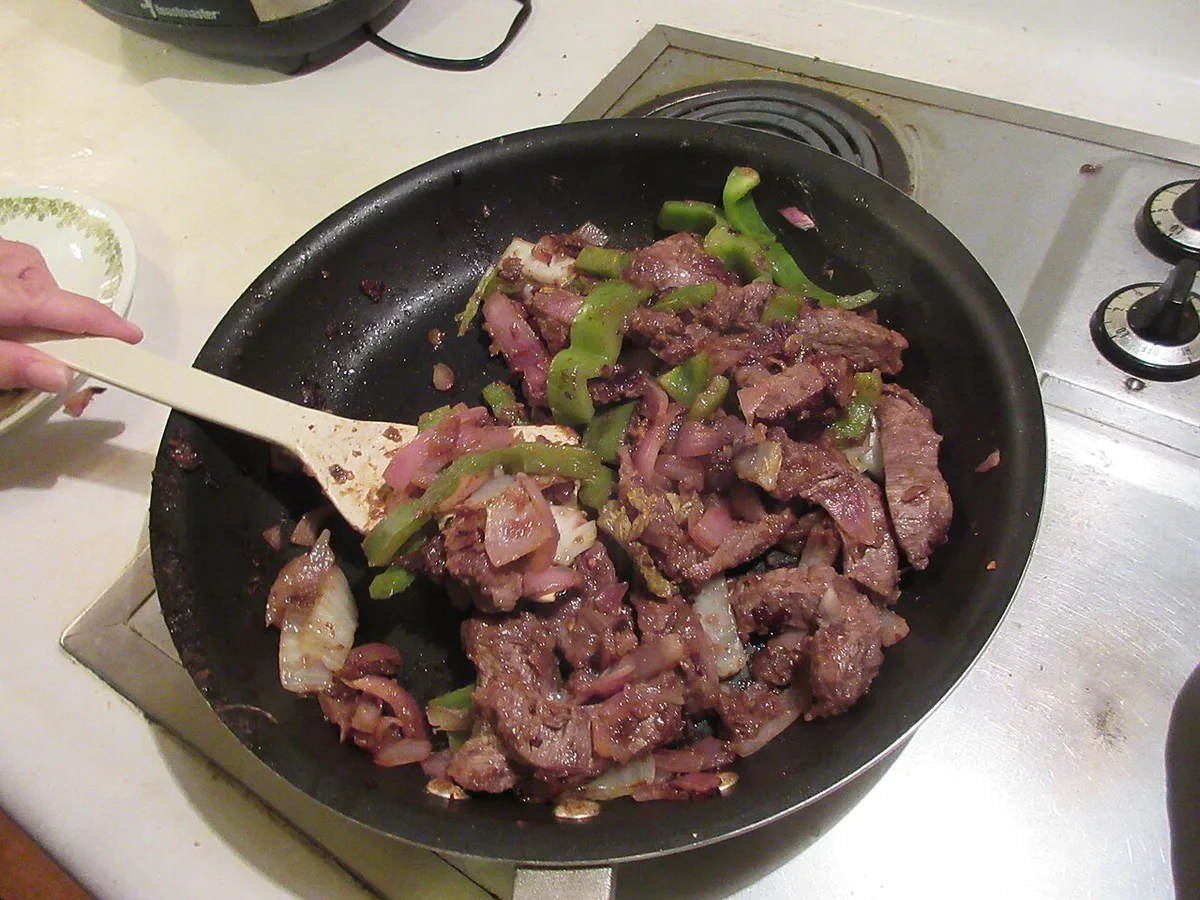
Image source: Wikimedia Commons / Infrogmation of New Orleans (CC BY-SA)
I’ll cut straight to it. You don’t need a wok to make killer stir fry. That’s the honest truth.
Walk into any kitchen supply store, and you’ll see fancy woks hanging from hooks. Carbon steel. Hammered.
Seasoned over open flames. Beautiful stuff, sure. But here’s what the salespeople won’t tell you: a normal frying pan or sauté pan can deliver results that are 90% as good, and in some cases, even better.
The question “can you make stir fry with a normal pan” pops up constantly on cooking forums. Home cooks worry they’re missing some secret equipment. They aren’t.
I’ve made hundreds of stir fries in standard nonstick skillets and stainless steel pans. They worked great.
Let me walk you through everything you need to know.
What Counts as a Normal Pan?
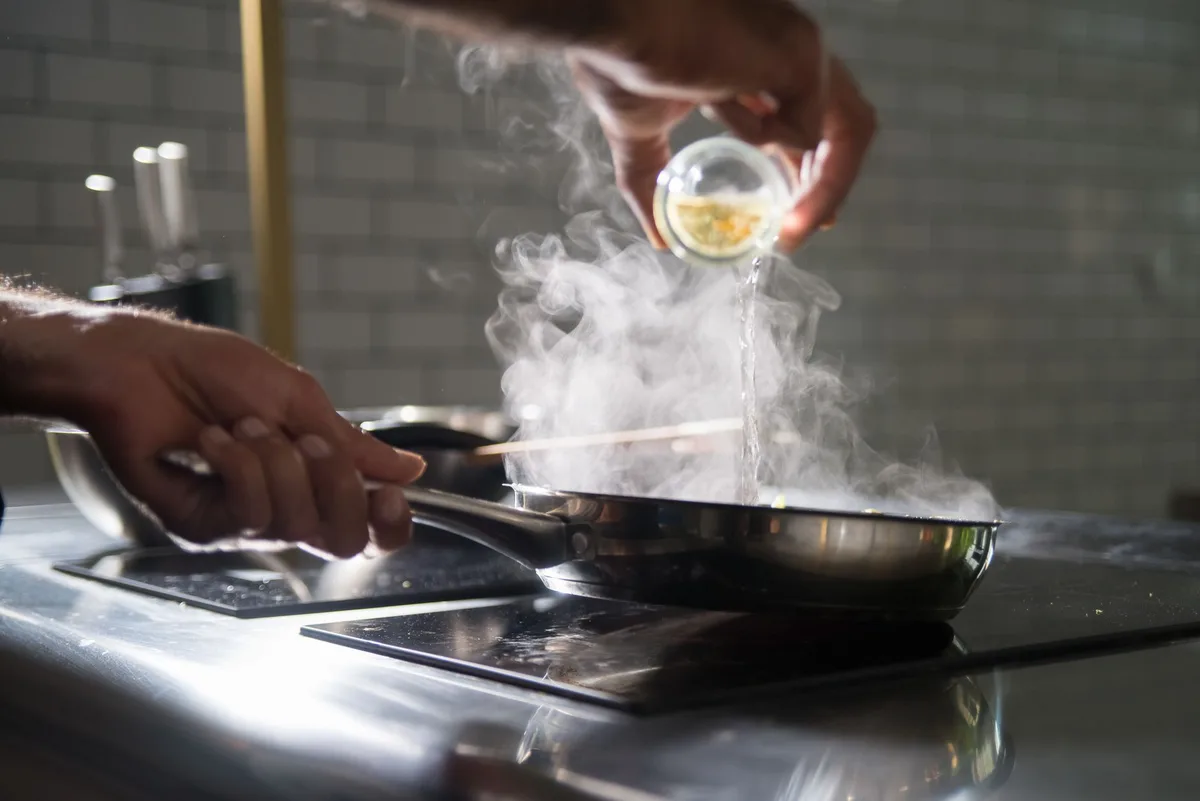
Image source: Pexels / Kampus Production (Pexels License)
Before we dive into technique, let’s get clear on what “normal pan” actually means.
A normal pan is whatever you already own. It’s the workhorse of your kitchen. Most likely, it’s one of these three types:
Nonstick skillet. This is the most common pan in American kitchens. It’s lightweight, easy to clean, and requires less oil. The coating prevents food from sticking, which sounds perfect for stir fry, but we’ll talk about the tradeoffs soon.
Stainless steel pan. Chefs love these. They conduct heat evenly and handle high temperatures well. Food will stick if you’re careless, but that stickiness creates flavor.
That’s the brown crust called the fond, and it’s pure gold.
Cast iron skillet. Heavy. Durable. Holds heat like nothing else.
It’s the closest thing to a wok in a Western kitchen, minus the curved sides.
Any of these pans can make a perfectly good stir fry. The key is knowing how each one behaves and adjusting your approach accordingly.
Why People Think You Need a Wok
The myth persists for a reason. Woks have specific design features that make stir fry easier. But “easier” doesn’t mean “required.”
A wok’s curved sides let you toss ingredients without spilling. The wide opening allows steam to escape quickly, which keeps vegetables crisp. The round bottom concentrates heat at the center, so you can cook in batches and push finished ingredients up the sides to stay warm.
That’s nice. It’s not magic.
Your normal pan is flat-bottomed. That means the heat distribution is more even across the surface. You lose some tossing ability, but you gain more consistent browning.
And frankly, most home cooks don’t toss their stir fry anyway. They use a spatula to move things around. A flat pan actually makes that easier.
The real question isn’t about the pan shape. It’s about heat.
The Heat Factor—Your Pan’s Real Limitation
Here’s where the “normal pan” conversation gets honest.
Professional wok cooking happens at temperatures that would ruin most home pans. Proper stir fry requires intense, screaming-hot heat. We’re talking 500°F to 600°F.
That’s well above the smoke point of most cooking oils.
A restaurant wok burner produces 100,000 to 150,000 BTUs. Your home stove puts out maybe 12,000 BTUs on a good day. That’s the real limitation, not your pan.
So can you make stir fry with a normal pan on a regular stove? Yes, but you have to work with reality instead of fighting it.
Here’s what works:
- Preheat your pan thoroughly. Give it 2 to 3 minutes on medium-high heat before adding oil. The pan needs to be hot enough that a drop of water dances across the surface.
- Don’t overcrowd. This is the number one mistake. Too much food in the pan drops the temperature instantly. You end up steaming instead of stir frying. Cook in small batches.
- Use high smoke point oil. Avocado oil, peanut oil, grapeseed oil, or refined coconut oil. Save olive oil for salads.
- Work fast. Once the food hits the pan, you’ve got minutes, not hours. Have everything prepped and within arm’s reach.
If you follow those rules, your normal pan will perform admirably. The heat limitation is real, but it’s manageable.
Which Normal Pan Works Best?
If you’re buying a new pan specifically for stir fry, here’s my honest ranking.
Cast iron skillet wins for heat retention. Get it screaming hot, and it stays hot even when you add cold ingredients. The downside is weight and maintenance.
You can’t use soap on seasoned cast iron, and acidic ingredients like tomatoes or vinegar will strip the seasoning.
Stainless steel pan wins for control. You can see exactly what’s happening with your fond. You can deglaze easily.
The pan handles high heat without warping, though cheap stainless steel models can develop hot spots.
Nonstick skillet wins for convenience. Cleanup takes seconds. You need less oil.
But nonstick coatings degrade above 500°F, and that’s exactly where stir fry wants to live. If you use nonstick, stay at medium-high instead of max heat. Your food won’t have that wok hei (that smoky, charred flavor) but it’ll still taste great.
My personal pick? A well-seasoned cast iron skillet. It’s not the prettiest tool, but it gets the job done.
How to Get the Best Stir Fry in a Normal Pan
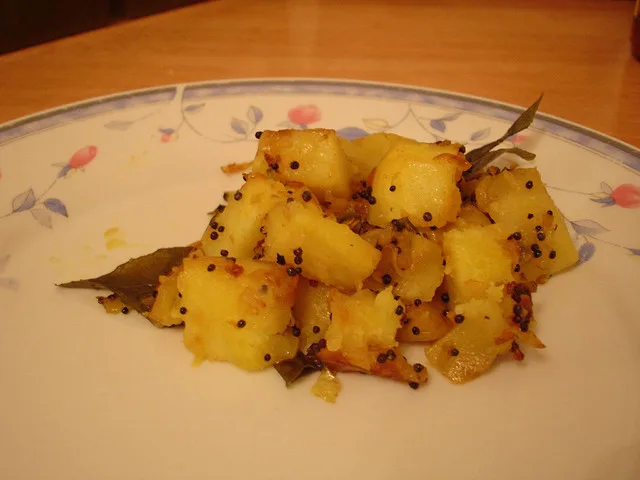
Image source: Wikimedia Commons / rovingI (CC BY)
Let me walk you through a foolproof method. These steps work for any normal pan.
Step 1: Prep everything first. This isn’t a suggestion. It’s a rule. Stir fry happens in about 4 minutes of active cooking.
You won’t have time to chop an onion once things start sizzling. Dice your protein, slice your vegetables, measure your sauce, and set it all in bowls.
Step 2: Heat the pan dry. Put your empty pan on high heat for 2 minutes. Don’t add oil yet. The pan should be hot enough that you feel the heat radiating when you hold your hand above it.
Step 3: Add oil and swirl. Pour in oil with a smoke point of 400°F or higher. Swirl to coat the bottom. You’ll see shimmering almost immediately.
Step 4: Cook in batches. Start with your protein. Spread it in a single layer and let it sear undisturbed for 30 seconds. Then toss or stir.
Remove it to a bowl once it’s browned.
Step 5: Cook aromatics. Add garlic, ginger, and chili. Stir for about 15 seconds. They’ll burn fast, so don’t walk away.
Step 6: Cook vegetables. Add the hardest vegetables first (carrots, broccoli stems, bell peppers). Then add softer vegetables (bok choy, mushrooms, snow peas). Keep the heat high.
Stir constantly.
Step 7: Return the protein. Pour your cooked protein back in. Add any sauce. Toss everything together for 30 seconds.
Step 8: Finish and serve. The whole process takes 5 to 8 minutes. Serve immediately.
That method works every time. You don’t need a wok. You need good technique and confidence.
Common Mistakes People Make
I’ve seen home cooks blame their pan for bad stir fry. Nine times out of ten, the pan wasn’t the problem. Here’s what actually went wrong.
Mistake: Adding oil to a cold pan. This causes oil to heat up slowly and soak into food instead of creating a searing surface. Heat the pan first, then add oil.
Mistake: Using too much oil. Stir fry isn’t deep frying. You need just enough to coat the pan. Excess oil makes everything greasy and prevents browning.
Mistake: Moving food too much. Let the ingredients sit for a moment to develop color. Constant stirring prevents browning.
Mistake: Wet ingredients. Pat your protein dry with paper towels. If your vegetables were washed, dry them thoroughly. Water in the pan creates steam, and steam is the enemy of crispy stir fry.
Mistake: Overloading the pan. This is the biggest killer. If your pan has a 10-inch diameter, don’t try to cook more than enough food for two people at once. Cook in batches if needed.
Does Pan Material Affect Flavor?
Different pan materials change the flavor profile slightly. I’ve tested this side by side.
Nonstick pans produce a cleaner, more delicate stir fry. The flavor is straightforward. It tastes exactly like your sauce and ingredients, without any added notes.
Stainless steel pans add subtle nuttiness. The fond that develops on the bottom caramelizes and gets stirred back into the sauce. That adds depth.
Good depth.
Cast iron pans add a slight mineral quality. If your pan is well-seasoned, you get a hint of that smoky, almost charred flavor that reminds you of restaurant cooking. It’s not wok hei, but it’s close.
Carbon steel skillets, which are technically normal pans, come closest to the wok experience. They’re light, they heat fast, and they develop a natural nonstick seasoning. If you’re picky about flavor and don’t want a wok, carbon steel is your best bet.
Can You Make Stir Fry With a Normal Pan for a Crowd?
You can. But you need to adjust your strategy.
Cooking for four or more people in a standard pan means multiple batches. That’s fine. Just plan for it.
Cook all your protein first, batch by batch. Set it aside. Cook all your aromatics.
Cook vegetables in batches if needed. Then combine everything in the pan for a final toss with sauce.
I’ve cooked for ten people using a single 12-inch stainless steel skillet. It took about 20 minutes of active cooking, plus 30 minutes of prep. Nobody complained about the food.
Several people asked for the recipe.
The key is patience. Don’t rush the process. Each batch deserves the same high heat and attention.
The Science Behind Stir Fry in a Normal Pan
Let’s get technical for a minute. Understanding the science helps you troubleshoot.
Stir frying relies on the Maillard reaction. That’s the chemical process where amino acids and reducing sugars react under high heat, creating browning and complex flavors. This reaction accelerates above 285°F.
Your normal pan needs to stay above that threshold while cold ingredients hit the surface. That’s why preheating matters so much. If the pan drops below 285°F during cooking, the Maillard reaction slows or stops.
Your food simmers instead of searing.
Water boiling happens at 212°F. If you add wet ingredients, the pan temperature immediately drops to boiling point. That water must evaporate before searing can resume.
So dry ingredients equal better browning.
The USDA recommends cooking most proteins to specific internal temperatures for food safety. Ground meat needs 160°F. Chicken needs 165°F.
Steak can go to 145°F for medium-rare. Your stir fry should reach these temperatures during the cooking process.
For more detailed food safety guidelines, check the USDA’s official temperature chart at https://www.usda.gov.
Can You Make Stir Fry With a Normal Pan Without Oil?
Technically, yes. Practically, no.
You can dry-fry vegetables in a hot nonstick pan without oil. Broccoli, mushrooms, and bell peppers release enough moisture to keep from burning. But you won’t get browning.
You’ll get steamed, pale vegetables.
For a proper stir fry with browning and texture, you need at least some oil. A tablespoon is usually enough for a single batch. If you’re watching calories, use a spray oil.
Misto makes refillable spray bottles that work well.
The oil serves multiple purposes. It conducts heat to the food. It prevents sticking.
It helps dissolve fat-soluble flavors from aromatics like garlic and ginger. Skip it, and you lose all of those benefits.
Cleaning Up After Stir Fry in a Normal Pan
Here’s a bonus benefit of using normal pans: cleanup is easy.
Nonstick pans need gentle scrubbing with a soft sponge. Avoid abrasive pads.
Stainless steel pans might develop brown residue. That’s not burnt food, it’s caramelized fond. Deglaze the pan while it’s still warm.
Add a splash of water or broth, bring it to a simmer, and scrape up the bits with a wooden spoon. That residue adds flavor to sauces.
Cast iron pans need different care. Wash with hot water and a stiff brush. Dry immediately.
Rub a thin layer of oil on the surface before storing. Never soak cast iron or put it in the dishwasher.
Final Verdict—Can You Make Stir Fry With a Normal Pan?
Yes. Absolutely. Without question.
The best pan for stir fry is the pan you already own. Practice with it. Learn how it heats.
Figure out which burner setting gives you the best sear without burning.
You’ll develop intuition over time. You’ll know when the pan is hot enough. You’ll learn exactly how much food it can handle.
That knowledge matters more than any specialized equipment.
A wok is nice. A normal pan works.
Stop worrying about gear. Start cooking.
The only thing standing between you and a perfect stir fry isn’t your pan. It’s your willingness to turn up the heat, move fast, and trust your instincts.
Now go make dinner. You’ve got everything you need.