Let’s be honest. Standing in the appliance aisle staring at fifty different coffee machines is overwhelming. You’ve got $50 drip machines sitting next to $2,000 espresso beasts.
They all promise great coffee. They can’t all be right.
I’ve spent years testing these things. I’ve pulled shots on commercial-grade rigs and I’ve brewed with bargain-bin specials that wobbled on their bases. The good news?
The right machine for you isn’t the most expensive one. It’s the one that matches how you actually drink coffee.
Here’s how to choose a coffee machine without the headache.
Start With Your Coffee Habits, Not the Specs
Before you look at pressure stats or boiler sizes, answer three simple questions. These answers will eliminate half your options instantly.
What do you drink most? If you’re a black coffee person who drinks three cups during work hours, you need a different machine than someone who drinks two cortados every morning.
How many cups per day? A single person brewing one cup needs simplicity. A family of four needs capacity. Don’t buy a commercial-grade machine for a household of one.
How much time do you have? Some machines deliver coffee in four minutes. Others take fifteen minutes to heat up before you even start. Be honest about your morning routine.
These answers create your starting point. They narrow the field. Now let’s look at the actual machine types.
The Two Main Categories: Espresso vs. Drip (And Everything Else)
The coffee machine world splits into two big camps. Understanding the difference saves you from buying the wrong thing.
Espresso Machines: For Milk Drinks and Concentrated Coffee
Espresso machines force hot water through finely-ground coffee under high pressure. The result is a thick, concentrated shot with crema on top. This is the base for lattes, cappuccinos, and americanos.
These machines range from basic to professional. They’re for people who take their coffee seriously and want café-quality drinks at home.
Drip Coffee Makers: For Bigger Batches of Regular Coffee
Drip machines pour hot water over ground coffee in a filter. Gravity does the work. The coffee drips into a carafe below.
This method produces a full pot of lighter-bodied coffee. It’s the classic home brewer. It’s what most people grew up with.
The Middle Ground: Pod Machines and Pour-Over
Pod machines (like Keurig or Nespresso) use pre-packaged capsules. They’re the fastest option. Just pop one in and press a button.
Pour-over requires a gooseneck kettle and a filter cone. It’s manual. There’s no machine to speak of.
It gives you total control but takes practice.
Most people end up with either a drip machine or an espresso machine. Start there.
How Espresso Machines Use Boilers to Heat Water
Here’s where things get technical. But stick with me. The boiler is the heart of any espresso machine.
It determines everything about your experience.
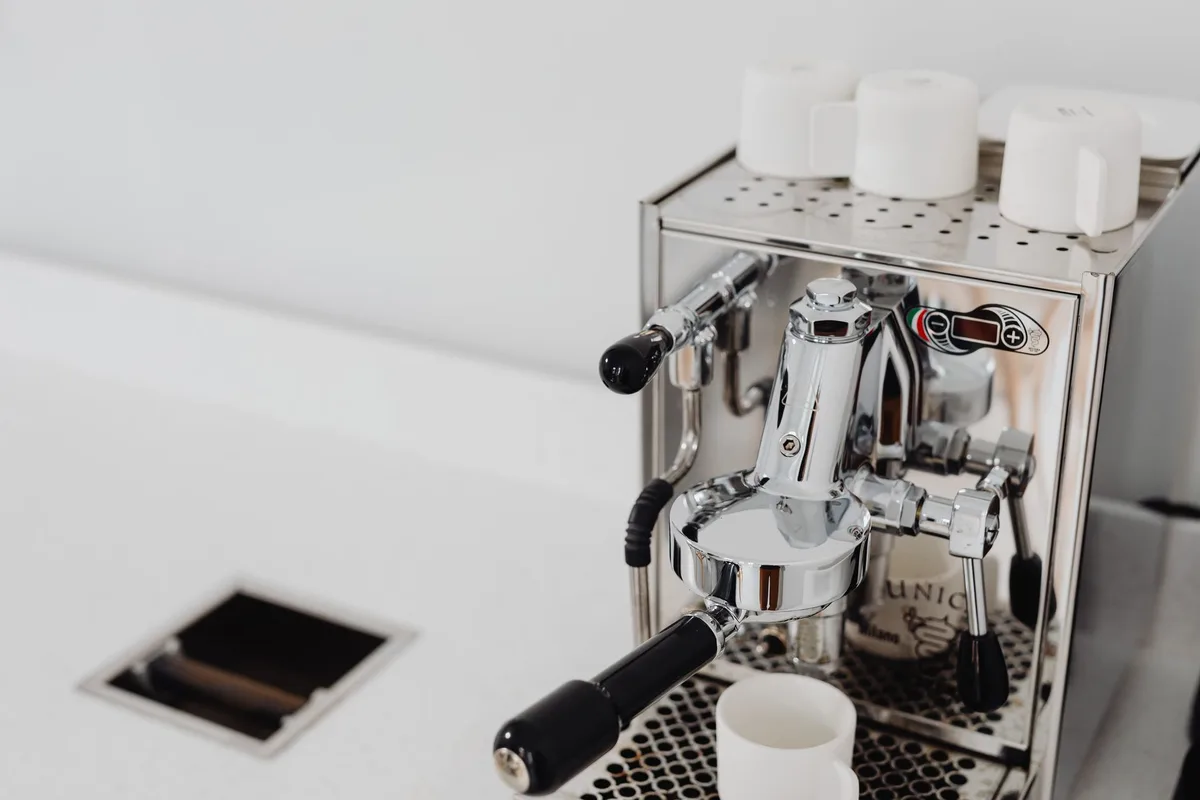
Image source: Pexels / https://kaboompics.com/ (Pexels License)
Espresso machines use one of three boiler setups. Each has pros and cons.
Single Boiler
A single boiler heats water for both brewing espresso and steaming milk. The catch? You can’t do both at once.
You brew your shot, then you wait for the boiler to heat up for steaming. Then you steam, then you brew again.
This is fine for occasional milk drinks. It’s a pain if you want multiple lattes in a row. The workflow goes: brew, wait, steam, wait, brew again.
Tedious.
Heat Exchanger (HX)
This is the clever middle ground. An HX machine uses one boiler but runs fresh water through a tube inside it. The water picks up heat without mixing with the boiler water.
This means you can brew and steam simultaneously.
These are popular with home baristas who make several milk drinks per session. They’re more expensive but far more practical.
Dual Boiler
The gold standard. Two separate boilers, one for brewing, one for steaming. Each operates at its ideal temperature.
No waiting. No compromise.
Dual boilers are expensive. They’re also amazing. If you make multiple milk drinks daily and have the budget, this is the endgame.
Temperature stability matters more than raw power. A machine that holds a steady temperature extracts better flavor. Cheap machines swing wildly. Watch for reviews that mention temperature consistency.
The Simplicity of Drip Coffee Makers
Ah, the humble drip brewer. It doesn’t get the glory of espresso machines, but it deserves respect. For many households, it’s the perfect choice.
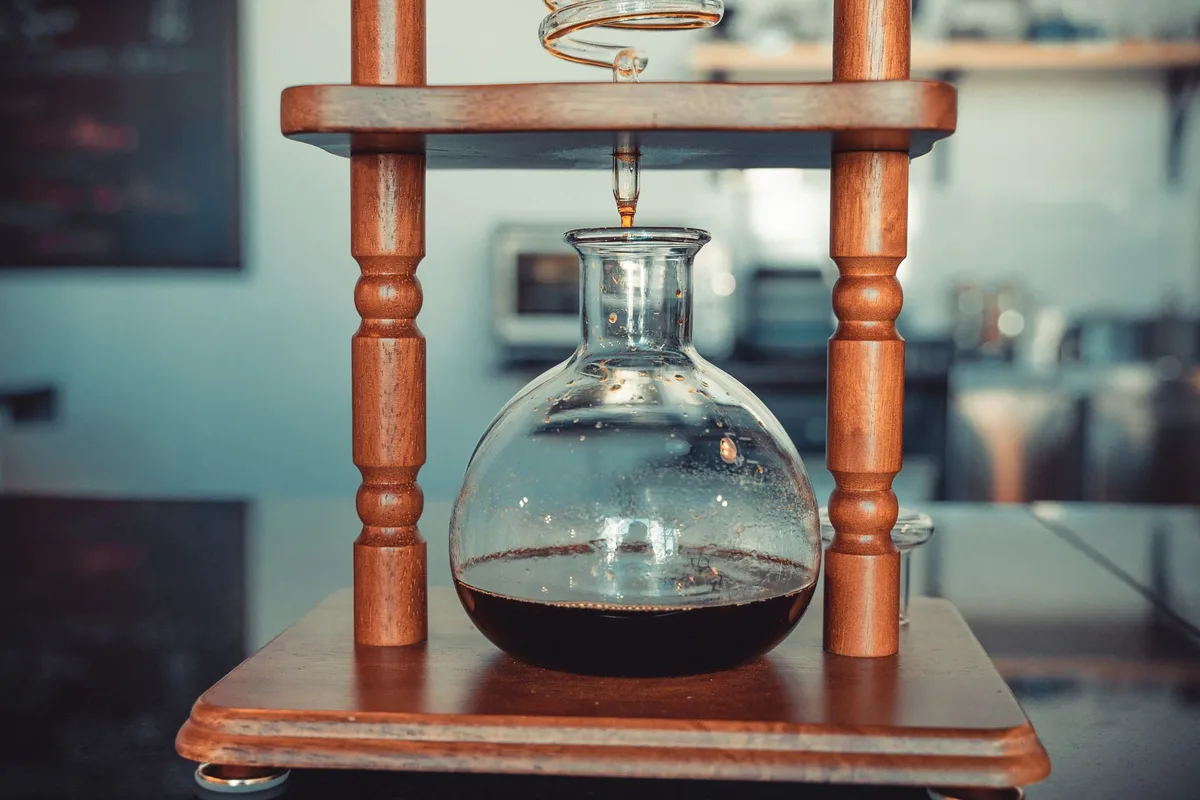
Image source: Pexels / Denys Gromov (Pexels License)
Drip machines shine because of their simplicity. You add ground coffee, pour in water, and press start. Ten minutes later, you have a carafe of coffee.
No fuss, no learning curve.
Here’s what to look for in a drip machine:
Carafe type matters. Glass carafes sit on a warming plate. They keep coffee hot but can burn it if left too long. Thermal carafes are insulated and keep the coffee fresher but cost more.
If you drink your pot slowly, go thermal.
The shower head design determines how evenly water saturates the grounds. Better machines spread water uniformly across the coffee bed. This prevents weak or bitter spots.
Programmability is a real convenience feature. Set it the night before. Wake up to fresh coffee.
Simple and effective.
Check the brew temperature. The sweet spot is between 195°F and 205°F. Many cheap machines fall short of this. Coffee brewed too cool tastes flat and acidic.
Look for machines that advertise “specialty coffee association” certification or temperature control.
For the record, the National Coffee Association has excellent resources on brew standards if you want to dive deep into water-to-coffee ratios and temperatures.
Key Features That Matter (And Some That Don’t)
Every manufacturer wants to sell you on fancy features. Here’s my honest take on what matters and what’s just marketing.
Features Worth Paying For
Adjustable grind settings. Some machines come with built-in grinders. They’re convenient but the grind quality is often mediocre. If you buy a machine with a grinder, make sure the adjustment range is wide enough for different brew methods.
PID temperature control. This is a digital controller that keeps water temperature rock-steady. It’s a game-changer for espresso. Absolutely worth the upgrade.
Pressure gauge. A small gauge on the front of an espresso machine shows the brew pressure. It helps you dial in your grind and spot problems. Nice to have, not essential.
Auto shut-off. Safety feature that turns the machine off after inactivity. Essential for busy mornings when you forget things.
Water filter system. Built-in filters extend the life of your machine and improve taste. Very useful if you have hard water. You can buy external filters if your machine lacks this.
Features to Ignore
Milk frothing wands on cheap machines. They’re often too weak to produce proper microfoam. A basic hand-held frother does the same job better.
“One-touch” drink buttons. On budget machines, these just reproduce the same extraction regardless of your button choice. They add cost without value.
Wi-Fi connectivity. Yes, there are coffee machines with apps. No, you don’t need one to make good coffee. Skip it.
Save your money.
Cup warmers. Many machines have a flat warming tray on top. It keeps cups warm while the machine heats up. Nice in theory, but the surface barely gets hot enough.
Not worth paying extra for.
Budget Breakdown: What You Get at Each Price Point
Price is the biggest factor for most buyers. Here’s a realistic picture of what your money buys at each level.
Under $100
You’re looking at basic drip machines and entry-level pod brewers. These get the job done. Expect mediocre brew temperatures and plastic bodies.
Coffee quality will be average. This is fine if you’re a casual drinker.
$100 – $300
This is the sweet spot for drip machines. Better materials. Better temperature control.
You can also find basic espresso machines here, but prepare for limited features. The steam wands will be weak. Pull quality will be acceptable, nothing more.
$300 – $700
Entry-level prosumer territory. You can get a solid espresso machine with a decent boiler system. Grinders included in this range are sometimes passable.
Drip machines at this price are excellent. Thermal carafes and precise temperature control come standard.
$700 – $1,500
Now we’re talking real espresso machines. Heat exchanger and basic dual boiler machines live here. You get commercial-grade components.
This is the range for dedicated home baristas. Expect rich, full-bodied shots and proper steam for latte art.
$1,500+
Professional-grade dual boilers. Rotary pumps. Pre-infusion control.
These machines replicate café performance at home. Unless you’re a serious enthusiast or run a home café, this is overkill.
For drip and pour-over enthusiasts, the Specialty Coffee Association provides rigorous guidelines for equipment standards that justify those higher price tags.
Grinder Considerations: Don’t Buy a Super-Auto If You Already Own a Good Grinder
There’s a recurring debate about buying machine and grinder combos versus separate components.
Bean-to-cup super-automatics include a grinder built in. They grind, tamp, and brew at the touch of a button. Very convenient.
These are fantastic if you want zero effort and accept some limitations in flavor tuning.
But if you already own a decent standalone grinder, buy a semi-auto espresso machine instead. Built-in grinders are often the weakest link. A separate grinder allows you to upgrade components independently and fine-tune your grind size with precision.
A good rule of thumb: spend more on your grinder than your machine. The grinder extracts flavor. The machine just delivers hot water. A weak grinder is the most common reason why home espresso fails.
Water Quality Is Every Third Problem
Here’s something most guides skip. The quality of your water affects your coffee more than any machine feature.
Hard water clogs internal components over time. It also contains minerals that make coffee taste bitter. Soft water makes coffee taste flat and sour.
If you live in a hard-water area, you must address this. Options:
Filtration pitchers. Cheap and effective. Just pour your water through one before using. You can use any standard pitcher filter system.
Built-in filters. Many mid-range and high-end espresso machines include these. Replace them on schedule. Don’t skip this maintenance step.
In-line water softeners. Plumb in a compact softening cartridge. These are more expensive but work continuously in the background.
I recommend checking your local water hardness before buying any machine. It influences not just taste but machine longevity. For authoritative guidance on water standards in specialty coffee, the Specialty Coffee Association has extensive water quality resources.
Maintenance Reality Check
Every coffee machine requires maintenance. The amount varies dramatically by type.
Drip machines need regular cleaning of the carafe. Descaling with vinegar or citric acid every few months prevents mineral buildup. This is easy and cheap.
Pod machines need simpler care. Run a cleaning cycle occasionally. Descale as recommended by the manufacturer.
The pods themselves are expensive over time, though. That recurring cost adds up faster than you think.
Espresso machines need the most attention. You should backflush with cleaning detergent weekly. Replace seals and gaskets yearly.
Clean the group head after every shot. If you’re not willing to do this, don’t buy an espresso machine. You’ll end up with awful-tasting coffee and a machine that fails prematurely.
Milk steaming component, a contaminated wand ruins milk texturing. Clean the wand with a damp cloth immediately after each use. Do a deep clean weekly.
This prevents crusty milk residue that affects taste.
Maintenance isn’t optional. Skip it, and you’ll be shopping for a new machine within two years.
Final Checklist Before You Click “Buy”
You’ve read all the details. Now here’s my quick checklist to finalize your decision.
- ✅ Daily output: How many cups each day? Match machine capacity.
- ✅ Milk drinks vs. black coffee: Espresso for milk-based drinks. Drip for big mugs.
- ✅ Your patience level: Super-automatics for low effort. Semi-automatics for ritual.
- ✅ Water quality test: Hard water? Budget for filtration.
- ✅ Maintenance willingness: Espresso demands care. Drip doesn’t.
- ✅ Budget split: Don’t forget the grinder. It matters.
One Final Thought
Choosing a coffee machine comes down to matching hardware to your habits. A $1,500 espresso machine is worthless if you don’t want to learn the craft. A $60 drip brewer is perfect if you want reliable convenience.
Take the time to answer the questions honestly. Visit stores and touch the machines. Read user reviews about real-world reliability, not just marketing specs.
The best coffee machine is the one you’ll actually use every morning. Choose carefully, and it’ll reward you with years of great coffee.