Image source: Pexels / Josh Eleazar (Pexels License)
I’ve spent years standing over a wok burner, learning what works and what doesn’t. Fried rice looks simple. It’s not.
Get it wrong and you’re eating a sticky, oily mess. Get it right and you’ve got something better than most restaurant versions.
The wok is not a suggestion, it’s the tool that makes this dish work. Its high sloping sides let you toss rice without spilling. Its thin metal heats fast and cools fast, giving you control you can’t get from a flat-bottomed skillet.
And the shape concentrates heat at the bottom, so you can cook in batches without steaming your ingredients.
This guide covers everything. The rice. The wok.
The heat. The technique. Follow it once and you won’t need another recipe.
Why the Wok Matters for Fried Rice
A flat pan holds heat evenly across its surface. A wok doesn’t. That sounds like a disadvantage until you understand how fried rice actually cooks.
When you add cold rice to a screaming-hot wok, the bottom grains sear instantly. The grains on top stay cooler. Tossing the wok rotates those grains through the hot zone, so each one gets direct contact with the metal.
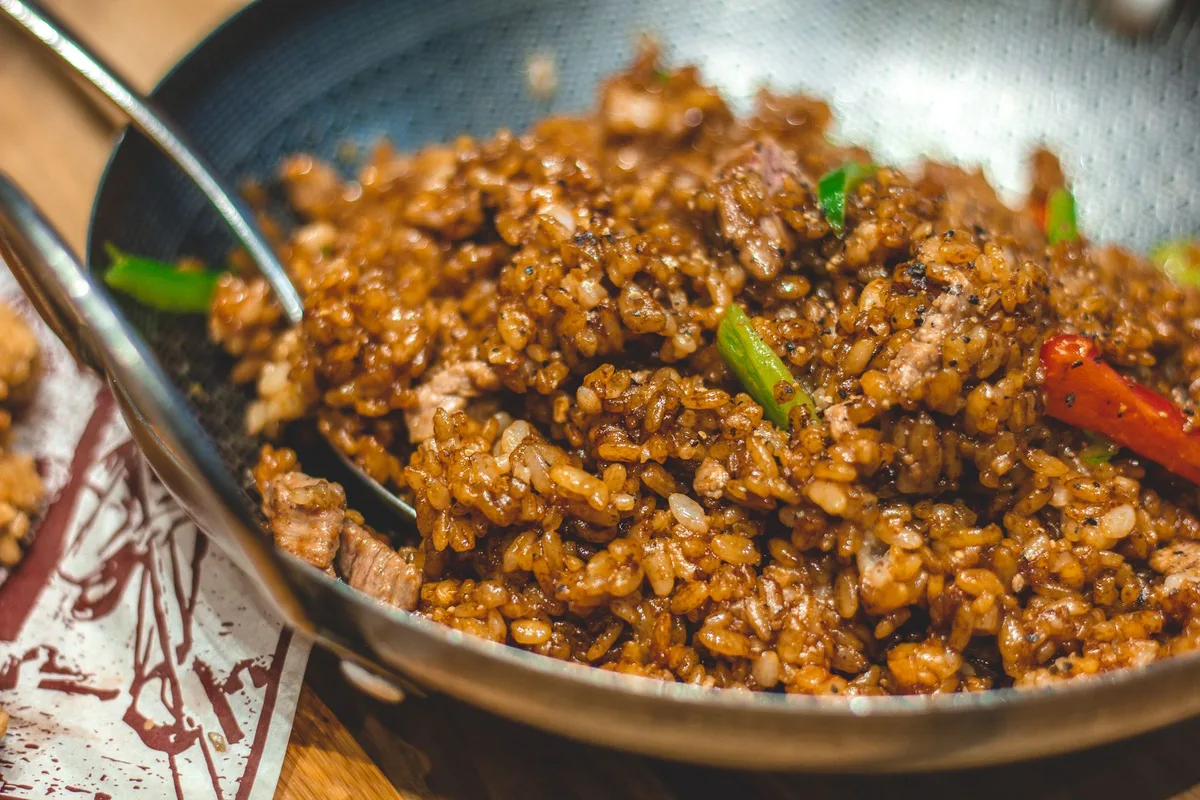
You get separate, chewy grains with caramelized edges. Not steamed clumps.
The wok’s round bottom also means oil pools at the center. That pool is where you cook your aromatics and protein. Once they’re done, you push them up the sides, out of the direct heat, and cook the rice in the center.
Then you mix everything together. You’re controlling temperature zones within a single pan.
You can make fried rice in a skillet. Millions of people do. But you won’t get the same texture.
You won’t get the smoky flavor. And you definitely won’t get that bouncy, separated grain that defines great fried rice.
Choosing the Right Wok
Don’t overthink this. You want a carbon steel wok. That’s it.
Carbon steel heats fast, develops a natural non-stick patina over time, and weighs less than cast iron. A 14-inch flat-bottom wok works best for home stoves. Round-bottom woks need a wok ring to stay stable on Western burners.
Avoid non-stick woks. They can’t handle the high heat needed for wok hei, and the coating degrades quickly. Stainless steel woks are too slow to respond to temperature changes.
Cast iron woks are too heavy to toss properly.
Season your wok before first use. Wash off the factory coating, dry it completely, then heat it until it smokes. Rub a thin layer of high-smoke-point oil over the surface with a paper towel.
Repeat this two or three times. The wok will darken and become naturally non-stick. Use it often and the seasoning only improves.
The Rice: Day-Old or Properly Dried Fresh Rice
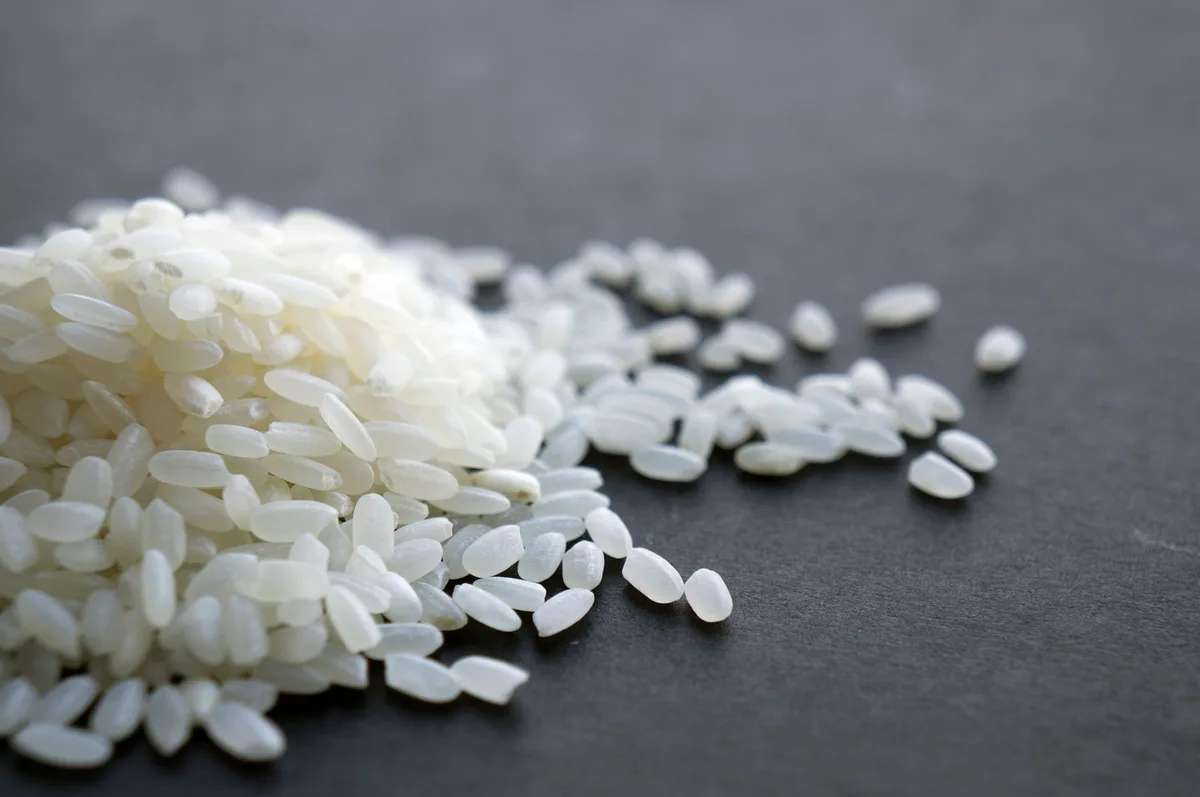
Image source: Pexels / Mari M (Pexels License)
This is the most common mistake people make. Freshly cooked rice is too moist. It steams rather than fries, turning into a dense, gummy block in your wok.
Day-old rice works because it’s dried out. Spread freshly cooked rice on a baking sheet and refrigerate it uncovered overnight. The surface moisture evaporates.
The grains firm up. They hold their shape when hit with high heat.
But you don’t always have day-old rice. That’s fine. Here’s the shortcut:
Cook your rice, spread it on a sheet pan, and put it in the fridge for 30 minutes. Then fluff it with a fork and let it sit at room temperature for another 15 minutes. The grains will be drier than fresh but not as dry as overnight.
It works well enough.
Which rice type? Medium-grain or long-grain jasmine rice. Short-grain sushi rice is too sticky.
Parboiled rice holds up okay but lacks the chew you want. Jasmine rice gives you that floral aroma and separate grains.
Rinse your rice before cooking. Rinse until the water runs clear. This removes excess starch that causes clumping.
What You Need: Ingredients List
Base ingredients:
- 3 cups cooked jasmine rice (day-old or properly dried)
- 2 tablespoons neutral oil (vegetable, canola, or peanut)
- 2 eggs, lightly beaten
- 3 cloves garlic, minced
- 1 small onion, diced
- 1 cup mixed vegetables (frozen peas and carrots work fine)
Protein (pick one):
- ½ cup diced Chinese sausage (lap cheong)
- ½ cup diced ham
- ½ cup small shrimp
- ½ cup diced chicken
Seasoning:
- 2 tablespoons soy sauce (use light soy for salt, dark soy for color)
- ½ teaspoon white pepper
- ¼ teaspoon MSG (optional but recommended)
- 1 tablespoon oyster sauce
- 1 teaspoon sesame oil
- 2 chopped green onions for garnish
This is a base recipe. Fried rice is a clean-out-the-fridge dish. Use leftovers.
The ratios matter more than the specifics.
Getting the Wok Hot Enough for “Wok Hei”
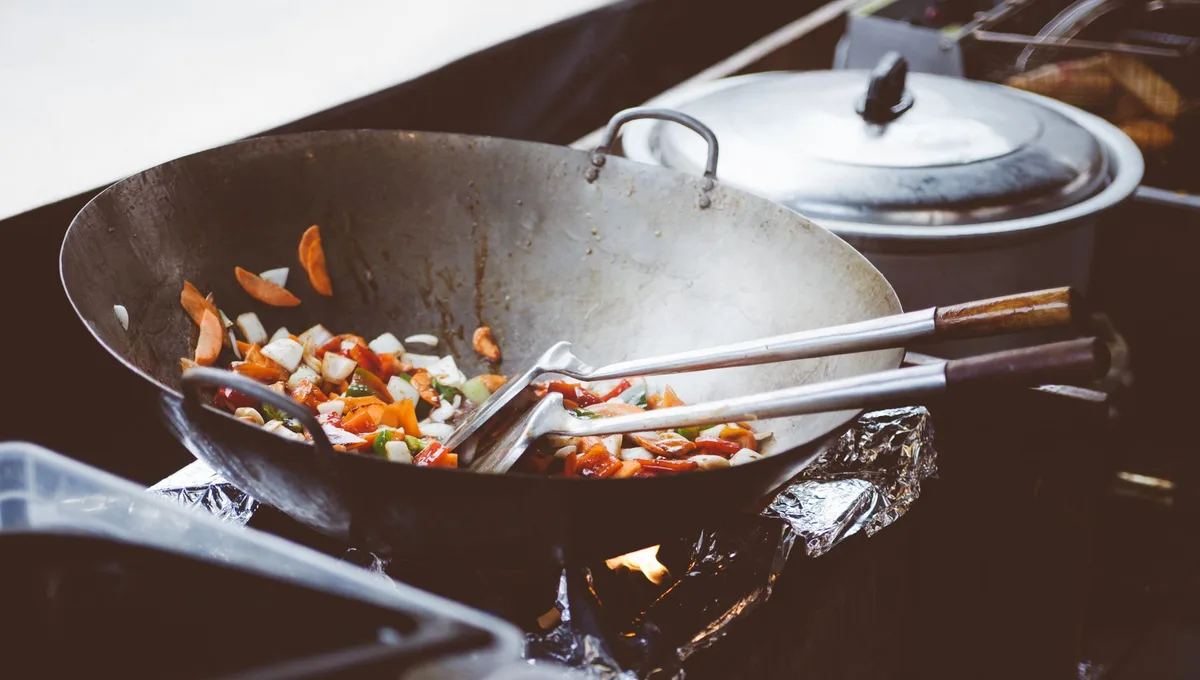
Image source: Pexels / Clem Onojeghuo (Pexels License)
Wok hei translates roughly to “breath of the wok.” It’s that smoky, slightly charred flavor you get from restaurant fried rice. You can’t fake it. But you can achieve it at home.
The trick is heat management. Your wok needs to be smoking hot before oil goes in. Like, seriously hot.
A few droplets of water should dance across the surface and evaporate instantly.
But here’s where people ruin their fried rice: they dump cold ingredients into a hot wok and the temperature crashes. Suddenly you’re steaming instead of frying.
Work in batches. Cook the protein first, remove it. Cook the eggs, remove them. Cook the aromatics, remove them.
Only then does the rice go in. Each batch takes less than a minute. The wok stays hot because you’re not overloading it.
On a standard home stove, you need to preheat on high for at least 2 minutes. On an induction burner, it’s faster. Gas gives you more immediate heat control.
If you have a wok burner, the kind that blasts heat up the sides, you’re golden.
The oil should shimmer and barely start smoking when you add the rice. That’s your window.
Step-by-Step: Making Fried Rice in a Wok
Step 1: Preheat the wok
Turn your burner to high. Let the wok heat until it smokes lightly. This takes 2, 3 minutes on most stoves.
Step 2: First batch — protein
Add 1 tablespoon oil. Swirl it around. Add your protein in a single layer.
Let it sear without moving for 20 seconds. Then stir-fry for another 30 seconds. Remove to a bowl.
Step 3: Second batch — eggs
Add another teaspoon oil. Pour in beaten eggs. Let them set for 10 seconds, then scramble them lightly.
Remove when they’re still slightly wet, they’ll finish cooking later.
Step 4: Third batch — aromatics and vegetables
Add oil if the wok looks dry. Toss in garlic and onion. Stir for 15 seconds until fragrant.
Add vegetables. Stir for 30 seconds. Remove everything to the bowl with the protein.
Step 5: The rice goes in
Crank the heat back to high if you lowered it. Add the remaining oil. Add the cold rice.
Spread it flat against the wok surface. Let it sit for 20 seconds to develop a crust. Then toss or stir vigorously.
This is the crucial step. Don’t stir constantly. Let the rice rest against the hot metal for short bursts.
You want browning, not burning.
Step 6: Season and combine
When the rice is hot and slightly toasted, add the soy sauce, white pepper, MSG, and oyster sauce. Toss to coat evenly. Return the cooked protein, eggs, and vegetables to the wok.
Toss everything together for 30 seconds.
Step 7: Final touches
Drizzle sesame oil around the edges of the wok. Toss once more. Add chopped green onions.
Give it one final toss. Serve immediately.
From start to finish, this takes about 8 minutes. The rice should be hot, separate, and slightly charred in spots. You should smell that smoky wok hei aroma.
Common Mistakes and How to Avoid Them
Using wet rice. This is number one by a mile. If your rice clumps when you break it apart with a spoon, it’s too wet. Spread it out.
Let it dry. Don’t skip this.
Overcrowding the wok. A wok full of rice steams. A wok with a thin layer of rice fries. Cook in batches if you need to.
Your stove can’t maintain high heat with a mountain of cold food in the pan.
Stirring instead of tossing. Stirring pushes rice around and breaks grains. Tossing, flipping the wok to rotate ingredients, keeps grains intact. If you can’t toss, use a spatula to flip sections rather than scrape.
Adding soy sauce too early. Soy sauce adds moisture. If you add it before the rice is hot and separated, you introduce steam. Add it late, right before you combine everything.
Not using enough oil. Fried rice needs oil. Not swimming in it, but enough to coat each grain. The oil conducts heat and prevents sticking.
If your rice looks dry, add a splash more.
Low heat. Your stove’s “high” setting might not be high enough. Preheat the wok longer. Use a wok ring to trap heat.
Consider a portable induction burner if your stove is weak.
Variations Worth Trying
Nasi goreng. Indonesian fried rice with sweet soy sauce (kecap manis), shrimp paste, and chili. Top with a fried egg and crispy shallots. The sweetness of kecap manis slightly changes the texture; watch for sticking.
Thai basil fried rice. Use Thai holy basil, bird’s eye chilies, fish sauce instead of soy sauce, and lots of garlic. Serve with a fried egg on top. This one wants high heat and fast cooking.
Egg fried rice. Just rice, eggs, scallions, and salt. The simplest version and the hardest to perfect. Each grain should be separate and glossy.
Use a generous amount of lard or rendered chicken fat for the best flavor.
Kimchi fried rice. Add chopped kimchi and kimchi juice to the wok after the rice. Top with a fried egg and sesame seeds. The acidity from the kimchi balances the richness.
Each variation follows the same technique. The only changes are ingredients and seasoning ratios.
Cleaning and Maintaining Your Wok
Never use soap on a seasoned carbon steel wok. Soap strips the seasoning. Instead, rinse the wok with hot water while it is still warm.
Use a soft sponge or a bamboo brush. Scrub off any stuck food.
Dry the wok immediately over low heat. When it’s dry, rub a drop of oil over the surface with a paper towel. This prevents rust and maintains the seasoning.
If food sticks persistently, your wok needs reseasoning. Heat it until it smokes, coat with oil, let it cool, and repeat. Do this two or three times.
The patina builds back up quickly.
Storing a wok on a hook is ideal. Air circulation prevents moisture buildup. If you stack it inside other pans, put a paper towel between the wok and the pan above it.
Frequently Asked Questions
Can I use freshly cooked rice? Yes, but you need to dry it. Spread it on a sheet pan and refrigerate for at least 30 minutes. Fluff with a fork before using.
It won’t be as good as day-old, but it works.
What oil should I use? Peanut oil or avocado oil. Both have high smoke points and neutral flavors. Avoid olive oil, it burns too easily and adds unwanted taste.
How do I make fried rice without a wok? Use a large cast iron skillet or a non-stick pan. Preheat it thoroughly. Follow the same batch-cooking method.
You won’t get wok hei, but the texture will be decent.
Can I freeze fried rice? Yes. Portion it into containers after it cools completely. Reheat in a hot wok or skillet, not a microwave.
The microwave makes it soggy.
Why is my fried rice mushy? Too much moisture. Either the rice was wet, you added too much soy sauce, or you overcrowded the wok. Fix those three things and your fried rice will improve immediately.
Do I need MSG? No. But it enhances savory flavors. If you avoid MSG, add a little extra salt and a splash of fish sauce.
It won’t be the same, but it’ll still taste good.
Final Notes on Technique
Fried rice rewards speed and confidence. Don’t hover over the wok, second-guessing every move. Trust the heat.
Trust the oil. Trust that the rice will release from the pan when it’s ready.
If the rice sticks, it’s either too wet or the wok wasn’t hot enough. Fix one batch and the next will be better. I’ve ruined plenty of fried rice.
Everyone has. The difference between average and excellent is noticing what went wrong and adjusting.
Make this recipe once. Then change it. Add more garlic.
Use leftover roast pork. Swap the vegetables for whatever’s in your fridge. The technique stays the same.
The specifics are yours to play with.
A good wok, high heat, dry rice, and fast cooking. That’s the whole thing. Master those four elements and you can make fried rice blindfolded.
Now go heat up your wok.