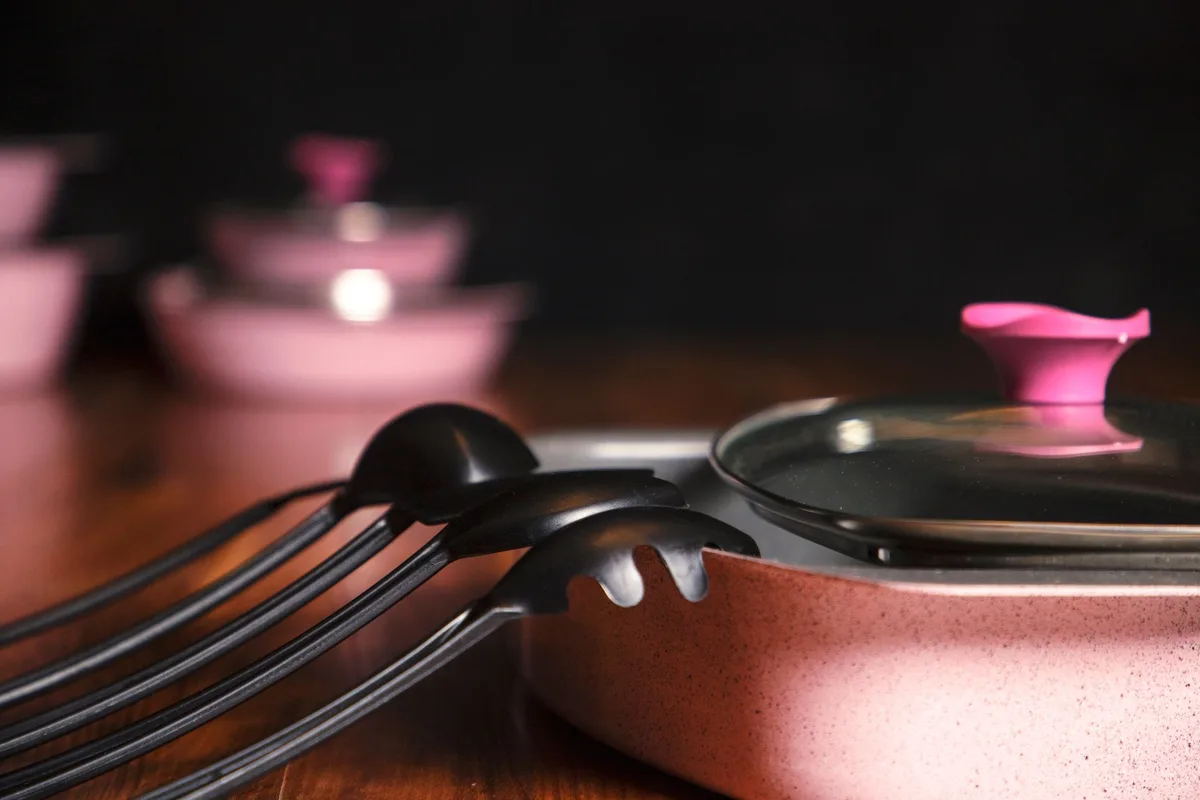
Image source: Pexels / Mohsen Naranjani (Pexels License)
I’ve been testing ceramic pans for years. And I’ll tell you straight: the wrong utensil can destroy a coating in weeks. The right one keeps it smooth and non-stick for years.
Ceramic cookware is different from traditional non-stick. The coating is a sol-gel silica layer, not PTFE. It’s harder, but also more brittle.
That means metal scratches it deeper. That means rough edges wear it faster. And once the coating is compromised, food sticks, heat distribution suffers, and you’re shopping for a new pan.
So what utensils should you use? Let’s get into it.
Why Your Utensil Choice Matters
Ceramic coatings are delicate. They’re baked onto the base metal (usually aluminum or stainless steel) at high temperatures. The result is a glass-like surface that’s incredibly smooth.
But glass chips. Glass scratches. And once that surface gets micro-abrasions, the non-stick performance drops.
I’ve seen people use a metal spatula on a ceramic skillet. Within a month, the center was dull and food was sticking. That’s not a defect.
That’s misuse.
The material of your utensil directly affects the lifespan of your cookware. Harder materials like metal and stainless steel remove microscopic particles of the ceramic coating every time they scrape across it. Softer materials like silicone and wood glide over the surface without digging in.
The choice isn’t just about performance. It’s about safety, too. Scratched ceramic can harbor bacteria.
And if the coating flakes off, you’re eating silica dust. Not ideal.
So let’s cover the best materials. Then I’ll tell you what to throw away.
Best Utensil Materials for Ceramic Cookware
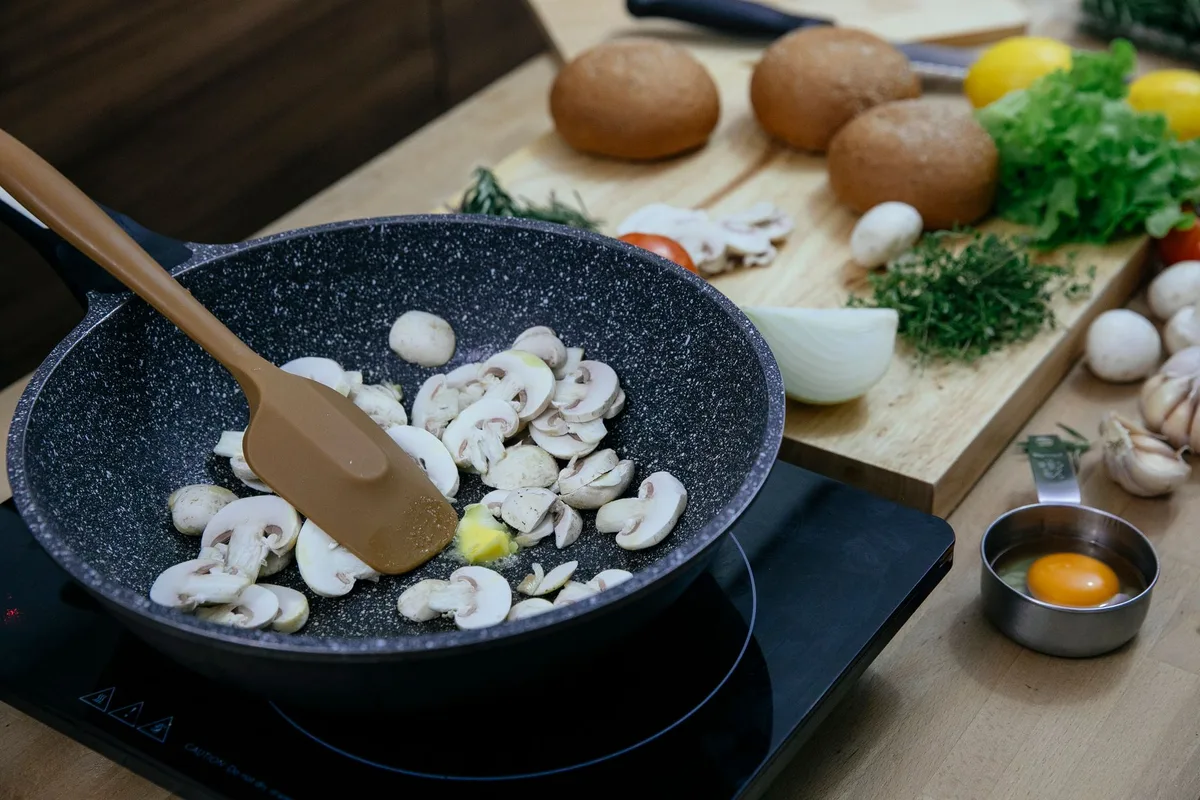
Image source: Pexels / Katerina Holmes (Pexels License)
These are the materials I use every day. They’re safe, effective, and they won’t ruin your pans.
Silicone
Silicone is the gold standard for ceramic cookware. It’s soft, flexible, and heat-resistant up to 600°F (315°C) for most high-quality brands. That’s well above any cooking temperature you’ll use.
Silicone spatulas, turners, and spoons glide over the ceramic surface without leaving a mark. They don’t absorb odors or stains. They’re dishwasher safe.
And they’re gentle enough to use on egg pans, saucepans, and woks.
One thing to watch: cheap silicone can have a seam or rough edge. Run your finger along the edge. If it feels sharp, it can still scratch.
Buy utensils with smooth, molded edges. I recommend brands like GIR or OXO for consistent quality.
Wood (Hardwood)
Wooden utensils are a classic choice. They’re naturally non-abrasive, they don’t conduct heat, and they won’t scratch ceramic. But not all wood is equal.
Softwoods like pine can splinter. Hardwoods like maple, beech, or olive wood are dense and smooth. They resist moisture and bacteria better.
I use a maple turner for flipping pancakes and a beech spoon for stirring sauces.
Keep in mind: wood can crack if you leave it soaking in water. And it can absorb food odors. Wash by hand, dry immediately, and oil it occasionally.
That’s minimal effort for a tool that lasts years.
Nylon or Plastic
Nylon and heat-resistant plastic utensils are safe for ceramic cookware if they’re rated for high heat. Most nylon utensils are good up to 400°F (204°C). That’s fine for sautéing, simmering, and most stovetop cooking.
But be careful. Cheap nylon can melt if you leave it in a hot pan. And some plastic utensils have rough edges that can scratch.
Look for “dishwasher safe” and “high-heat” on the label. Use them for stirring, not for scraping.
I personally avoid thin plastic spatulas. They bend too much and don’t give you the leverage you need. Thicker nylon turners are fine, but I prefer silicone.
Bamboo
Bamboo is a sustainable alternative to wood. It’s harder than most hardwoods, but still gentle on ceramic. It doesn’t splinter easily.
It’s lightweight. And it’s naturally antimicrobial.
I use bamboo spatulas for stir-frying and bamboo tongs for serving. They’re inexpensive and they last a long time if you don’t leave them in water.
One downside: bamboo can become brittle over time if it dries out. Oil it every few months. And don’t use it for heavy scraping or pounding.
Utensils to Avoid for Ceramic Coating
Image source: Pexels / Sternsteiger Stahlwaren (Pexels License)
Here’s where most people go wrong. These utensils will ruin your ceramic cookware. Don’t use them.
Metal Utensils
This includes stainless steel, aluminum, and carbon steel. Anything metal. Even a metal spatula with a rounded edge can cause micro-scratches.
Over time, those scratches become visible grooves. The coating wears away.
I’ve seen people argue that “it’s just a light scrape.” It’s not. Ceramic is brittle. A metal edge chips it like a glass window.
You won’t see the damage immediately, but it’s there.
Metal tongs are especially bad. The sharp tips dig into the coating. Metal whisks can also leave marks.
Keep them away from your ceramic pans.
If you must use metal for some reason (like a carbon steel wok), then don’t. Get a separate pan for that. But for ceramic, no.
Sharp-Edged Utensils
Even if the material is technically soft, any utensil with a sharp edge can scratch. That includes silicone spatulas with a rough seam, plastic spoons with a molded ridge, and wooden turners with a splintered edge.
Check every utensil before you use it. Run your finger along the edge and the tip. If it catches, it’s not safe.
Sand it down or replace it.
Abrasive Materials
This isn’t just about utensils. It’s about cleaning tools. Steel wool, scouring pads, and abrasive sponges will scratch ceramic.
Use a soft sponge or a nylon scrubber. And never use a metal scourer.
Also avoid abrasive cleaning powders. Baking soda is fine if you make a paste, but don’t rub it vigorously. Ceramic coatings are sensitive to rough particles.
How to Care for Your Ceramic Cookware (Utensil Edition)
The utensils you use are only part of the equation. How you handle them matters, too.
- Don’t cut in the pan. Never use a knife or a pizza cutter directly on a ceramic surface. The blade will scratch. Transfer food to a cutting board.
- Don’t use electric mixers. Hand mixers and immersion blenders have metal blades. They’ll gouge the coating. Mix in a separate bowl.
- Don’t stack pans without protection. If you stack pans, the base of the upper pan can scratch the coating of the lower one. Place a paper towel or a felt pad between them.
- Use low to medium heat. Ceramic pans heat evenly. High heat can damage the coating and cause discoloration. And it’s not necessary for most cooking.
- Cool before washing. Sudden temperature changes can cause thermal shock. Let the pan cool down, then wash with warm water and a soft sponge.
These habits extend the life of your cookware. I’ve had a ceramic skillet for three years that still looks new. The secret is consistent care.
Frequently Asked Questions
Can I use a silicone spatula on ceramic cookware?
Yes. Silicone is the safest material. It’s soft, flexible, and heat-resistant.
Just make sure the spatula has smooth, seamless edges.
Is wood safe for ceramic pans?
Yes, hardwood is safe. Maple, beech, and olive wood are good choices. Avoid softwoods like pine that can splinter.
What about plastic utensils?
Heat-resistant plastic utensils are safe if they’re rated for at least 400°F. Check the label. Avoid cheap plastic that can melt.
Can I use bamboo utensils on ceramic?
Yes. Bamboo is hard but gentle. It’s a good option.
Keep it dry and oil it occasionally.
What happens if I use metal utensils on ceramic?
You’ll scratch the coating. The scratches get worse over time, leading to sticking and reduced non-stick performance. In severe cases, the coating can flake off.
Are nylon utensils safe?
Nylon is safe if it’s high-heat rated. But it can scratch if the edges are rough. I prefer silicone for most tasks.
Can I use a metal whisk on ceramic?
No. Metal whisks have sharp wires that can scratch the coating. Use a silicone whisk instead.
Should I use a metal ladle on ceramic?
No. A metal ladle can scratch, especially if you scrape the bottom. Use a silicone or wooden ladle.
How do I know if a utensil is safe?
Run your fingernail across the edge. If it catches, it’s not safe. Also check the tip.
Smooth, rounded edges are best.
Can I use a spoon rest on a ceramic pan?
Avoid putting metal or ceramic spoon rests directly on the cooking surface. Use a separate rest or a silicone mat.
Final Thoughts
Choosing the right utensils for ceramic cookware isn’t complicated. Stick with silicone, hardwood, or high-heat nylon. Avoid metal, sharp edges, and abrasive materials.
That’s it.
Your ceramic pans will last longer, perform better, and save you money. I’ve seen too many people ruin a perfectly good pan with a metal spatula. Don’t be that person.
For more detailed care instructions, check the official guidelines from a trusted manufacturer like GreenPan. And for safety information on ceramic coatings, the FDA’s page on ceramic cookware is a solid resource.
Now go cook. And use the right spoon.